
Fighting Rust and Corrosion on Outdoor HVAC Units in Windy Neighborhoods Like Twin Peaks
San Francisco’s Twin Peaks neighborhood sits at an elevation where coastal fog meets constant Pacific winds. That combination creates the perfect storm for HVAC corrosion. Salt particles carried inland settle on condenser coils and aluminum fins, where moisture from fog accelerates electrolytic reactions. Within months, unprotected units in Twin Peaks can show pitting corrosion that cuts efficiency by 15-20% and shortens equipment life by half. Short Cycling.
The problem goes beyond aesthetics. Corroded coils trap heat, forcing compressors to work harder and driving up energy bills. Once copper tubing develops formicary corrosion (the “ant nest” pattern), refrigerant leaks follow quickly. In Twin Peaks’ microclimate, where average humidity stays above 80% and salt exposure is constant, the difference between a coated and uncoated unit shows up in just one cooling season.
Professional marine-grade coatings like Blygold or Heresite create a polymer barrier that stops salt-air oxidation before it starts. These aren’t the spray-can products from hardware stores. Factory-applied coatings bond at the molecular level, filling microscopic gaps where moisture would otherwise collect. Combined with sacrificial zinc anodes and stainless steel hardware, they can extend outdoor unit life from 8-10 years to 15-20 years in coastal conditions. Professional Commercial HVAC Maintenance for SOMA Office Buildings.
Homeowners can help by rinsing units monthly during fog season, clearing debris from coil fins, and ensuring proper drainage around the pad. But once corrosion starts, DIY fixes rarely work. The aluminum fins that dissipate heat become brittle and break easily. At that point, professional assessment determines whether cleaning, recoating, or full replacement makes economic sense.
Call (628) 201-6600 today to schedule your inspection. We’ll test your unit’s current condition and recommend the right protection level for Twin Peaks’ unique wind and moisture exposure.
Why Twin Peaks HVAC Units Fail Faster Than Other Neighborhoods

Twin Peaks’ elevation puts it directly in the path of prevailing westerly winds off the Pacific. Those winds carry microscopic salt particles that act like sandpaper on aluminum fins. When evening fog rolls in, the salt dissolves into an electrolyte solution that speeds oxidation. The process is electrochemical: salt (NaCl) breaks into sodium and chloride ions, which conduct electricity between dissimilar metals in your condenser.
San Francisco building code Section 43A-5.1 requires all new HVAC installations to include proper seismic anchoring, but it doesn’t address corrosion protection. That gap means many Twin Peaks homes have units that meet earthquake standards but fail from salt-air damage within a decade. The problem compounds because older homes often have undersized pads that trap moisture against the cabinet. The Best Way to Install Heat Pumps in Historic San Francisco Victorians.
Microclimate data from the National Weather Service shows Twin Peaks averages 225 foggy days per year, compared to 120 in downtown San Francisco. That extra moisture means more frequent condensate formation on coils. When temperatures drop at night, that condensate freezes and expands, creating micro-fractures in protective paint that let salt penetrate deeper.
Types of Corrosion That Attack Bay Area HVAC Systems
Understanding the enemy helps you fight it. Bay Area HVAC units face three main corrosion types, each requiring different prevention strategies.
Pitting Corrosion
Pitting creates small, deep holes in aluminum fins. It starts when chloride ions from salt spray concentrate in tiny surface defects. The pits grow downward, not outward, making them hard to spot until they penetrate completely. Once a pit forms, it creates a galvanic cell where the pit bottom becomes anodic (corroding) and the surrounding area cathodic (protected). This self-accelerating process can eat through 1mm of aluminum in under a year in Twin Peaks conditions.
Formicary Corrosion
Formicary corrosion affects copper refrigerant tubing. It creates a network of tiny tunnels that look like ant nests under magnification. The culprit is often volatile organic compounds from household cleaners, paints, or even Chinese drywall off-gassing. In San Francisco’s tightly sealed homes, these compounds concentrate around indoor units and get drawn into the refrigerant loop. The result: pinhole leaks that cause slow refrigerant loss over months.
Galvanic Corrosion
This occurs when dissimilar metals touch in the presence of an electrolyte. Your condenser has aluminum fins bonded to copper tubes, with steel bolts holding everything together. Add salt-water electrolyte from fog, and you get a battery that corrodes the weaker metal. The aluminum typically loses this battle, which is why many coastal units show white, powdery corrosion on fins while copper tubes remain intact.
Professional Protection Strategies That Actually Work
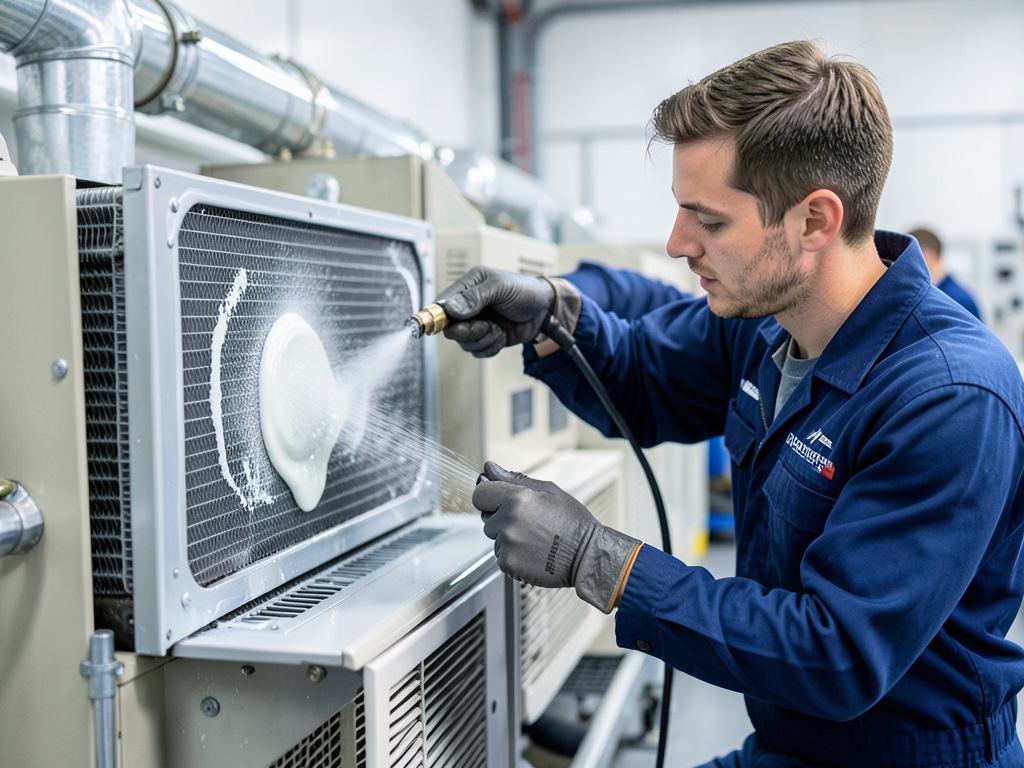
The most effective corrosion prevention combines multiple barriers. No single solution stops all salt-air damage, but together they can extend equipment life by 10+ years.
Marine-Grade Coil Coatings
Factory-applied coatings like Blygold Polibrid or Heresite P-413 create a 25-50 micron polymer layer over entire coil assemblies. The process involves chemical etching to clean the surface, then electrostatic application of the coating, followed by heat curing. These coatings flex with thermal expansion, resist UV degradation, and maintain 85-90% of original heat transfer efficiency. Cost: $400-800 per unit, but they pay for themselves in extended equipment life.
Sacrificial Anodes
Zinc anodes work like those on boat hulls. They corrode preferentially, protecting aluminum and copper components. A 6-inch zinc bar bolted to the condenser cabinet can provide 5-7 years of protection in coastal conditions. The anode must be replaced when it’s 50% consumed, which requires periodic inspection. This low-cost ($50-100) addition prevents the most expensive damage.
Stainless Steel Hardware
Standard condenser hardware uses galvanized steel, which fails quickly in salt-air. Replacing bolts, brackets, and service valves with 316 stainless steel (marine grade) costs $100-200 but eliminates a major corrosion point. The hardware also resists the expansion and contraction that breaks cheaper fasteners over time.
Elevated Mounting Pads
Condensers sitting directly on concrete pads trap moisture and debris underneath. Elevating the unit on rubber isolation mounts or composite stands improves drainage and air circulation. This simple change can reduce bottom-panel corrosion by 70% and makes coil rinsing much more effective.
DIY Maintenance That Prevents Expensive Repairs
Regular maintenance won’t stop corrosion entirely, but it can slow it dramatically. The key is removing salt deposits before they can form electrolytic solutions.
Monthly Rinsing Protocol
During fog season (May through October), rinse your condenser with fresh water every 4-6 weeks. Use a garden hose with moderate pressure—no pressure washers, which can bend fins. Spray from the top down, ensuring water flows through the coil from inside to outside. This flushes out salt crystals and debris. Pay special attention to the area where the coil meets the cabinet, as salt accumulates there.
Coil Cleaning Frequency
Beyond rinsing, deep cleaning twice yearly removes the biofilm and mineral deposits that trap moisture. Use a foaming coil cleaner designed for aluminum fins. Apply, let sit for 10 minutes, then rinse thoroughly. This process also reveals early corrosion signs like white powdery deposits or blue-green copper oxidation.
Clearance Maintenance
Keep at least 24 inches of clearance around your condenser. Overgrown plants trap moisture and block airflow, creating humid micro-environments where corrosion accelerates. Trim vegetation back and remove any debris accumulation on or around the unit. Check that drain holes in the base pan aren’t clogged—standing water is corrosion’s best friend.
Electrical Inspection
Corroded electrical connections cause voltage drops that make compressors work harder. Every spring, inspect wire terminals for green corrosion or white oxidation. Clean with a wire brush and apply dielectric grease. Check that the disconnect box closes tightly—moisture entering here can corrode contact points within months.
Cost-Benefit Analysis: When to Coat vs. Replace
The decision between applying protective coatings or replacing an aging unit depends on several factors. Here’s a framework for making the right choice.
| Unit Age | Current Efficiency | Coating Cost | Replacement Cost | Recommended Action |
|---|---|---|---|---|
| 0-5 years | 14+ SEER | $400-800 | $3,500-5,000 | Apply marine coating |
| 5-10 years | 12-14 SEER | $400-800 | $3,000-4,500 | Coat if no major corrosion |
| 10-15 years | 10-12 SEER | $400-800 | $2,500-4,000 | Replace with high-efficiency |
| 15+ years | 8-10 SEER | $400-800 | $2,000-3,500 | Replace immediately |
Units under 5 years with no visible corrosion almost always benefit from coating. The $600 investment can add 8-10 years to a $4,000 system. Between 5-10 years, the math gets closer. If your unit shows any pitting or the fins feel brittle, replacement often makes more sense. The energy savings from a new 16-18 SEER unit can offset much of the replacement cost over 5 years.
Units over 10 years old face a different equation. Even with perfect corrosion protection, the compressor and other components are nearing end-of-life. A new unit with variable-speed technology and smart controls will use 30-40% less electricity while providing better comfort. In Twin Peaks’ climate, where AC runs sporadically but needs to work perfectly when it does, reliability often trumps keeping an old system alive.
Environmental Factors That Accelerate Corrosion in Twin Peaks
Beyond salt and moisture, several local conditions make Twin Peaks particularly harsh on HVAC equipment. Understanding these helps you choose the right protection level.
Temperature Swings
Twin Peaks experiences wider temperature variations than surrounding neighborhoods. Summer afternoons can hit 85°F, while nights drop to 55°F. This 30-degree swing causes metal components to expand and contract, stressing protective coatings and creating microscopic cracks where moisture penetrates. Units in more stable climates don’t face this thermal cycling stress.
Wind Erosion
Constant winds, especially from the northwest, carry abrasive particles that wear away surface finishes. This erosion is gradual but relentless. A unit that might last 15 years in a sheltered location might fail at 8 years in Twin Peaks simply from surface degradation. The erosion also removes any DIY protective sprays homeowners might apply, making professional coatings more cost-effective long-term.
Air Quality Factors
San Francisco’s air contains more than just salt. Vehicle emissions, construction dust, and occasional wildfire smoke all contribute to corrosive deposits. These pollutants often have acidic components that accelerate metal degradation. During fire season, ash particles can settle on coils and, when combined with fog moisture, create mild acid solutions that eat through protective finishes.
Warning Signs That Your Unit Needs Immediate Attention
Corrosion often starts before homeowners notice performance issues. Here are the early warning signs that indicate your Twin Peaks HVAC unit needs professional evaluation.
Visual Indicators
White, chalky deposits on aluminum fins signal early chloride corrosion. Blue-green deposits on copper tubing indicate acid corrosion. Rust streaks running down the cabinet from mounting bolts suggest galvanic corrosion. Any of these signs appearing within the first 3-5 years of installation indicates an aggressive environment that needs enhanced protection.
Performance Issues
Units running longer to achieve the same cooling, higher energy bills without increased usage, or inconsistent cooling across rooms all suggest heat transfer problems from corroded coils. A simple temperature split test (measuring air temp difference across the coil) can confirm this. A healthy system shows 15-20°F split; anything less indicates restricted heat transfer.
Refrigerant Behavior
Systems that need annual refrigerant top-offs likely have formicary corrosion creating pinhole leaks. Unlike catastrophic leaks that show up immediately, formicary leaks lose ounces over months. The refrigerant loss forces the compressor to work harder, which generates more heat and accelerates corrosion in a vicious cycle.
Frequently Asked Questions
How long does marine-grade coating last on coastal HVAC units?
Quality marine coatings like Blygold or Heresite typically last 7-10 years in San Francisco’s coastal environment. Factors affecting longevity include exposure level, maintenance frequency, and whether the coating was professionally applied. Annual inspections can catch areas where the coating is thinning before corrosion penetrates.
Can I apply corrosion protection myself?
DIY spray coatings provide minimal protection and often void manufacturer warranties. Professional coatings require surface preparation, controlled application environments, and proper curing that homeowners can’t replicate. The $50-100 cost savings isn’t worth the risk of trapping moisture under poorly applied coating, which accelerates corrosion. EPA Clean Air Act standards.
Does corrosion protection affect HVAC efficiency?
Quality marine coatings reduce efficiency by only 3-5% when new, compared to 15-20% loss from corrosion damage. The net effect is positive—protected units maintain efficiency longer. Some newer coatings are engineered to enhance heat transfer while providing protection, actually improving performance slightly.
Should I replace my old unit with a coastal-rated model?
If your unit is over 10 years old or shows significant corrosion, upgrading to a coastal-rated model makes sense. These units come from the factory with enhanced protection, better materials, and often higher efficiency. The energy savings combined with longer life expectancy typically provide 3-5 year payback.
How does Twin Peaks’ elevation affect corrosion compared to lower neighborhoods?
Twin Peaks’ elevation exposes units to stronger winds and more direct salt spray. The increased wind velocity raises the “salt creep” distance—how far inland salt particles travel. Units at sea level in the Sunset might get salt spray from immediate ocean proximity, but Twin Peaks units get continuous exposure from prevailing winds plus fog moisture, creating a more corrosive environment.
Call (628) 201-6600 today to schedule your inspection. We’ll test your unit’s current condition and recommend the right protection level for Twin Peaks’ unique wind and moisture exposure.
Don’t wait until corrosion forces an expensive emergency replacement. A simple inspection now can identify problems while they’re still manageable. Our technicians understand Twin Peaks’ specific challenges and can recommend solutions that actually work in this unique microclimate. Pick up the phone and call (628) 201-6600 before the next fog rolls in. For more information, visit ASHRAE HVAC standards.
{
“@context”: “https://schema.org”,
“@type”: “BlogPosting”,
“headline”: “Fighting Rust and Corrosion on Outdoor HVAC Units in Windy Neighborhoods Like Twin Peaks”,
“description”: “Salt air and wind damage outdoor HVAC units in Twin Peaks. Learn how San Francisco’s coastal conditions accelerate corrosion and what professional protection works best.”,
“wordCount”: 2224,
“datePublished”: “2026-06-01T13:54:00.000Z”,
“dateModified”: “2026-06-01T13:54:00.000Z”,
“inLanguage”: “en-US”,
“mainEntityOfPage”: {
“@type”: “WebPage”,
“@id”: “https://atlashvacsanfrancisco.com”
},
“publisher”: {
“@type”: “LocalBusiness”,
“name”: “Atlas HVAC San Francisco”,
“url”: “https://atlashvacsanfrancisco.com”
},
“author”: {
“@type”: “Organization”,
“name”: “Atlas HVAC San Francisco”,
“url”: “https://atlashvacsanfrancisco.com”
},
“image”: {
“@type”: “ImageObject”,
“url”: “https://atlashvacsanfrancisco.com/wp-content/uploads/2026/03/fighting-rust-and-corrosion-on-outdoor-hvac-units-1.png”
}
}
{
“@context”: “https://schema.org”,
“@type”: “HVACBusiness”,
“name”: “Atlas HVAC San Francisco”,
“url”: “https://atlashvacsanfrancisco.com”,
“address”: {
“@type”: “PostalAddress”,
“addressLocality”: “San Francisco”
},
“areaServed”: {
“@type”: “City”,
“name”: “San Francisco”
}
}
{
“@context”: “https://schema.org”,
“@type”: “FAQPage”,
“mainEntity”: [
{
“@type”: “Question”,
“name”: “How long does marine-grade coating last on coastal HVAC units?”,
“acceptedAnswer”: {
“@type”: “Answer”,
“text”: “Quality marine coatings like Blygold or Heresite typically last 7-10 years in San Francisco’s coastal environment. Factors affecting longevity include exposure level, maintenance frequency, and whether the coating was professionally applied. Annual inspections can catch areas where the coating is thinning before corrosion penetrates.”
}
},
{
“@type”: “Question”,
“name”: “Can I apply corrosion protection myself?”,
“acceptedAnswer”: {
“@type”: “Answer”,
“text”: “DIY spray coatings provide minimal protection and often void manufacturer warranties. Professional coatings require surface preparation, controlled application environments, and proper curing that homeowners can’t replicate. The $50-100 cost savings isn’t worth the risk of trapping moisture under poorly applied coating, which accelerates corrosion. EPA Clean Air Act standards.”
}
},
{
“@type”: “Question”,
“name”: “Does corrosion protection affect HVAC efficiency?”,
“acceptedAnswer”: {
“@type”: “Answer”,
“text”: “Quality marine coatings reduce efficiency by only 3-5% when new, compared to 15-20% loss from corrosion damage. The net effect is positive—protected units maintain efficiency longer. Some newer coatings are engineered to enhance heat transfer while providing protection, actually improving performance slightly.”
}
},
{
“@type”: “Question”,
“name”: “Should I replace my old unit with a coastal-rated model?”,
“acceptedAnswer”: {
“@type”: “Answer”,
“text”: “If your unit is over 10 years old or shows significant corrosion, upgrading to a coastal-rated model makes sense. These units come from the factory with enhanced protection, better materials, and often higher efficiency. The energy savings combined with longer life expectancy typically provide 3-5 year payback.”
}
},
{
“@type”: “Question”,
“name”: “How does Twin Peaks’ elevation affect corrosion compared to lower neighborhoods?”,
“acceptedAnswer”: {
“@type”: “Answer”,
“text”: “Twin Peaks’ elevation exposes units to stronger winds and more direct salt spray. The increased wind velocity raises the \”salt creep\” distance—how far inland salt particles travel. Units at sea level in the Sunset might get salt spray from immediate ocean proximity, but Twin Peaks units get continuous exposure from prevailing winds plus fog moisture, creating a more corrosive environment.”
}
}
]
}
{
“@context”: “https://schema.org”,
“@type”: “BreadcrumbList”,
“itemListElement”: [
{
“@type”: “ListItem”,
“position”: 1,
“name”: “Home”,
“item”: “https://atlashvacsanfrancisco.com”
},
{
“@type”: “ListItem”,
“position”: 2,
“name”: “Blog”,
“item”: “https://atlashvacsanfrancisco.com/blog”
},
{
“@type”: “ListItem”,
“position”: 3,
“name”: “Fighting Rust and Corrosion on Outdoor HVAC Units in Windy Neighborhoods Like Twin Peaks”
}
]
}
{
“@context”: “https://schema.org”,
“@type”: “Service”,
“serviceType”: “HVAC”,
“provider”: {
“@type”: “LocalBusiness”,
“name”: “Atlas HVAC San Francisco”,
“url”: “https://atlashvacsanfrancisco.com”
},
“areaServed”: {
“@type”: “City”,
“name”: “San Francisco”
},
“description”: “Salt air and wind damage outdoor HVAC units in Twin Peaks. Learn how San Francisco’s coastal conditions accelerate corrosion and what professional protection works best.”
}