




menu

Troubleshooting AC Issues in San Francisco – Expert Diagnostics That Find the Real Problem Fast

When your air conditioner fails in San Francisco's unpredictable microclimates, accurate troubleshooting AC issues separates a quick fix from recurring breakdowns and wasted money on guesswork repairs.

Slider Image 1
Slider Image 2
Slider Image 3
Slider Image 4
Slider Image 5
Slider Image 7
Slider Image 8
Slider Image 9
Slider Image 10
Slider Image 11

Why San Francisco Air Conditioners Fail in Ways Most Techs Miss

San Francisco's fog belt creates a unique problem for central air systems. You wake up to 55-degree marine layer mornings, then by 2 PM, the Mission District hits 85 degrees while the Sunset stays at 62. Your AC system cycles on and off constantly, trying to compensate for temperature swings that can reach 30 degrees in six blocks.

This constant cycling wears down capacitors, contactors, and compressor bearings faster than in climate-stable regions. Most HVAC techs trained in Sacramento or the Central Valley do not understand how coastal moisture interacts with refrigerant pressures. They see a tripped breaker and replace it without diagnosing air conditioner problems at the root level.

Identifying AC faults in San Francisco requires understanding how salt air from the Pacific corrodes condenser coils differently than inland oxidation. The copper tubing on units near Ocean Beach shows pitting after just five years. A tech who does not know to check for microleaks will tell you the system is fine, then you are calling again in three weeks when refrigerant levels drop.

HVAC system diagnostics here must account for the thermal stress of 15-degree temperature differentials between your living room and bedroom. Victorian homes with original ductwork create back-pressure issues that trigger safety switches. Without proper central air troubleshooting that factors in San Francisco's building stock, you get Band-Aid fixes that fail when the next heatwave hits Noe Valley.

The air conditioning troubleshooting guide your system needs is not the one written for Phoenix or Houston.

Why San Francisco Air Conditioners Fail in Ways Most Techs Miss
How Atlas HVAC Diagnoses Problems Other Companies Call Mysterious

How Atlas HVAC Diagnoses Problems Other Companies Call Mysterious

We start every diagnostic with differential pressure readings across your evaporator coil and condenser. Most companies skip this step. They check if the fan spins and call it good. Pressure drop tells us if your coil is partially blocked with biological growth from San Francisco's humidity, which reduces airflow by 30 percent before you notice weak cooling.

Next, we measure superheat and subcool at the service ports. These refrigerant measurements reveal if your system has the correct charge for the current ambient temperature. A system that works fine at 70 degrees will short-cycle at 85 degrees if subcool is off by even 3 degrees. We adjust for San Francisco's elevation and the fact that your outdoor unit sits in a shaded courtyard that stays 10 degrees cooler than rated test conditions.

We pull amp draw on the compressor and compare it against the nameplate rating. A compressor drawing 2 amps over spec is failing, but it will still run for months while driving your electric bill up 40 percent. We catch this before the windings burn out and you face a full replacement.

Our technicians check static pressure in your duct system with a manometer. San Francisco homes built before 1950 often have undersized return plenums. Your system cannot pull enough air, so the evaporator coil freezes. Most techs see ice and say you need refrigerant. We measure the actual CFM and find you need duct modification.

We test capacitor microfarads under load, not just with a cheap meter. A weak capacitor passes a static test but fails when the compressor starts. We document voltage drop at your disconnect under full load to identify failing breakers before they strand you during September heat.

What Happens During Your AC Diagnostic Appointment

Troubleshooting AC Issues in San Francisco – Expert Diagnostics That Find the Real Problem Fast
01

System Performance Baseline

We arrive and immediately take supply and return air temperature readings at each register. This tells us if you have a refrigerant issue, an airflow problem, or a duct leak before we open any panels. We document your thermostat differential and how long the system runs to satisfy a call for cooling. These numbers create a diagnostic baseline that reveals patterns most companies miss.
02

Component-Level Testing

We test every electrical component with calibrated instruments. Contactors, capacitors, transformers, and safety switches all get measured under operating conditions. We check refrigerant pressures on both the suction and discharge sides while the system runs through a complete cooling cycle. We inspect the condenser coil for the salt air corrosion common near the Pacific and check drain lines for the algae buildup that thrives in San Francisco's moisture.
03

Detailed Findings Report

You get a written report with all measurements, photos of problem areas, and a prioritized repair list. We separate urgent safety issues from efficiency problems and deferred maintenance. You see exactly what is wrong, why it is happening, and what it costs to fix each item. No surprise charges, no upselling. Just the information you need to make a smart decision about your system.

Why San Francisco Property Owners Choose Atlas HVAC for Diagnostics

We have diagnosed AC systems in every San Francisco microclimate, from the fog-locked Outer Sunset to the heat island of SoMa. We know how Richmond District units behave differently than Potrero Hill systems. That geographic knowledge matters when identifying AC faults because the same symptom has different causes in different neighborhoods.

Our technicians understand San Francisco's Title 24 energy code requirements for existing buildings. When you need duct modifications or refrigerant changes, we know what the city inspectors will approve and what triggers a permit requirement. We have worked with the Department of Building Inspection enough times to navigate their process without delays.

We stock parts for the systems common in San Francisco buildings. Your 1920s building probably has a Carrier or Trane unit with components that take three days to order elsewhere. We keep contactors, capacitors, and reversing valves for these older models because half of San Francisco's housing stock predates 1940. You get same-day repairs instead of waiting for freight from the Central Valley.

Atlas HVAC techs receive ongoing training in heat pump diagnostics. As more San Francisco buildings switch from gas furnaces to electric heat pumps for heating and cooling, you need a company that understands reversing valves, defrost cycles, and auxiliary heat staging. Most companies here still treat heat pumps like rare equipment. We install and service them daily.

We provide flat-rate diagnostic pricing before we arrive. You know the cost upfront. If we find multiple problems, we give you options ranked by priority. You decide what to fix now and what can wait. We do not pressure you into unnecessary repairs or replacement systems you do not need yet.

What to Expect When You Schedule AC Troubleshooting

Same-Day Diagnostic Appointments Available

We schedule most diagnostics within 24 hours of your call. If your AC fails during a heatwave, we prioritize emergency diagnostics and can often arrive same-day. Our techs carry full diagnostic equipment in every truck, so we complete the assessment in one visit. You get answers fast, not a callback after we order a special tool. Average diagnostic time runs 60 to 90 minutes depending on system complexity and access challenges in older buildings.

Comprehensive System Assessment

Our diagnostic goes beyond the obvious problem. We test airflow, measure refrigerant charge, check electrical components, inspect ductwork, and evaluate your thermostat operation. You learn about problems that have not caused a breakdown yet but will soon. We photograph corroded components, measure temperature splits, and document pressure readings. You receive a detailed report you can review later or share with property managers if you are a landlord diagnosing issues in a rental unit.

Accurate Problem Identification

We find the actual cause, not just the symptom. If your AC freezes up, we determine whether you have low refrigerant, restricted airflow, a failed expansion valve, or a control board issue. Each problem has a different fix and different cost. You do not pay for refrigerant if the real issue is a dirty coil. Our diagnostic accuracy means you fix the problem once instead of paying for multiple service calls that do not solve anything.

Transparent Repair Recommendations

After the diagnostic, we explain what we found in plain language. You get repair options with upfront pricing. We tell you which repairs are urgent, which improve efficiency, and which can wait until next season. If your system is near end of life, we give you honest guidance on whether repair makes sense or if replacement is smarter financially. We never pressure you into a new system if yours can be fixed properly and run reliably for several more years.

Frequently Asked Questions

You Have Questions,
We Have Answers

How do I diagnose what's wrong with my AC? +

Start by checking your thermostat settings and replacing the air filter. Verify the circuit breaker has not tripped. Listen for unusual sounds like grinding or clicking. Check if the outdoor unit is running and inspect for visible ice buildup on refrigerant lines. Feel the airflow at vents. Weak airflow suggests ductwork or blower issues. No cold air points to refrigerant problems or compressor failure. San Francisco's marine layer and coastal moisture can cause condensation issues that mimic refrigerant leaks. If basic checks do not reveal the problem, you need a technician with diagnostic tools to measure refrigerant pressures and electrical components.

What is the 3 minute rule for AC? +

The 3-minute rule prevents compressor damage by requiring a three-minute wait between shut-off and restart. When you turn off your AC, refrigerant pressure remains high in the system. Restarting immediately forces the compressor to work against this pressure, causing strain and potential failure. Modern thermostats have built-in delay timers, but older units do not. If you manually cycle your thermostat or experience power outages, wait three full minutes before restarting. This allows refrigerant pressure to equalize throughout the system. Ignoring this rule shortens compressor lifespan and leads to costly repairs.

What is the $5000 rule for AC? +

The $5000 rule helps you decide between repair and replacement. If your AC is over 10 years old, multiply the repair cost by the unit's age. If the result exceeds $5000, replace the system instead of repairing it. For example, a $600 repair on a 9-year-old unit equals $5400, suggesting replacement. This calculation accounts for declining efficiency, increasing repair frequency, and warranty coverage on new equipment. San Francisco's mild summers mean AC units often last longer than in hotter climates, but aging systems still lose efficiency and use outdated refrigerants that cost more.

How to figure out what's wrong with AC? +

Start with simple diagnostics before calling for service. Check the thermostat for correct settings and dead batteries. Replace the air filter if clogged. Inspect the outdoor unit for debris, vegetation, or obstructions blocking airflow. Listen for abnormal sounds like rattling, hissing, or clicking. Check vents for weak airflow or warm air. Look for ice on refrigerant lines or water pooling near the indoor unit. Test the circuit breaker and disconnect switch. If the unit runs but does not cool, you likely have refrigerant loss or compressor problems. Complex issues require pressure testing and electrical diagnostics that only certified technicians can perform safely.

Why is my AC set to 72 but reads 78? +

Your AC cannot reach the set temperature due to several factors. Check for a dirty filter restricting airflow or blocked vents. Your system may be undersized for the space or losing efficiency due to age. Refrigerant leaks reduce cooling capacity. Ductwork leaks in attics or crawl spaces waste cooled air. San Francisco's microclimates mean fog-belt homes stay cooler naturally, but southern neighborhoods face more heat. Poor insulation or air leaks around windows let heat infiltrate faster than your AC can compensate. If the gap persists after replacing the filter, you need a technician to check refrigerant levels and system capacity.

What is the most common AC problem? +

Dirty or clogged air filters cause most AC problems. Restricted airflow forces the system to work harder, freezing evaporator coils and overheating components. This leads to poor cooling, higher energy bills, and premature failure. Change filters every 30 to 90 days depending on household conditions. Homes with pets, smokers, or San Francisco's seasonal pollen need more frequent changes. Beyond filters, refrigerant leaks rank second. Low refrigerant reduces cooling capacity and damages the compressor. Electrical failures, capacitor issues, and thermostat malfunctions round out common problems. Regular maintenance catches these issues before they become expensive failures.

How cool should my house be if it's 100 outside? +

Expect your home to stay 15 to 20 degrees cooler than outside temperatures. On a 100-degree day, achieving 80 to 85 degrees indoors is realistic for most systems. Pushing your AC to reach 72 degrees strains the equipment and spikes energy costs. San Francisco rarely hits 100 degrees, but microclimates in neighborhoods like the Mission or Portola experience higher temperatures than coastal areas. Your cooling capacity depends on insulation quality, home size, AC unit capacity, and sun exposure. Close blinds, use ceiling fans, and avoid heat-generating activities during peak afternoon hours to help your system keep up.

What are signs of a failing AC compressor? +

A failing compressor shows several warning signs before total failure. Listen for hard-starting sounds, loud clanking, or grinding noises when the outdoor unit kicks on. The compressor may cycle on and off rapidly without cooling the home. You might notice the circuit breaker tripping repeatedly. Warm air blowing from vents despite correct thermostat settings indicates compressor struggles. Look for the outdoor unit vibrating excessively or not running at all. Compressor failure often stems from electrical issues, refrigerant problems, or age. Replacement costs are high, often justifying full system replacement on units over 10 years old.

Why is my AC blowing cool but not cold? +

Cool but not cold air suggests low refrigerant levels, a dirty evaporator coil, or incorrect thermostat settings. Check your thermostat mode and lower the temperature setting to test responsiveness. Replace the air filter and inspect the outdoor unit for debris. Low refrigerant from leaks reduces cooling capacity without stopping airflow entirely. A dirty evaporator coil blocks heat transfer. Ductwork leaks in unconditioned spaces lose cooling before air reaches vents. San Francisco's naturally cool evenings can mask this problem until afternoon heat arrives. If the issue persists after basic maintenance, you need a technician to check refrigerant charge and coil condition.

What is the life expectancy of an AC unit? +

AC units last 15 to 20 years with proper maintenance. San Francisco's mild climate extends equipment life compared to regions with extreme heat. However, coastal salt air accelerates corrosion on outdoor units in neighborhoods near the ocean. Annual maintenance, regular filter changes, and prompt repairs prevent premature failure. Systems installed before 2010 use R-22 refrigerant, now phased out and expensive to refill. Age reduces efficiency even if the unit still runs. Most manufacturers recommend replacement after 15 years due to declining performance and increased repair costs. Energy-efficient models pay for themselves through lower utility bills.

How San Francisco's Microclimate Variability Complicates AC Diagnostics

Your AC unit operates in conditions that swing wildly within hours. The Sunset District sits in fog while the Mission bakes. This creates condensation cycling that breeds mold in evaporator coils and drain pans. Salt-laden Pacific air corrodes copper tubing faster than anywhere else in California. Central air troubleshooting must account for these factors or you will replace components that fail prematurely. Standard diagnostic procedures written for stable climates miss the refrigerant charge issues caused by 30-degree temperature swings between neighborhoods. HVAC system diagnostics in San Francisco require understanding how marine layer moisture interacts with indoor humidity levels in poorly insulated Victorian buildings.

Atlas HVAC has serviced systems across every San Francisco district for years. We understand how Pacific Heights units behave differently than Bayview systems. We know which inspectors enforce Title 24 strictly and which ones accept practical compromises in pre-1950 buildings. Our techs recognize the ductwork configurations common in San Francisco's Edwardian flats and know where builders hid access panels in Mission District apartments. This local knowledge speeds diagnosis and prevents the trial-and-error approach that costs you extra service calls. When you need air conditioning troubleshooting that accounts for San Francisco's unique building stock and climate patterns, local expertise matters more than brand name recognition.
HVAC Services in The San Francisco Area

While we provide mobile service across the entire San Francisco area, you can locate our main office and service dispatch hub on the map below. We are proud to serve all neighborhoods, from the Financial District to the Sunset and Richmond areas, ensuring swift response times for all your heating and cooling needs. Feel free to stop by our location or easily invite our professional team to your residential or commercial property for a consultation.

Address:
Atlas HVAC San Francisco, 1390 Market St, San Francisco, CA, 94102

Additional Services We Offer

Our news updates

Latest Articles & News from The Blogs

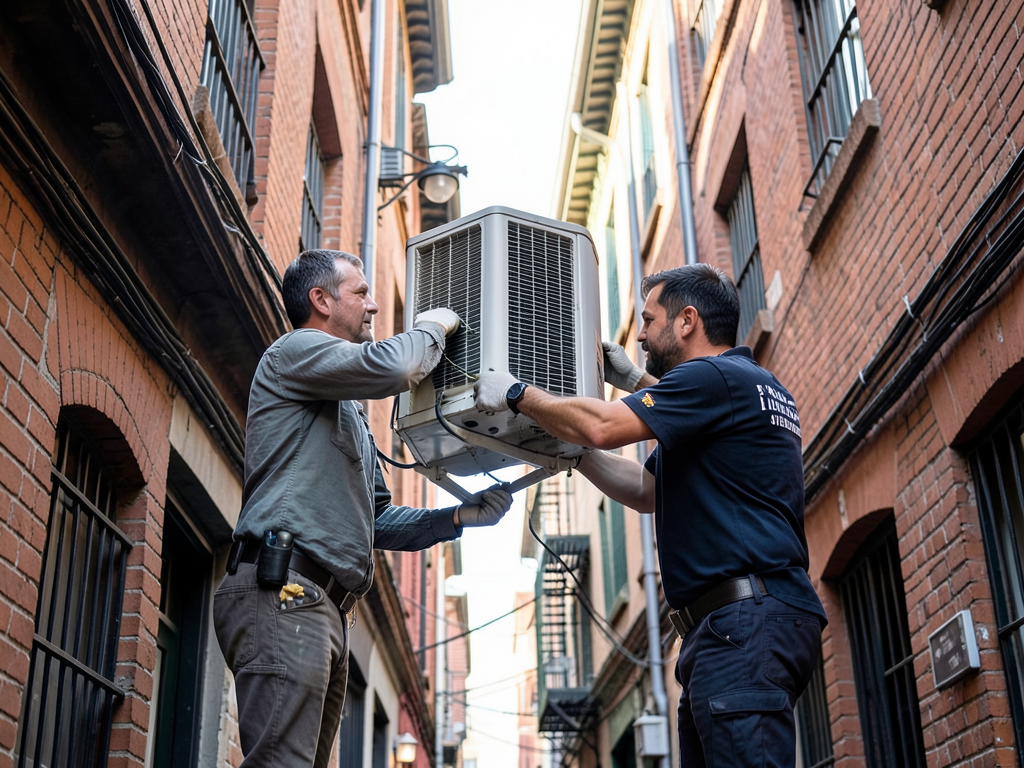
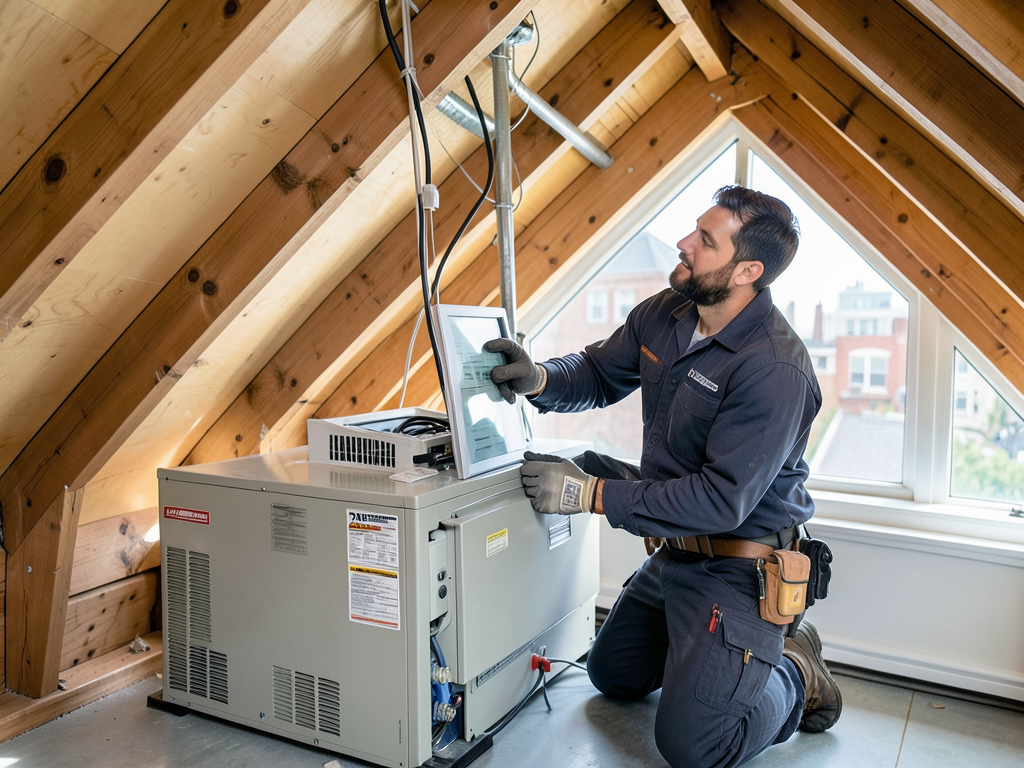
Heating and Cooling Solutions for Sunnyside Attic and Basement Conversions Converting your Sunnyside attic or basement into livable space requires…

Heating and Cooling Solutions for Sunnyside Attic and Basement Conversions

Heating and Cooling Solutions for Sunnyside Attic and Basement Conversions Converting your Sunnyside attic or basement into livable space requires…

Pairing Your San Francisco Solar Panels with a High Efficiency Heat Pump

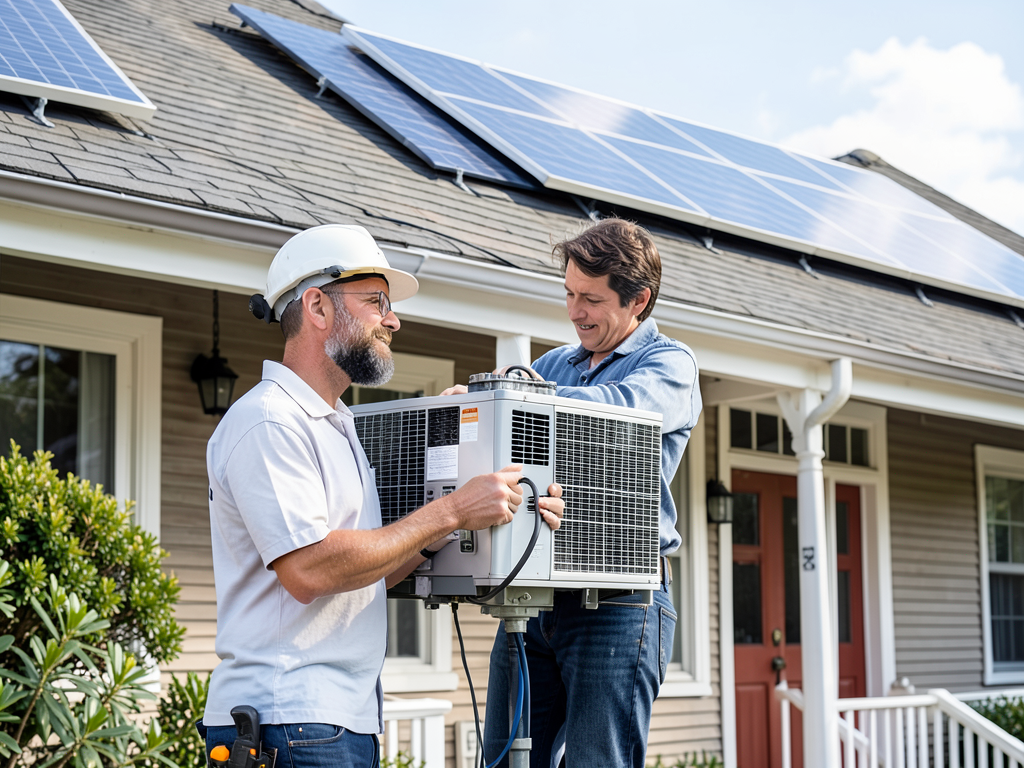
Pairing Your San Francisco Solar Panels with a High Efficiency Heat Pump If you have solar panels on your San…

Energy Efficient HVAC Upgrades for Small Businesses in Chinatown

Energy Efficient HVAC Upgrades for Small Businesses in Chinatown Small businesses in San Francisco's Chinatown face unique challenges when it…

Contact Us

Stop guessing what is wrong with your air conditioner. Call Atlas HVAC at (628) 201-6600 now for expert troubleshooting that finds the real problem. We schedule same-day diagnostics and provide upfront pricing before we start.