



menu

Holiday Heating Repair in San Francisco – Emergency HVAC Service Dispatched in Under 60 Minutes

Your furnace doesn't pick convenient times to fail. When your heat goes out on Thanksgiving, Christmas, or New Year's, United HVAC Kansas City has HVAC technicians standing by 24/7 to restore warmth to your San Francisco home fast.

Slider Image 1
Slider Image 2
Slider Image 3
Slider Image 4
Slider Image 5
Slider Image 7
Slider Image 8
Slider Image 9
Slider Image 10
Slider Image 11

Why Your Furnace Fails on the Worst Possible Day

You wake up Christmas morning to a cold house. The thermostat reads 58 degrees. Your guests arrive in four hours. This is not a coincidence.

Holiday heating failures spike in San Francisco for predictable reasons. Furnaces sit idle during our mild fall months, then suddenly run nonstop when that first real cold snap hits in late November or December. Dust accumulates on heat exchangers. Igniters corrode. Blower motors seize after months of dormancy. When you finally fire up the system for extended operation during Thanksgiving week, all those dormant problems surface at once.

San Francisco's marine layer creates another issue. Coastal humidity causes condensation inside ductwork and on electrical components. When you need emergency holiday furnace repair, it's often because moisture has shorted a control board or corroded a flame sensor. These failures happen fast once the system runs continuously.

The timing makes sense from a mechanical standpoint. Your furnace experiences the most thermal stress during the first 72 hours of sustained operation after a long idle period. That's exactly when families gather for holidays. You need after hours furnace repair because the failure happens outside business hours, when temperatures drop and runtime increases.

24 hour heating repair exists for this exact scenario. Your system doesn't care that it's a federal holiday. United HVAC Kansas City keeps technicians on call throughout San Francisco because heating emergencies follow patterns. We staff for the demand spikes that happen every Thanksgiving weekend, Christmas week, and New Year's Day. When you search for heating repair open on holidays, you find us because we planned for your emergency before it happened.

Why Your Furnace Fails on the Worst Possible Day
How We Diagnose and Fix Holiday Heating Failures

How We Diagnose and Fix Holiday Heating Failures

Emergency heating repair service requires a different approach than scheduled maintenance. You need answers in minutes, not hours.

Our technicians carry full diagnostic equipment in every truck. We start with differential pressure testing across the heat exchanger to check for cracks or blockages. A manometer reading tells us immediately if you have airflow problems or a compromised exchanger. We check flame rollout switches, limit switches, and pressure switches with a multimeter before we even look at the ignition system.

Most holiday furnace failures trace to three components: the hot surface igniter, the flame sensor, or the inducer motor. We test each in sequence. A failing hot surface igniter shows resistance outside the 40-80 ohm range. A fouled flame sensor reads below 1 microamp DC during operation. An inducer motor pulling more than nameplate amperage indicates bearing failure.

San Francisco's older housing stock means we see a lot of standing pilot systems and early electronic ignition models. These require different diagnostic protocols than modern two-stage variable-speed furnaces. A technician who doesn't understand the difference between a millivolt system and a 24-volt control circuit will waste your time on holidays.

We stock common failure parts on every emergency truck. Igniters, flame sensors, control boards, blower capacitors, and gas valves go in the vehicle before the shift starts. When we diagnose a failed component, we fix it on the spot. No waiting for parts to arrive on the next business day.

The goal is restoration, not just diagnosis. United HVAC Kansas City trains technicians to think like engineers under pressure. We troubleshoot based on symptom patterns and failure probabilities. That's how we get your heat back on while other companies are still running diagnostic cycles.

What Happens When You Call for Emergency Holiday Service

Holiday Heating Repair in San Francisco – Emergency HVAC Service Dispatched in Under 60 Minutes
01

Immediate Phone Assessment

You reach a live person, not a voicemail system. Our dispatcher asks specific questions about your symptoms: Is the blower running? Do you smell gas? Is the thermostat calling for heat? These answers determine priority level and help the technician prepare. We dispatch within 10 minutes of your call and provide a realistic arrival window based on current San Francisco traffic conditions and technician location.
02

On-Site System Analysis

The technician arrives with a fully stocked truck and runs a complete diagnostic sequence. We check gas pressure at the manifold, measure voltage at the transformer, and test safety circuits with precision instruments. You receive a clear explanation of what failed and why. If multiple issues exist, we prioritize based on safety first, then functionality. You approve the repair scope before we start work.
03

Heat Restoration and Testing

After replacing failed components, we run the furnace through three complete heating cycles. We verify proper flame color, check temperature rise across the heat exchanger, and measure static pressure in the duct system. The system must operate correctly under load before we leave. You get heat back the same day we arrive, even on Christmas or Thanksgiving. No return trips required.

Why San Francisco Residents Choose United HVAC Kansas City for Holiday Emergencies

Emergency heating repair demands local knowledge. San Francisco's building codes and climate create specific challenges that out-of-area contractors miss.

Our technicians understand how the city's microclimates affect HVAC performance. A furnace in the Richmond District near Ocean Beach deals with constant salt air exposure. Sunset and Parkside homes face similar corrosion issues. Compare that to Noe Valley or Bernal Heights, where fog patterns create different condensation problems. We adjust our diagnostic approach based on your neighborhood because environmental factors change failure modes.

San Francisco's housing mix requires versatility. We service everything from Victorian flats with gravity furnaces to new construction condos with high-efficiency modulating systems. Many holiday calls come from multi-unit buildings where one furnace serves multiple flats. These shared systems require coordination with property managers and an understanding of tenant rights during heating outages. We handle the complexity so you don't have to.

The city's permit requirements matter during emergencies. If your furnace is beyond repair, we know which replacements need Department of Building Inspection permits and which fall under minor repair exemptions. We pull permits on holidays when necessary and know the emergency inspection protocols. That knowledge prevents delays when you need heat immediately.

United HVAC Kansas City keeps emergency inventory specifically for San Francisco's common furnace models. We stock parts for Rheem, Goodman, Carrier, and Trane units because those brands dominate local installations. When we say we fix it the same day, we have the components to back that claim.

Local expertise means faster repairs. Our technicians drive San Francisco routes daily. We know which streets flood during winter storms and which neighborhoods experience traffic congestion during holiday events. That routing knowledge cuts response times when minutes matter.

What to Expect When You Need Holiday Heating Repair

Response Time and Availability

We dispatch technicians within one hour of your call, every day of the year. That includes Thanksgiving, Christmas Day, New Year's Day, and every other holiday. Our average arrival time runs 45-90 minutes depending on your San Francisco location and current call volume. We staff extra technicians during known high-demand periods like the week between Christmas and New Year's. You receive text updates with technician location and estimated arrival time. If weather or traffic creates delays, we communicate immediately. Emergency service means we arrive when you need us, not when it's convenient for us.

Diagnostic Process and Transparency

The diagnostic fee covers the first hour of labor and includes complete system testing. Our technician will show you the failed component and explain what caused the failure. You receive a written estimate before any repair work begins. We don't sell you a new furnace when a $200 part fixes the problem. Honest diagnosis matters more during emergencies because you're making decisions under stress. We take photos of failed parts and damaged components so you understand exactly what broke. If your furnace needs replacement rather than repair, we explain why and provide options that fit your budget and timeline.

Repair Quality and Parts

Every repair uses OEM or equivalent-quality parts designed for your specific furnace model. We don't install generic components that fail prematurely. Our trucks carry the most common failure parts for systems installed throughout San Francisco. When we replace a control board or gas valve, you get the correct part, not a workaround. The repair is done right the first time. We test the complete heating cycle before we leave your property. Your furnace will run properly under full load, not just during a brief test cycle. You get heat back that lasts through winter.

Follow-Up and Service Records

After completing your holiday heating repair, we add your system to our service database. You receive a detailed invoice showing all work performed, parts installed, and system test results. We keep permanent records of your furnace model, age, and repair history. This information helps during future service calls because technicians arrive knowing your system's background. We follow up within 48 hours to confirm your heat is still working properly. If any issue appears with the repair, we return at no additional charge. Our work stands on its own merit, holiday emergency or not.

Frequently Asked Questions

You Have Questions,
We Have Answers

What are common holiday heating problems? +

During holidays, heating systems fail from neglect and overuse. Dirty filters restrict airflow, forcing your furnace to work harder. Pilot lights blow out from drafts or dust buildup. Thermostats fail when batteries die or wiring corrodes. Ignition systems malfunction after months of sitting idle. In San Francisco, salt air accelerates corrosion on outdoor heat pump components. Ductwork leaks from seasonal expansion and contraction. Blower motors burn out under continuous strain. Gas valves stick from inactivity. Circuit breakers trip when you run space heaters alongside your furnace. Do not wait until Christmas morning to discover your system is dead. Call for emergency repair immediately when you notice cold air or strange noises.

What is the $5000 rule for HVAC? +

The $5000 rule helps you decide between repair and replacement. Multiply your system age by the repair cost. If the result exceeds $5000, replace the unit instead of fixing it. Example: A 12-year-old furnace needs a $500 repair. 12 times 500 equals 6000. Replace it. This rule considers that older systems fail more often and waste energy. In San Francisco, where natural gas costs fluctuate and efficiency matters, a new high-efficiency furnace pays for itself faster than repeated repairs on an aging system. The rule is not perfect, but it prevents throwing money at a dying furnace. Get a second opinion before major repairs on systems over 10 years old.

Who to call when your heat stops working? +

Call a licensed HVAC contractor immediately when your heat stops working. Do not call a handyman or general contractor. You need a specialist who diagnoses furnace problems fast. Check your thermostat settings first. Verify your circuit breaker did not trip. Confirm your pilot light is lit. If those checks fail, call for emergency service. In San Francisco, many HVAC companies offer 24/7 emergency response during winter months. Ask about response times before you commit. A good contractor arrives within two hours for true emergencies. Do not wait overnight in a cold house. Prolonged cold damages pipes and creates health risks for children and elderly residents.

What is the highest paid HVAC worker? +

HVAC service managers and commercial specialists earn the highest wages, often exceeding $100,000 annually in San Francisco. Union journeymen in commercial settings earn $80,000 to $95,000. Residential techs with EPA certification and 10 years of experience earn $70,000 to $85,000. Specialized roles like building automation programmers or chiller techs command premium rates. Compensation reflects cost of living, which is extreme in the Bay Area. Overtime during emergency calls boosts earnings significantly. Licensing, certifications, and willingness to work holidays increase pay. The question matters less than finding a qualified tech who fixes your furnace correctly the first time, regardless of their salary bracket.

Why does my house feel cold at 73? +

Your house feels cold at 73 because of poor insulation, air leaks, or humidity issues. Cold surfaces radiate chill even when air temperature reads warm. Single-pane windows common in older San Francisco homes bleed heat. Drafts from unsealed doors and gaps around baseboards create cold spots. Low humidity makes air feel colder than it actually is. Your thermostat location matters. If it sits in a sunny spot or near a heat source, it reads warmer than the rest of your house. Ductwork leaks dump warm air into your attic or crawlspace. Your furnace may cycle off before heat distributes evenly. Check for these issues before cranking your thermostat higher and wasting energy.

What is the most expensive part to fix on a furnace? +

Heat exchangers cost the most to replace, ranging from $1500 to $3500 in parts and labor. This component transfers heat from combustion gases to your home air. Cracks develop from metal fatigue and corrosion. A cracked heat exchanger leaks carbon monoxide into your home, creating a life-threatening hazard. In San Francisco, salt air accelerates corrosion on these components. Most techs recommend full furnace replacement instead of heat exchanger replacement because labor costs are so high. The furnace must be completely disassembled. If your heat exchanger fails and your furnace is over 12 years old, replace the entire system. You avoid future breakdowns and gain efficiency improvements that cut your gas bills.

What is the life expectancy of a heating system? +

Furnaces last 15 to 20 years with proper maintenance. Heat pumps last 12 to 15 years. Boilers can reach 20 to 25 years. Lifespan depends on installation quality, maintenance frequency, and usage patterns. In San Francisco, mild winters reduce strain compared to extreme climates, potentially extending system life. Salt air from the Bay corrodes outdoor components faster. Annual maintenance catches small problems before they cascade into major failures. Dirty filters shorten lifespan dramatically by forcing components to work harder. If your system is over 15 years old and needs major repairs, replacement makes more financial sense. Newer systems use 30 percent less energy, paying for themselves over time through lower utility bills.

Is a new HVAC system tax deductible in 2025? +

Yes, the Energy Efficient Home Improvement Credit covers HVAC systems in 2025. You can claim 30 percent of equipment and installation costs, up to $2000 annually. Your new system must meet ENERGY STAR efficiency requirements. Heat pumps qualify for higher credits. Keep receipts and manufacturer certification statements for your tax filing. The credit applies to primary residences only, not rental properties. In San Francisco, where natural gas and electricity costs run high, the tax credit combined with energy savings makes upgrading financially smart. Consult a tax professional to verify your eligibility. This credit expires after 2032, so upgrading sooner maximizes your benefit and improves comfort during cold holiday seasons.

What is the 3 minute rule for air conditioners? +

The 3 minute rule prevents compressor damage by allowing refrigerant pressures to equalize before restart. After your air conditioner shuts off, wait three full minutes before turning it back on. Restarting too quickly forces the compressor to start against high pressure, burning out the motor. This rule applies to heat pumps operating in cooling mode. Many modern systems have built-in delay timers that enforce this automatically. In San Francisco, where you might switch between heating and cooling frequently during mild seasons, this protection matters. If you experience short cycling where your system turns on and off rapidly, call for service immediately. Short cycling damages your compressor and wastes energy.

What is the average cost to service a furnace? +

Furnace maintenance costs $100 to $200 in San Francisco. This includes filter replacement, burner cleaning, heat exchanger inspection, blower motor lubrication, and combustion analysis. Annual service catches problems early and maintains efficiency. Companies often offer maintenance plans that reduce per-visit costs and include priority emergency service. Skip maintenance and you risk carbon monoxide leaks, higher gas bills, and mid-winter breakdowns. Some plans include discounts on repairs. Schedule service in fall before heating season starts. Techs are less busy and can spend more time on your system. Maintenance extends furnace life by years and prevents expensive emergency calls during holidays when you need heat most and service costs more.

How San Francisco's Winter Fog Patterns Increase Holiday Heating Failures

San Francisco's marine layer creates unique problems for heating systems during winter months. When ocean fog rolls inland and temperatures drop into the 40s, condensation forms inside furnace cabinets and on cold metal surfaces. This moisture accelerates corrosion on flame sensors, shorts out circuit boards, and causes rust on heat exchangers. Systems in western neighborhoods like the Richmond and Sunset see higher failure rates because they face constant exposure to salt-laden fog. When you run your furnace continuously during cold holiday periods, that accumulated moisture triggers electrical failures and sensor malfunctions. Emergency holiday furnace repair calls spike during extended foggy periods because the combination of moisture and sustained operation creates the perfect failure condition.

United HVAC Kansas City has served San Francisco's residential heating needs for years. Our technicians understand how local weather patterns affect furnace performance. We know which components fail first in fog-prone areas and which neighborhoods experience the most corrosion issues. When you call for 24 hour heating repair, you get a technician who has fixed hundreds of systems throughout the city. We work with San Francisco's Department of Building Inspection regularly and stay current on local code requirements for heating equipment. That local expertise means faster, more accurate diagnosis when your furnace fails on a holiday. We are part of this community, and we prioritize keeping San Francisco homes warm when it matters most.
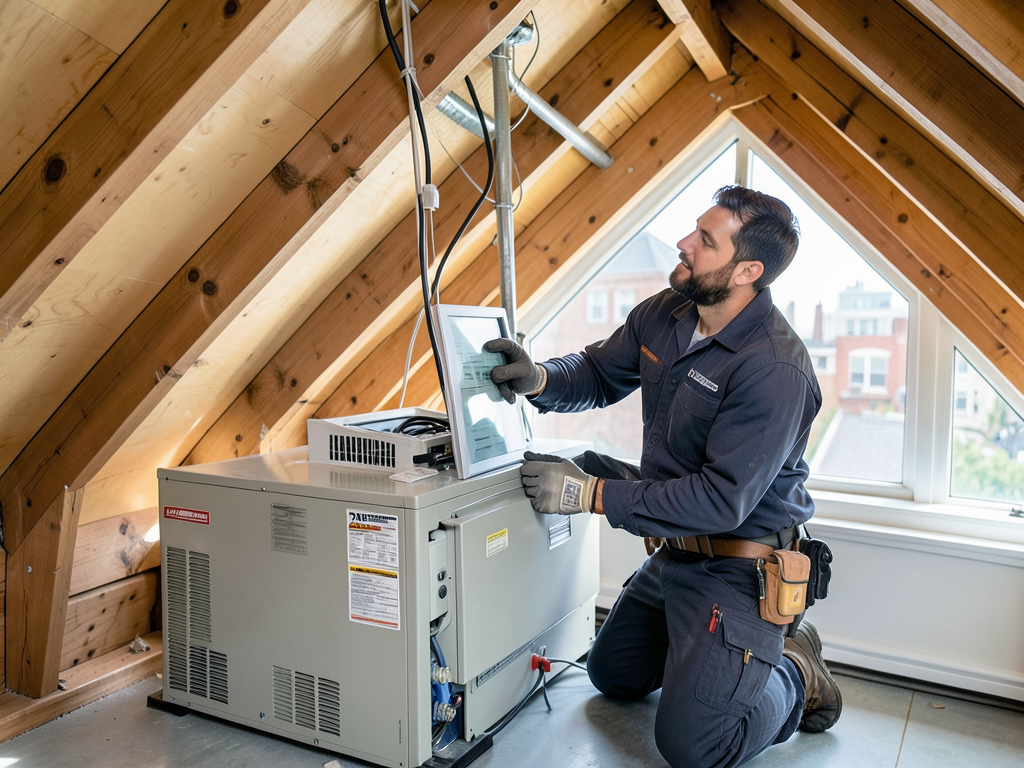
HVAC Services in The San Francisco Area

While we provide mobile service across the entire San Francisco area, you can locate our main office and service dispatch hub on the map below. We are proud to serve all neighborhoods, from the Financial District to the Sunset and Richmond areas, ensuring swift response times for all your heating and cooling needs. Feel free to stop by our location or easily invite our professional team to your residential or commercial property for a consultation.

Address:
Atlas HVAC San Francisco, 1390 Market St, San Francisco, CA, 94102

Additional Services We Offer

Our news updates

Latest Articles & News from The Blogs

Heating and Cooling Solutions for Sunnyside Attic and Basement Conversions Converting your Sunnyside attic or basement into livable space requires…

Heating and Cooling Solutions for Sunnyside Attic and Basement Conversions

Heating and Cooling Solutions for Sunnyside Attic and Basement Conversions Converting your Sunnyside attic or basement into livable space requires…

Pairing Your San Francisco Solar Panels with a High Efficiency Heat Pump

Pairing Your San Francisco Solar Panels with a High Efficiency Heat Pump If you have solar panels on your San…

Energy Efficient HVAC Upgrades for Small Businesses in Chinatown

Energy Efficient HVAC Upgrades for Small Businesses in Chinatown Small businesses in San Francisco's Chinatown face unique challenges when it…

Contact Us

Your family shouldn't spend the holiday in a cold house. Call United HVAC Kansas City now at (628) 201-6600. We have technicians ready to dispatch to your San Francisco location within the hour. Emergency heating repair service available 24/7, every holiday, every day of the year.