
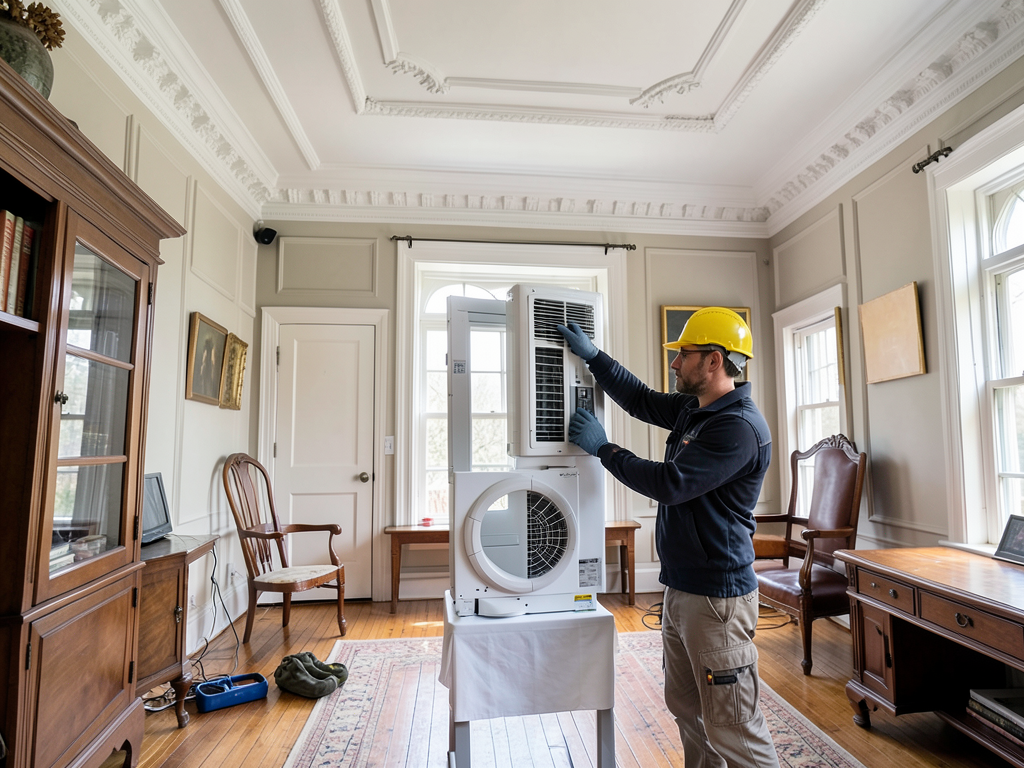
Cow Hollow’s Victorian homes are architectural treasures but keeping them warm is a constant battle. High ceilings create a physics problem: heat rises and leaves you shivering below. The stack effect pulls cold air in through old windows and sash frames while warm air escapes through the attic. In San Francisco’s mild but damp climate this means your parlor can feel 10 degrees cooler than the thermostat reading.
The solution isn’t just cranking up the heat. It’s understanding thermal stratification and installing systems that work with your home’s unique layout. You need targeted heating that pushes warmth down where you actually live not up where it disappears into the rafters. The Best Way to Install Heat Pumps in Historic San Francisco Victorians.
Why Your High Ceiling Victorian Feels Like a Walk-In Cooler
Thermal stratification happens when warm air forms layers with the hottest air at the ceiling. In a room with 12-foot ceilings that top layer can be 15 degrees warmer than the floor. The stack effect makes it worse by creating a continuous draft as cold air rushes in to replace rising warm air.
Cow Hollow Victorians built before 1920 have lath and plaster walls that offer minimal insulation. Original sash windows leak air even when closed. The combination means your heating system works overtime but the room still feels cold. Who to Call for 24 Hour Emergency Heating Repair in San Francisco.
Golden Nugget #1: San Francisco’s average winter humidity sits around 75% which makes cold feel colder through increased heat transfer from your body to the air. This is why 60 degrees in San Francisco feels colder than 60 degrees in a dry climate.
Modern Heating Solutions That Preserve Historic Charm
Ductless mini-split heat pumps offer the best balance of efficiency and preservation. These systems mount high on walls where they can push warm air down into the room. They eliminate the need for ductwork that would destroy original plaster and crown molding.
High-velocity HVAC systems use small flexible ducts that snake through walls without major demolition. They deliver heated air at high speed creating turbulence that mixes the air layers before stratification can occur.
Radiant floor heating provides invisible warmth perfect for Cow Hollow’s hardwood floors. Electric mats or hydronic tubes installed under flooring heat objects and people directly rather than trying to warm the air.
Golden Nugget #2: The California Energy Commission’s Title 24 building code requires minimum insulation levels even for historic renovations. In San Francisco that means R-13 in walls and R-30 in attics for new construction or major remodels.
Preserving Architectural Integrity During Installation
Installing modern HVAC in a Victorian requires surgical precision. Our technicians use thermal imaging cameras to map wall cavities before cutting. We identify lath and plaster thickness to avoid structural damage.
Exterior condenser units need careful placement to comply with San Francisco’s noise ordinances. Units must sit at least 5 feet from property lines and maintain 65 decibels or less at the nearest neighbor’s window.
We protect original woodwork by creating custom mounting brackets that distribute weight across multiple studs. This prevents stress cracks in century-old plaster that can occur with standard mounting hardware.
Golden Nugget #3: San Francisco’s building permit process for historic districts includes review by the Planning Department’s preservation division. Any visible equipment changes require approval and may need to match original exterior colors and materials.
Energy Efficiency and San Francisco Rebates
Heat pumps qualify for multiple incentives in San Francisco. The TECH Clean California program offers rebates up to $3,000 for heat pump installations. BayREN provides additional incentives for energy-efficient HVAC upgrades. Quiet and Efficient Furnace Replacement Options for Pacific Heights Residents.
PG&E offers time-of-use rates that make heat pumps even more economical. Running your system during off-peak hours can cut heating costs by 20% compared to standard rates. PG&E time-of-use rates.
Modern heat pumps achieve 300% efficiency by moving heat rather than creating it. For every watt of electricity they use they deliver three watts of heating power. This beats even the most efficient gas furnaces which top out around 98% efficiency.
The Hidden Factors Making Your Room Feel Cold
Bay windows are Cow Hollow’s signature feature but they’re also massive heat losers. Original single-pane glass has an R-value of about 1 compared to modern windows at R-3 to R-5. That means your bay window loses heat 3 to 5 times faster than an insulated wall.
Ceiling fans aren’t just for summer. Running them clockwise at low speed in winter pushes rising warm air back down along walls and into the room. This simple trick can raise floor-level temperatures by 3 to 5 degrees.
Humidity control matters more than you think. Dry air feels colder because moisture evaporates from your skin faster. A whole-house humidifier can make 65 degrees feel like 70 degrees by maintaining optimal 30-50% relative humidity.
Cost Comparison: Heat Pumps vs Traditional Systems
| System Type | Installation Cost | Annual Operating Cost | Efficiency |
|---|---|---|---|
| Ductless Mini-Split | $5,500 – $8,000 | $450 – $650 | 300% |
| High-Velocity | $8,000 – $12,000 | $500 – $700 | 280% |
| Gas Furnace + AC | $6,000 – $9,000 | $800 – $1,200 | 95% |
Step-by-Step Process for Victorian Heating Retrofit
- Energy Audit
We use blower door tests and infrared cameras to identify air leaks and thermal weak points. This diagnostic process reveals exactly where your heat is escaping.
- System Design
Based on the audit we calculate BTU requirements accounting for 12-foot ceilings which need 50% more heating capacity than standard 8-foot rooms.
- Permit Acquisition
We handle all San Francisco building permits including historic district approvals. The process takes 2-4 weeks depending on complexity.
- Installation
Most projects complete in 2-3 days with minimal disruption to your home. We use dust containment and protect all original finishes.
- Testing and Calibration
We verify even heating throughout the room using thermal imaging and adjust fan speeds for optimal air mixing.
Frequently Asked Questions
Will a heat pump work in San Francisco’s mild climate?
Yes heat pumps excel in moderate climates. San Francisco’s average winter temperature of 50 degrees is ideal for heat pump efficiency. They provide both heating and cooling so you’re covered year-round.
How long do heat pump systems last?
Quality heat pump systems last 15-20 years with proper maintenance. The compressor is the main wear item but modern units include 10-year warranties on this critical component.
Can I keep my radiators if I install a heat pump?
Absolutely. Many homeowners use heat pumps for primary heating and keep radiators as backup or for specific rooms. This hybrid approach provides redundancy and maintains historic character.
What’s the ROI on a heat pump installation?
Most homeowners see payback in 5-7 years through energy savings and available rebates. Heat pumps can cut heating costs by 30-50% compared to electric resistance heating.
Will installation damage my crown molding or wainscoting?
Our specialized installation techniques preserve all original architectural details. We’ve worked in hundreds of Cow Hollow Victorians without damaging historic finishes.
Call Today for Your Victorian Heating Assessment
Your Cow Hollow Victorian deserves heating that respects its history while providing modern comfort. We’ve solved the high ceiling problem for dozens of homeowners in your neighborhood. Our diagnostic approach identifies exactly what’s making your rooms cold and designs systems that work with your home’s unique character.
Call (628) 201-6600 today to schedule your assessment. We’ll show you exactly how much warmer your parlor can be and provide a detailed plan that preserves your home’s historic charm. Don’t spend another winter shivering in your own living room.
Golden Nugget #4: The average Cow Hollow Victorian built before 1920 has air leakage equivalent to a 3-foot by 3-foot hole in the wall. Sealing these leaks alone can reduce heating costs by 15-20%.
Pick up the phone and call (628) 201-6600 before the next cold snap hits. Your comfort and your home’s preservation are worth a professional assessment. For more information, visit Title 24 Energy Efficiency Standards.
{
“@context”: “https://schema.org”,
“@type”: “BlogPosting”,
“headline”: “Keeping High Ceiling Victorian Parlors Warm in Cow Hollow”,
“description”: “Struggling with cold rooms in your Cow Hollow Victorian? Discover why high ceilings trap cold air and how San Francisco’s unique climate affects heating efficiency.”,
“wordCount”: 1317,
“datePublished”: “2026-06-05T10:13:00.000Z”,
“dateModified”: “2026-06-05T10:13:00.000Z”,
“inLanguage”: “en-US”,
“mainEntityOfPage”: {
“@type”: “WebPage”,
“@id”: “https://atlashvacsanfrancisco.com”
},
“publisher”: {
“@type”: “LocalBusiness”,
“name”: “Atlas HVAC San Francisco”,
“url”: “https://atlashvacsanfrancisco.com”
},
“author”: {
“@type”: “Organization”,
“name”: “Atlas HVAC San Francisco”,
“url”: “https://atlashvacsanfrancisco.com”
},
“image”: {
“@type”: “ImageObject”,
“url”: “https://atlashvacsanfrancisco.com/wp-content/uploads/2026/03/keeping-high-ceiling-victorian-parlors-warm-in-cow-1.png”
}
}
{
“@context”: “https://schema.org”,
“@type”: “HVACBusiness”,
“name”: “Atlas HVAC San Francisco”,
“url”: “https://atlashvacsanfrancisco.com”,
“address”: {
“@type”: “PostalAddress”,
“addressLocality”: “San Francisco”
},
“areaServed”: {
“@type”: “City”,
“name”: “San Francisco”
}
}
{
“@context”: “https://schema.org”,
“@type”: “FAQPage”,
“mainEntity”: [
{
“@type”: “Question”,
“name”: “Will a heat pump work in San Francisco’s mild climate?”,
“acceptedAnswer”: {
“@type”: “Answer”,
“text”: “Yes heat pumps excel in moderate climates. San Francisco’s average winter temperature of 50 degrees is ideal for heat pump efficiency. They provide both heating and cooling so you’re covered year-round.”
}
},
{
“@type”: “Question”,
“name”: “How long do heat pump systems last?”,
“acceptedAnswer”: {
“@type”: “Answer”,
“text”: “Quality heat pump systems last 15-20 years with proper maintenance. The compressor is the main wear item but modern units include 10-year warranties on this critical component.”
}
},
{
“@type”: “Question”,
“name”: “Can I keep my radiators if I install a heat pump?”,
“acceptedAnswer”: {
“@type”: “Answer”,
“text”: “Absolutely. Many homeowners use heat pumps for primary heating and keep radiators as backup or for specific rooms. This hybrid approach provides redundancy and maintains historic character.”
}
},
{
“@type”: “Question”,
“name”: “What’s the ROI on a heat pump installation?”,
“acceptedAnswer”: {
“@type”: “Answer”,
“text”: “Most homeowners see payback in 5-7 years through energy savings and available rebates. Heat pumps can cut heating costs by 30-50% compared to electric resistance heating.”
}
},
{
“@type”: “Question”,
“name”: “Will installation damage my crown molding or wainscoting?”,
“acceptedAnswer”: {
“@type”: “Answer”,
“text”: “Our specialized installation techniques preserve all original architectural details. We’ve worked in hundreds of Cow Hollow Victorians without damaging historic finishes.”
}
}
]
}
{
“@context”: “https://schema.org”,
“@type”: “HowTo”,
“name”: “How to Heat a Victorian Parlor”,
“step”: [
{
“@type”: “HowToStep”,
“position”: 1,
“name”: “Energy Audit”,
“text”: “We use blower door tests and infrared cameras to identify air leaks and thermal weak points. This diagnostic process reveals exactly where your heat is escaping.”
},
{
“@type”: “HowToStep”,
“position”: 2,
“name”: “System Design”,
“text”: “Based on the audit we calculate BTU requirements accounting for 12-foot ceilings which need 50% more heating capacity than standard 8-foot rooms.”
},
{
“@type”: “HowToStep”,
“position”: 3,
“name”: “Permit Acquisition”,
“text”: “We handle all San Francisco building permits including historic district approvals. The process takes 2-4 weeks depending on complexity.”
},
{
“@type”: “HowToStep”,
“position”: 4,
“name”: “Installation”,
“text”: “Most projects complete in 2-3 days with minimal disruption to your home. We use dust containment and protect all original finishes.”
},
{
“@type”: “HowToStep”,
“position”: 5,
“name”: “Testing and Calibration”,
“text”: “We verify even heating throughout the room using thermal imaging and adjust fan speeds for optimal air mixing.”
}
],
“image”: “https://atlashvacsanfrancisco.com/wp-content/uploads/2026/03/keeping-high-ceiling-victorian-parlors-warm-in-cow-1.png”
}
{
“@context”: “https://schema.org”,
“@type”: “BreadcrumbList”,
“itemListElement”: [
{
“@type”: “ListItem”,
“position”: 1,
“name”: “Home”,
“item”: “https://atlashvacsanfrancisco.com”
},
{
“@type”: “ListItem”,
“position”: 2,
“name”: “Blog”,
“item”: “https://atlashvacsanfrancisco.com/blog”
},
{
“@type”: “ListItem”,
“position”: 3,
“name”: “Keeping High Ceiling Victorian Parlors Warm in Cow Hollow”
}
]
}
{
“@context”: “https://schema.org”,
“@type”: “Service”,
“serviceType”: “HVAC”,
“provider”: {
“@type”: “LocalBusiness”,
“name”: “Atlas HVAC San Francisco”,
“url”: “https://atlashvacsanfrancisco.com”
},
“areaServed”: {
“@type”: “City”,
“name”: “San Francisco”
},
“description”: “Struggling with cold rooms in your Cow Hollow Victorian? Discover why high ceilings trap cold air and how San Francisco’s unique climate affects heating efficiency.”
}