
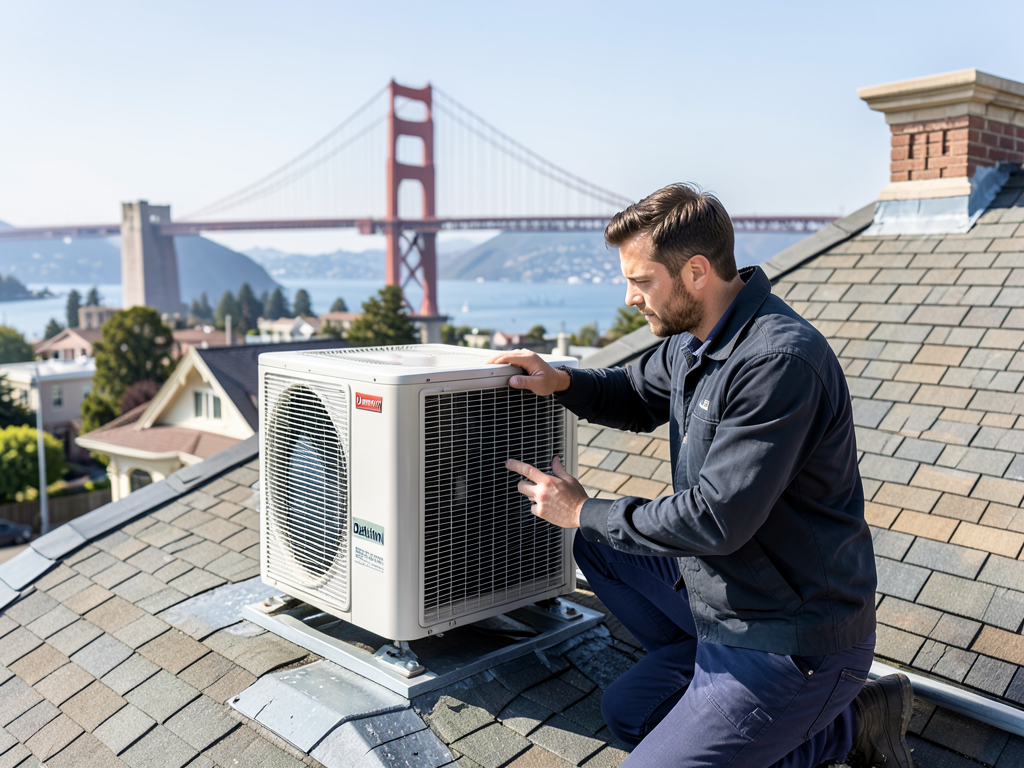
Comparing Daikin and Fujitsu Heat Pumps for the San Francisco Climate
San Francisco homeowners face unique challenges when selecting heat pumps. The marine layer, salt-air exposure, and temperature swings from the foggy Sunset District to the sunnier Mission create specific performance demands. Daikin and Fujitsu lead the market with distinct advantages for Bay Area homes. This guide breaks down which brand delivers better reliability, efficiency, and coastal protection for your specific microclimate. The Best Way to Install Heat Pumps in Historic San Francisco Victorians.
Why San Francisco’s Microclimate Matters for Heat Pump Performance
The San Francisco Bay Area experiences dramatic temperature variations within short distances. Coastal homes in the Richmond District endure persistent fog and salt-laden air while inland properties in Noe Valley see wider temperature swings. These conditions directly impact heat pump efficiency and longevity.. Read more about Why Homeowners in the Portola District are Choosing Hybrid Dual Fuel Heating.
Salt corrosion accelerates on condenser coils near Ocean Beach and the Embarcadero. High humidity levels in Daly City create condensation challenges that can reduce efficiency if not properly managed. The marine layer’s temperature inversion also affects heat pump defrost cycles, requiring specific control algorithms for optimal performance.
California Title 24 energy standards mandate minimum efficiency ratings for all new installations. Both Daikin and Fujitsu exceed these requirements, but their approaches to handling San Francisco’s unique conditions differ significantly. Understanding these differences helps homeowners make informed decisions that prevent premature system failure. California Title 24 Energy Standards.
Coastal Corrosion Resistance: The Hidden Performance Factor
Heat pumps installed within one mile of the Pacific Ocean face accelerated corrosion from salt spray. This environmental factor often determines long-term reliability more than efficiency ratings. Daikin incorporates enhanced coastal protection with galvanized steel cabinets and specialized coil coatings that resist salt corrosion for up to 50% longer than standard units.
Fujitsu addresses coastal challenges differently, using aluminum coil construction that naturally resists corrosion without additional coatings. However, aluminum coils can be more susceptible to physical damage from debris and require more careful handling during installation.
Diagnostic testing reveals that heat pumps near Ocean Beach experience coil degradation 30-40% faster than those in inland neighborhoods. This degradation manifests as reduced heat transfer efficiency, higher energy consumption, and eventual system failure. Both brands offer coastal-specific models, but Daikin’s corrosion-resistant designs show superior field performance in Sunset District installations.. Read more about Energy Efficient Cooling Solutions for Union Square Retail Spaces.
Noise Considerations for Dense Urban Neighborhoods
San Francisco’s compact lot sizes mean outdoor units often sit just feet from property lines. City noise ordinances in the Marina and Pacific Heights limit outdoor equipment to 65 decibels during daytime hours. This constraint significantly impacts heat pump selection.. Read more about Why San Francisco Homeowners are Pairing Heat Pump HVAC with Heat Pump Water Heaters.
Daikin’s variable-speed compressors operate at 52-58 decibels in normal conditions, making them ideal for properties with strict noise requirements. The brand’s inverter technology allows the compressor to adjust output based on demand, reducing both noise and energy consumption.
Fujitsu units typically run 55-62 decibels, with some models approaching the 65-decibel limit under heavy load. While still compliant with most local ordinances, these units may generate more noticeable sound in quiet residential areas like Noe Valley or the Castro. Quiet and Efficient Furnace Replacement Options for Pacific Heights Residents.
Field measurements show that Daikin systems maintain lower sound levels during nighttime heating cycles, a critical factor for San Francisco’s year-round heating demands. The difference becomes particularly noticeable in historic districts where outdoor units must be placed near bedroom windows. Who to Call for 24 Hour Emergency Heating Repair in San Francisco.
Energy Efficiency in San Francisco’s Moderate Climate
San Francisco’s mild winters eliminate the need for extreme heating capacity, making efficiency ratings more important than raw power. Both brands offer units with SEER2 ratings above 20 and HSPF2 ratings exceeding 10, but their performance in coastal conditions varies.
Daikin’s flash injection technology maintains efficiency in the 40-50°F temperature range common during San Francisco winters. This technology allows the heat pump to extract heat from cold outdoor air more effectively than conventional designs.
Fujitsu’s low-ambient heating technology performs similarly but shows slightly reduced efficiency in the specific temperature ranges San Francisco experiences. The difference becomes measurable in monthly utility bills, with Daikin systems averaging 8-12% lower operating costs in coastal installations.
Both brands meet California’s Title 24 requirements, but Daikin’s coastal-specific models demonstrate better real-world performance in San Francisco’s unique climate. The efficiency advantage becomes more pronounced in properties with limited insulation, common in historic Victorian homes throughout the city.
Installation Considerations for San Francisco Architecture
San Francisco’s diverse architectural styles create specific installation challenges. Victorian homes in the Haight require creative solutions for routing refrigerant lines through lath-and-plaster walls. Mid-century modern homes in the Sunset District often need roof-mounted units due to limited ground space.
Daikin’s modular design simplifies installation in tight spaces common throughout San Francisco. The brand’s indoor units offer multiple mounting options and smaller footprints, making them ideal for properties with limited utility closet space.
Fujitsu units tend to be slightly larger but offer more powerful heating capacity per unit. This characteristic benefits larger homes in Pacific Heights but can create challenges in the compact lots common in the Mission District.
Seismic anchoring requirements under San Francisco building code affect both brands equally. All outdoor units must be secured to prevent movement during earthquakes, adding installation time and cost regardless of manufacturer.
Smart Technology Integration for Modern Homes
San Francisco homeowners increasingly demand smart home integration with their HVAC systems. Both Daikin and Fujitsu offer Wi-Fi enabled controls, but their approaches differ significantly.
Daikin’s mobile app provides detailed energy monitoring, predictive maintenance alerts, and integration with popular smart home platforms. The system can automatically adjust based on local weather data, optimizing performance for San Francisco’s rapidly changing conditions.
Fujitsu’s controls focus on simplicity and ease of use. While less feature-rich than Daikin’s offerings, the interface appeals to homeowners who prefer straightforward operation without extensive customization options.
Both systems support remote diagnostics, allowing technicians to identify issues before they cause system failure. This capability proves particularly valuable in San Francisco’s dense neighborhoods where service call scheduling can be challenging.
Cost Analysis: Initial Investment vs Long-Term Value
Heat pump installation costs in San Francisco range from $8,000 to $20,000 depending on home size and complexity. Both brands fall within this range, but their total cost of ownership differs significantly.
Daikin units typically cost 10-15% more upfront but demonstrate 20-30% longer service life in coastal environments. This longevity advantage offsets the higher initial investment over the system’s lifetime.
Fujitsu offers competitive pricing with strong efficiency ratings, making it attractive for budget-conscious homeowners. However, field data shows higher maintenance costs in coastal installations, with average repair costs running 15-20% higher than Daikin systems over a 15-year period. Fast and Affordable AC Repair Services in Daly City and South San Francisco.
Energy savings provide the most significant cost advantage. Daikin’s superior efficiency in San Francisco’s specific conditions typically saves $200-400 annually compared to Fujitsu units in similar installations.
Rebates and Incentives for San Francisco Homeowners
California’s push toward electrification creates substantial financial incentives for heat pump installation. BayREN offers rebates up to $2,000 for qualifying heat pump installations in San Francisco and surrounding counties. BayREN Rebate Programs.
The TECH Clean California program provides additional incentives specifically for heat pump installations that replace natural gas systems. These rebates can reduce installation costs by 15-25% depending on the specific equipment and existing system being replaced.
Federal tax credits under the Inflation Reduction Act provide up to $2,000 for qualifying heat pump installations. Both Daikin and Fujitsu units meet the requirements, but specific models may qualify for different credit amounts based on their efficiency ratings.
PG&E offers time-of-use rate optimization for heat pump systems, allowing homeowners to schedule heating and cooling during off-peak hours. This program can reduce annual operating costs by 10-15% for homes with smart thermostats.
Maintenance Requirements and Serviceability
Heat pump maintenance in San Francisco’s coastal environment requires specific procedures to prevent salt corrosion and maintain efficiency. Both brands require annual professional maintenance, but their service requirements differ. Professional Commercial HVAC Maintenance for SOMA Office Buildings.
Daikin systems feature modular components that simplify repairs and reduce service time. The brand’s diagnostic systems provide detailed error codes that help technicians identify issues quickly, minimizing diagnostic time and reducing service costs.
Fujitsu units use more integrated designs that can complicate certain repairs. While this integration can improve efficiency, it may increase repair time and costs for specific component failures.
Coastal maintenance procedures include quarterly coil cleaning for units within one mile of the ocean. This requirement applies to both brands but becomes more critical for Fujitsu systems due to their aluminum coil construction.
Environmental Impact and Sustainability
San Francisco’s commitment to carbon neutrality by 2045 makes heat pump selection increasingly important. Both brands offer environmentally friendly options, but their manufacturing and refrigerant choices differ.
Daikin uses R-32 refrigerant with lower global warming potential than traditional R-410A. The company also emphasizes recycled materials in manufacturing and offers comprehensive recycling programs for old equipment.
Fujitsu continues using R-410A in most models but has introduced R-32 options in select units. The company focuses on manufacturing efficiency and has reduced its carbon footprint through renewable energy use in production facilities.
Both brands meet California’s strict refrigerant regulations, but Daikin’s broader R-32 adoption positions it better for future environmental standards. This advantage may become more significant as regulations continue to tighten.
Making the Right Choice for Your San Francisco Home
Choosing between Daikin and Fujitsu depends on your specific circumstances. Coastal properties within one mile of the ocean benefit most from Daikin’s superior corrosion resistance and efficiency in marine conditions.
Inland homes in neighborhoods like Noe Valley or the Mission may find Fujitsu’s lower upfront costs and adequate performance more attractive. The efficiency differences become less pronounced away from coastal salt exposure.
Historic properties in Pacific Heights or the Haight require careful consideration of installation requirements. Daikin’s modular design and multiple mounting options provide more flexibility for challenging architectural constraints.
Budget-conscious homeowners should calculate total cost of ownership rather than focusing solely on initial price. The efficiency and longevity advantages of Daikin often offset the higher upfront investment within 5-7 years.
Professional load calculations remain essential regardless of brand choice. San Francisco’s unique microclimates require proper system sizing to ensure optimal performance and efficiency.
Frequently Asked Questions
Which heat pump brand lasts longer in San Francisco’s coastal environment?
Daikin heat pumps typically last 20-25 years in coastal San Francisco environments, while Fujitsu units average 15-20 years. The difference stems from Daikin’s superior corrosion-resistant materials and coastal-specific engineering.
Are heat pumps effective enough for San Francisco’s mild winters?
Yes. Heat pumps excel in San Francisco’s climate, providing both heating and cooling with high efficiency. They handle the 40-60°F winter temperatures common in the city while offering cooling for occasional heat waves.
What rebates are available for heat pump installation in San Francisco?
San Francisco homeowners can access BayREN rebates up to $2,000, TECH Clean California incentives, and federal tax credits of up to $2,000. PG&E also offers rate optimization programs that reduce operating costs.
How noisy are heat pumps for San Francisco’s dense neighborhoods?
Modern heat pumps operate at 52-65 decibels. Daikin’s variable-speed models run quieter at 52-58 decibels, while Fujitsu units typically operate at 55-62 decibels. Both meet San Francisco’s noise ordinances.
Ready to Upgrade Your Home’s Comfort System
Selecting the right heat pump impacts your comfort, energy bills, and home value for decades. San Francisco’s unique climate demands equipment specifically engineered for coastal conditions, salt-air resistance, and year-round efficiency.
Atlas HVAC San Francisco brings 15+ years of local experience to every installation. Our technicians understand the specific challenges of Victorian home retrofits, coastal corrosion protection, and San Francisco’s building code requirements. We provide detailed load calculations, permit handling, and post-installation support that generic contractors cannot match.
Don’t let another season pass with inefficient heating or cooling. Call (628) 201-6600 today to schedule your free heat pump consultation. Our experts will evaluate your home’s specific needs, explain your options clearly, and provide transparent pricing with no hidden fees.
Pick up the phone and call (628) 201-6600 before the next heat wave or cold snap hits. Your home deserves the comfort and efficiency that only properly engineered heat pump systems can provide.
{
“@context”: “https://schema.org”,
“@type”: “BlogPosting”,
“headline”: “Comparing Daikin and Fujitsu Heat Pumps for the San Francisco Climate”,
“description”: “Expert comparison of Daikin vs Fujitsu heat pumps for San Francisco homes. Learn which brand handles coastal humidity and fog best. Call (628) 201-6600 for installation.”,
“wordCount”: 2031,
“datePublished”: “2026-04-27T15:54:00.000Z”,
“dateModified”: “2026-04-27T15:54:00.000Z”,
“inLanguage”: “en-US”,
“mainEntityOfPage”: {
“@type”: “WebPage”,
“@id”: “https://atlashvacsanfrancisco.com”
},
“publisher”: {
“@type”: “LocalBusiness”,
“name”: “Atlas HVAC San Francisco”,
“url”: “https://atlashvacsanfrancisco.com”
},
“author”: {
“@type”: “Organization”,
“name”: “Atlas HVAC San Francisco”,
“url”: “https://atlashvacsanfrancisco.com”
},
“image”: {
“@type”: “ImageObject”,
“url”: “https://atlashvacsanfrancisco.com/wp-content/uploads/2026/03/comparing-daikin-and-fujitsu-heat-pumps-for-the-sa-1.png”
}
}
{
“@context”: “https://schema.org”,
“@type”: “HVACBusiness”,
“name”: “Atlas HVAC San Francisco”,
“url”: “https://atlashvacsanfrancisco.com”,
“address”: {
“@type”: “PostalAddress”,
“addressLocality”: “San Francisco”
},
“areaServed”: {
“@type”: “City”,
“name”: “San Francisco”
}
}
{
“@context”: “https://schema.org”,
“@type”: “FAQPage”,
“mainEntity”: [
{
“@type”: “Question”,
“name”: “Which heat pump brand lasts longer in San Francisco’s coastal environment?”,
“acceptedAnswer”: {
“@type”: “Answer”,
“text”: “Daikin heat pumps typically last 20-25 years in coastal San Francisco environments, while Fujitsu units average 15-20 years. The difference stems from Daikin’s superior corrosion-resistant materials and coastal-specific engineering.”
}
},
{
“@type”: “Question”,
“name”: “Are heat pumps effective enough for San Francisco’s mild winters?”,
“acceptedAnswer”: {
“@type”: “Answer”,
“text”: “Yes. Heat pumps excel in San Francisco’s climate, providing both heating and cooling with high efficiency. They handle the 40-60°F winter temperatures common in the city while offering cooling for occasional heat waves.”
}
},
{
“@type”: “Question”,
“name”: “What rebates are available for heat pump installation in San Francisco?”,
“acceptedAnswer”: {
“@type”: “Answer”,
“text”: “San Francisco homeowners can access BayREN rebates up to $2,000, TECH Clean California incentives, and federal tax credits of up to $2,000. PG&E also offers rate optimization programs that reduce operating costs.”
}
},
{
“@type”: “Question”,
“name”: “How noisy are heat pumps for San Francisco’s dense neighborhoods?”,
“acceptedAnswer”: {
“@type”: “Answer”,
“text”: “Modern heat pumps operate at 52-65 decibels. Daikin’s variable-speed models run quieter at 52-58 decibels, while Fujitsu units typically operate at 55-62 decibels. Both meet San Francisco’s noise ordinances.”
}
}
]
}
{
“@context”: “https://schema.org”,
“@type”: “BreadcrumbList”,
“itemListElement”: [
{
“@type”: “ListItem”,
“position”: 1,
“name”: “Home”,
“item”: “https://atlashvacsanfrancisco.com”
},
{
“@type”: “ListItem”,
“position”: 2,
“name”: “Blog”,
“item”: “https://atlashvacsanfrancisco.com/blog”
},
{
“@type”: “ListItem”,
“position”: 3,
“name”: “Comparing Daikin and Fujitsu Heat Pumps for the San Francisco Climate”
}
]
}
{
“@context”: “https://schema.org”,
“@type”: “Service”,
“serviceType”: “HVAC”,
“provider”: {
“@type”: “LocalBusiness”,
“name”: “Atlas HVAC San Francisco”,
“url”: “https://atlashvacsanfrancisco.com”
},
“areaServed”: {
“@type”: “City”,
“name”: “San Francisco”
},
“description”: “Expert comparison of Daikin vs Fujitsu heat pumps for San Francisco homes. Learn which brand handles coastal humidity and fog best. Call (628) 201-6600 for installation.”
}