
Energy Efficient HVAC Upgrades for Small Businesses in Chinatown
Small businesses in San Francisco’s Chinatown face unique challenges when it comes to heating and cooling. The neighborhood’s historic buildings, dense urban environment, and aging infrastructure create specific needs that require specialized solutions. Upgrading to energy efficient HVAC systems can reduce operating costs by 20-30% while improving indoor air quality and customer comfort. Quiet and Efficient Furnace Replacement Options for Pacific Heights Residents.
Chinatown’s commercial properties often feature mixed-use buildings with retail on the ground floor and residential units above. This configuration requires careful zoning and ventilation strategies to maintain comfort for both business owners and residents. The area’s proximity to the bay also means dealing with salt-air corrosion and occasional fog that can affect system performance. Professional Commercial HVAC Maintenance for SOMA Office Buildings.
Understanding Chinatown’s Commercial HVAC Challenges
Chinatown’s commercial buildings present distinct HVAC challenges that differ from other San Francisco neighborhoods. The area’s historic structures, many dating back to the early 1900s, were not designed with modern HVAC systems in mind. This creates unique retrofit opportunities that can significantly improve energy efficiency.
The neighborhood’s high foot traffic and dense building layout affect how HVAC systems perform. Limited rooftop access and narrow alleyways make equipment installation and maintenance more complex. Many businesses operate in spaces under 2,000 square feet, requiring compact yet powerful systems that can handle varying occupancy loads throughout the day. The Best Way to Install Heat Pumps in Historic San Francisco Victorians.
San Francisco’s building codes, particularly Title 24 energy efficiency standards, require all commercial HVAC upgrades to meet specific performance criteria. These regulations ensure that new installations contribute to the city’s overall energy reduction goals while providing reliable comfort for business owners and their customers.
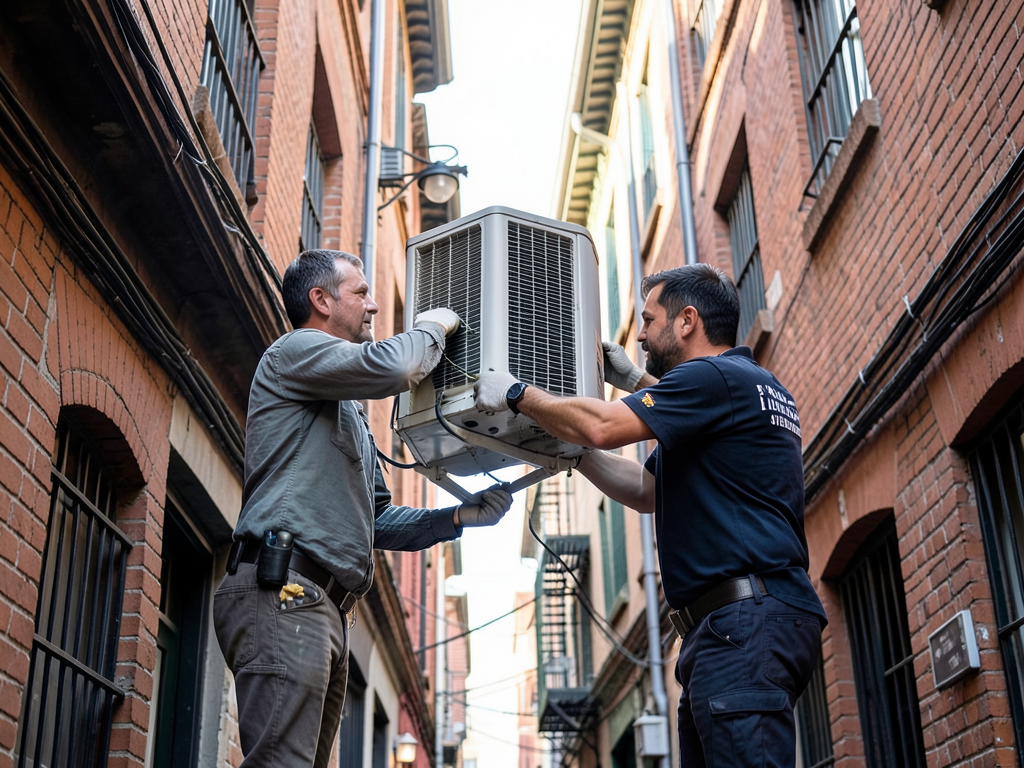
A technician installing a high-efficiency rooftop unit on a narrow Chinatown commercial building, demonstrating the specialized equipment and techniques required for the neighborhood’s unique architecture.
High-Efficiency System Options for Small Businesses
Modern high-efficiency HVAC systems offer significant advantages for Chinatown businesses. Variable Refrigerant Flow (VRF) systems provide precise temperature control across different zones, making them ideal for restaurants, retail shops, and office spaces within the same building. These systems can reduce energy consumption by up to 40% compared to traditional systems.
Packaged rooftop units with Energy Star certification offer another excellent option for Chinatown businesses. These units combine heating, cooling, and ventilation in a single system that sits on the roof, preserving valuable interior space. Modern units feature advanced controls that optimize performance based on occupancy and weather conditions. Who to Call for 24 Hour Emergency Heating Repair in San Francisco.
Heat pump technology has advanced significantly in recent years, making it a viable option for many Chinatown businesses. These systems provide both heating and cooling while using less energy than traditional furnaces and air conditioners. They work particularly well in San Francisco’s moderate climate, where extreme temperature swings are rare.
Cost-Benefit Analysis of HVAC Upgrades
Investing in energy efficient HVAC upgrades delivers measurable returns for small businesses. The initial investment typically ranges from $8,000 to $25,000 depending on system size and complexity, but most businesses see complete payback within 3-5 years through reduced utility bills and maintenance costs.
Energy efficient systems often qualify for rebates and incentives through Pacific Gas and Electric Company and federal tax credits. These programs can reduce upfront costs by 15-30%, making upgrades more accessible for small business owners. Some local banks also offer green business loans with favorable terms for energy efficiency projects. Pacific Gas and Electric Company energy efficiency programs.
Beyond direct cost savings, efficient HVAC systems improve indoor air quality and temperature consistency. This creates a more comfortable environment for customers and employees, potentially increasing sales and productivity. Many businesses also report fewer equipment failures and emergency service calls after upgrading to modern systems.
Installation Considerations for Historic Buildings
Upgrading HVAC systems in Chinatown’s historic buildings requires specialized knowledge and careful planning. Many structures have architectural features that cannot be modified, such as decorative facades, original windows, or historic signage. This constraint often leads to creative solutions that preserve the building’s character while improving efficiency.
Building Department permits are required for all commercial HVAC installations in San Francisco. The process typically takes 2-4 weeks and includes plan review, inspections, and compliance verification. Working with contractors familiar with local regulations can streamline this process and prevent costly delays.
Noise considerations are particularly important in Chinatown’s dense urban environment. Modern systems include sound-dampening features and can be installed with vibration isolation mounts to minimize disturbance to neighboring businesses and residents. Proper equipment placement is crucial for maintaining good relationships in this close-knit community.
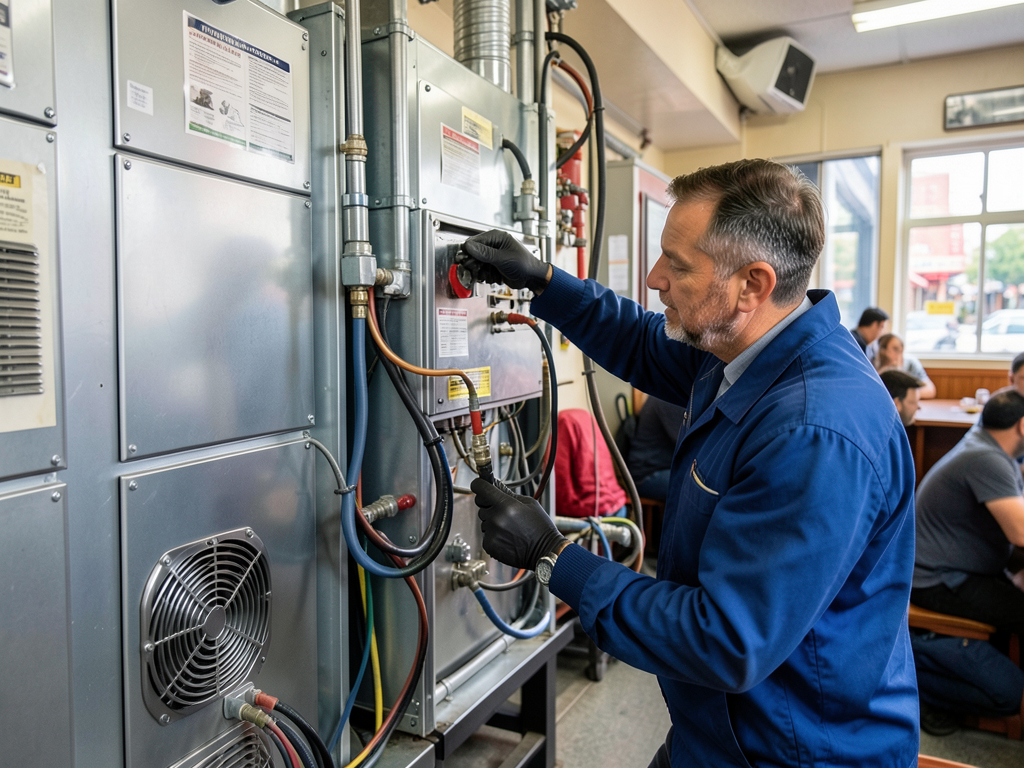
A technician performing routine maintenance on a commercial HVAC system in a Chinatown restaurant, showing the specialized tools and techniques required for the neighborhood’s unique commercial applications.
Maintenance Strategies for Optimal Performance
Regular maintenance is essential for maximizing the efficiency and lifespan of commercial HVAC systems. Chinatown businesses should schedule professional inspections at least twice per year, typically in spring and fall, to prepare for seasonal temperature changes. These checkups can identify potential issues before they become costly problems.
Air filter replacement is one of the most important maintenance tasks for commercial systems. In Chinatown’s urban environment, filters can become clogged with dust, pollen, and other particulates more quickly than in suburban areas. Monthly filter checks and replacements ensure proper airflow and system efficiency.
Cleaning condenser coils and checking refrigerant levels are also critical maintenance tasks. Dirty coils can reduce system efficiency by up to 30%, while low refrigerant levels force the system to work harder, increasing energy consumption and wear on components. Professional technicians use specialized tools to measure system performance and make necessary adjustments.
Energy Management Systems and Smart Controls
Modern energy management systems allow small businesses to monitor and control their HVAC usage more effectively. These systems can automatically adjust temperatures based on occupancy patterns, time of day, and even weather forecasts. Smart thermostats and building automation systems can reduce energy consumption by 10-15% without sacrificing comfort.
Many energy management systems include mobile apps that allow business owners to monitor system performance and make adjustments remotely. This feature is particularly valuable for restaurant owners who may need to adjust temperatures before opening or after closing. Some systems can even send alerts when performance issues are detected.
Integration with other building systems, such as lighting and security, can provide additional efficiency gains. For example, occupancy sensors can coordinate HVAC, lighting, and security systems to reduce energy usage in unoccupied areas while maintaining comfort in active spaces.
Financing Options for Small Business Upgrades
Several financing options are available to help small businesses in Chinatown afford HVAC upgrades. Pacific Gas and Electric Company offers on-bill financing programs that allow businesses to pay for improvements through monthly utility bills. These programs often feature low interest rates and terms that match the expected energy savings.
Local credit unions and community development financial institutions frequently offer green business loans specifically for energy efficiency projects. These loans may have more flexible qualification requirements than traditional bank loans and can provide funding for both equipment and installation costs.
Some businesses may qualify for Small Business Administration loans or grants through state energy efficiency programs. These programs often have specific requirements but can provide substantial funding for qualifying projects. Local business associations in Chinatown may also have information about additional funding opportunities.
Emergency Repair Services and Response Times
When HVAC systems fail, quick response times are crucial for minimizing business disruption. Most emergency repair services in San Francisco guarantee response times of 2-4 hours for commercial customers. Having a reliable service provider on call can mean the difference between a minor inconvenience and a major business interruption. Fast and Affordable AC Repair Services in Daly City and South San Francisco.
Emergency repair costs typically range from $150 to $500 for the initial service call, with additional charges for parts and labor. Many businesses find that investing in a service contract with guaranteed response times and discounted rates provides better value than paying for emergency services as needed.
Preventative maintenance can significantly reduce the likelihood of emergency breakdowns. Regular inspections can identify worn components, refrigerant leaks, or electrical issues before they cause system failures. This proactive approach often costs less than emergency repairs and helps maintain consistent business operations.
Choosing the Right HVAC Contractor
Selecting a qualified HVAC contractor is crucial for successful system upgrades and ongoing maintenance. Look for contractors with specific experience in commercial installations, particularly in historic buildings or urban environments similar to Chinatown. Proper licensing, insurance, and certifications should be verified before any work begins.
Ask potential contractors about their experience with energy efficient systems and local building codes. A knowledgeable contractor should be able to explain different system options, expected energy savings, and compliance requirements. They should also provide detailed written estimates and explain the installation process clearly.
References from other Chinatown businesses can provide valuable insights into a contractor’s reliability and quality of work. Look for contractors who have completed similar projects in the area and have established relationships with local suppliers and permitting agencies.
Future Trends in Commercial HVAC Technology
The HVAC industry continues to evolve with new technologies that promise even greater efficiency and control. Heat recovery systems, which capture waste heat from one area to provide heating for another, are becoming more common in commercial applications. These systems can reduce energy consumption by an additional 10-20% in appropriate applications.
Advanced filtration systems that improve indoor air quality while reducing energy usage are gaining popularity. These systems can remove allergens, bacteria, and other contaminants more effectively than traditional filters while maintaining optimal airflow. This feature is particularly valuable in Chinatown’s urban environment.
Integration with renewable energy systems, such as solar panels, is becoming more feasible as both technologies become more affordable. Some businesses are combining high-efficiency HVAC systems with on-site power generation to achieve near-zero net energy consumption.
Frequently Asked Questions
How long does a typical HVAC upgrade take for a small business?
Most commercial HVAC installations in small businesses take 2-5 days, depending on system complexity and building constraints. Historic buildings may require additional time for specialized equipment or custom ductwork solutions.
Will upgrading my HVAC system require closing my business?
Many installations can be completed with minimal business interruption. Contractors often work during off-hours or in phases to maintain operations. However, some temporary closures may be necessary for safety during major component replacements.
What size HVAC system does my business need?
System sizing depends on your building’s square footage, insulation levels, window area, occupancy patterns, and equipment heat loads. A professional load calculation is essential for proper sizing and optimal efficiency.
How often should commercial HVAC systems be serviced?
Commercial systems should receive professional maintenance at least twice per year, with monthly filter checks and quarterly visual inspections recommended for optimal performance and efficiency.
Are there any rebates available for energy efficient HVAC upgrades?
Yes, both PG&E and federal programs offer rebates for qualifying high-efficiency equipment. Local incentives may also be available through San Francisco’s energy efficiency programs or business improvement districts.
A before-and-after comparison of a Chinatown restaurant’s HVAC upgrade, showing the compact, high-efficiency equipment installed in a historic commercial space while preserving the building’s architectural character.
Take the Next Step Toward Energy Efficiency
Upgrading your Chinatown business’s HVAC system is an investment in your company’s future. The combination of energy savings, improved comfort, and enhanced indoor air quality provides immediate benefits while positioning your business for long-term success in San Francisco’s competitive market.
Don’t wait for your current system to fail during peak season. Contact a qualified HVAC contractor today to discuss your options and receive a professional assessment of your building’s needs. The sooner you start planning, the more options you’ll have for minimizing disruption and maximizing efficiency.
Call (628) 201-6600 today to schedule your inspection and learn how energy efficient HVAC upgrades can benefit your Chinatown business. Our experienced technicians understand the unique challenges of historic commercial buildings and can recommend solutions that meet your budget and performance requirements.
Take control of your energy costs and create a more comfortable environment for your customers and employees. The investment you make today will pay dividends through lower utility bills, fewer repairs, and a more sustainable business operation for years to come. For more information, visit California Title 24 Energy Efficiency Standards.
{
“@context”: “https://schema.org”,
“@type”: “BlogPosting”,
“headline”: “Energy Efficient HVAC Upgrades for Small Businesses in Chinatown”,
“description”: “Upgrade your Chinatown business with energy efficient HVAC solutions. Learn how to cut costs and improve comfort in historic San Francisco commercial spaces.”,
“wordCount”: 2063,
“datePublished”: “2026-06-07T11:54:00.000Z”,
“dateModified”: “2026-06-07T11:54:00.000Z”,
“inLanguage”: “en-US”,
“mainEntityOfPage”: {
“@type”: “WebPage”,
“@id”: “https://atlashvacsanfrancisco.com”
},
“publisher”: {
“@type”: “LocalBusiness”,
“name”: “Atlas HVAC San Francisco”,
“url”: “https://atlashvacsanfrancisco.com”
},
“author”: {
“@type”: “Organization”,
“name”: “Atlas HVAC San Francisco”,
“url”: “https://atlashvacsanfrancisco.com”
},
“image”: {
“@type”: “ImageObject”,
“url”: “https://atlashvacsanfrancisco.com/wp-content/uploads/2026/03/energy-efficient-hvac-upgrades-for-small-businesse-1.png”
}
}
{
“@context”: “https://schema.org”,
“@type”: “HVACBusiness”,
“name”: “Atlas HVAC San Francisco”,
“url”: “https://atlashvacsanfrancisco.com”,
“address”: {
“@type”: “PostalAddress”,
“addressLocality”: “San Francisco”
},
“areaServed”: {
“@type”: “City”,
“name”: “San Francisco”
}
}
{
“@context”: “https://schema.org”,
“@type”: “FAQPage”,
“mainEntity”: [
{
“@type”: “Question”,
“name”: “How long does a typical HVAC upgrade take for a small business?”,
“acceptedAnswer”: {
“@type”: “Answer”,
“text”: “Most commercial HVAC installations in small businesses take 2-5 days, depending on system complexity and building constraints. Historic buildings may require additional time for specialized equipment or custom ductwork solutions.”
}
},
{
“@type”: “Question”,
“name”: “Will upgrading my HVAC system require closing my business?”,
“acceptedAnswer”: {
“@type”: “Answer”,
“text”: “Many installations can be completed with minimal business interruption. Contractors often work during off-hours or in phases to maintain operations. However, some temporary closures may be necessary for safety during major component replacements.”
}
},
{
“@type”: “Question”,
“name”: “What size HVAC system does my business need?”,
“acceptedAnswer”: {
“@type”: “Answer”,
“text”: “System sizing depends on your building’s square footage, insulation levels, window area, occupancy patterns, and equipment heat loads. A professional load calculation is essential for proper sizing and optimal efficiency.”
}
},
{
“@type”: “Question”,
“name”: “How often should commercial HVAC systems be serviced?”,
“acceptedAnswer”: {
“@type”: “Answer”,
“text”: “Commercial systems should receive professional maintenance at least twice per year, with monthly filter checks and quarterly visual inspections recommended for optimal performance and efficiency.”
}
},
{
“@type”: “Question”,
“name”: “Are there any rebates available for energy efficient HVAC upgrades?”,
“acceptedAnswer”: {
“@type”: “Answer”,
“text”: “Yes, both PG&E and federal programs offer rebates for qualifying high-efficiency equipment. Local incentives may also be available through San Francisco’s energy efficiency programs or business improvement districts.”
}
}
]
}
{
“@context”: “https://schema.org”,
“@type”: “BreadcrumbList”,
“itemListElement”: [
{
“@type”: “ListItem”,
“position”: 1,
“name”: “Home”,
“item”: “https://atlashvacsanfrancisco.com”
},
{
“@type”: “ListItem”,
“position”: 2,
“name”: “Blog”,
“item”: “https://atlashvacsanfrancisco.com/blog”
},
{
“@type”: “ListItem”,
“position”: 3,
“name”: “Energy Efficient HVAC Upgrades for Small Businesses in Chinatown”
}
]
}
{
“@context”: “https://schema.org”,
“@type”: “Service”,
“serviceType”: “HVAC”,
“provider”: {
“@type”: “LocalBusiness”,
“name”: “Atlas HVAC San Francisco”,
“url”: “https://atlashvacsanfrancisco.com”
},
“areaServed”: {
“@type”: “City”,
“name”: “San Francisco”
},
“description”: “Upgrade your Chinatown business with energy efficient HVAC solutions. Learn how to cut costs and improve comfort in historic San Francisco commercial spaces.”
}