
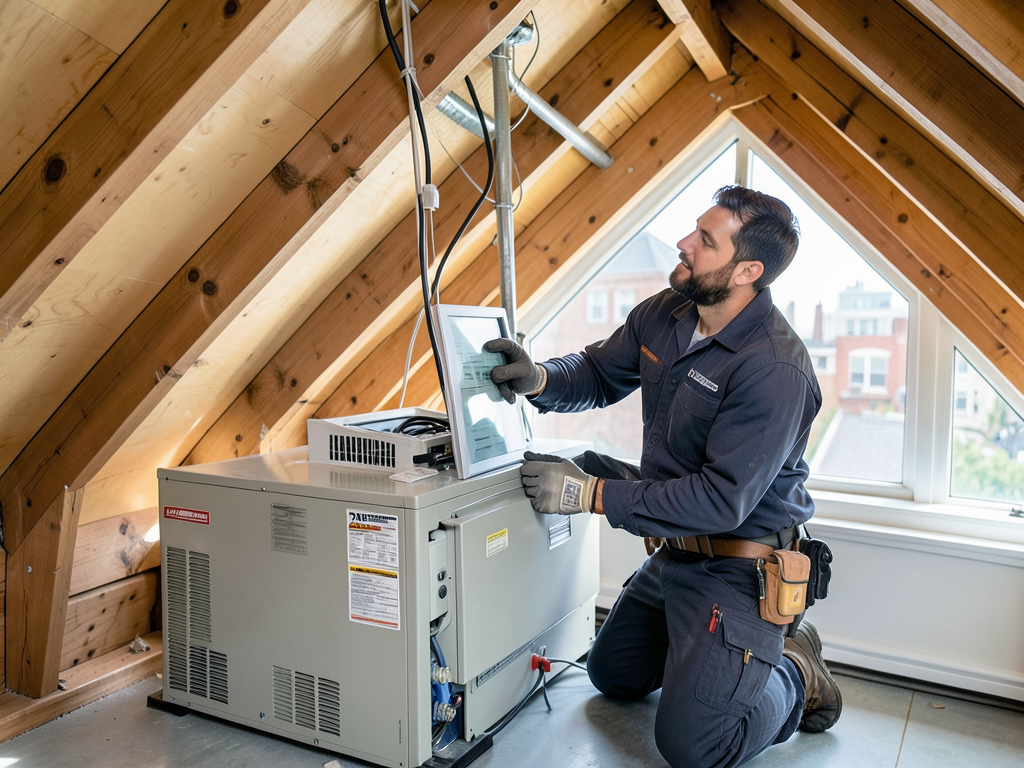
Heating and Cooling Solutions for Sunnyside Attic and Basement Conversions
Converting your Sunnyside attic or basement into livable space requires specialized HVAC solutions that account for San Francisco’s unique climate and building regulations. Whether you’re finishing an attic in a classic Edwardian home or transforming a basement into a rental unit, proper heating and cooling is essential for comfort and code compliance. Who to Call for 24 Hour Emergency Heating Repair in San Francisco.
Why Sunnyside Homes Need Specialized HVAC Solutions
Sunnyside’s location in the southeastern part of San Francisco creates specific challenges for attic and basement conversions. The neighborhood sits at a slightly higher elevation than downtown, experiencing cooler temperatures and more fog than areas like the Mission District. These microclimatic conditions mean your converted space needs a system that can handle both temperature swings and humidity control.
Many Sunnyside homes were built between 1900 and 1940, featuring the characteristic Edwardian architecture with narrow floor plans and limited space for ductwork. This architectural constraint, combined with San Francisco’s strict building codes, requires careful planning for any HVAC installation. The Best Way to Install Heat Pumps in Historic San Francisco Victorians.
Understanding Your HVAC Options for Attic Conversions
Choosing the right heating and cooling system for your attic conversion depends on several factors including your home’s existing infrastructure, local building codes, and your comfort preferences. Here are the most effective solutions for Sunnyside homes:
Ductless Mini-Split Systems: The Space-Saving Champion
Ductless mini-split systems have become the go-to solution for attic conversions in San Francisco’s older homes. These systems consist of an outdoor compressor unit connected to one or more indoor air handlers, eliminating the need for extensive ductwork.
The installation process typically takes 1-2 days and causes minimal disruption to your home’s structure. The indoor units can be mounted on walls or ceilings, making them ideal for the sloped ceilings common in attics. Modern mini-splits offer SEER2 ratings up to 22, providing excellent energy efficiency that helps offset San Francisco’s high electricity costs.
For Sunnyside’s climate, a heat pump mini-split provides both heating and cooling in a single system, eliminating the need for separate furnaces or air conditioners. The systems operate quietly, with indoor noise levels as low as 19 decibels—quieter than a whisper. Quiet and Efficient Furnace Replacement Options for Pacific Heights Residents.
High-Velocity HVAC Systems: For Tight Spaces
When attic space is extremely limited or you’re working with a historic home where preserving original architecture is crucial, high-velocity HVAC systems offer an excellent alternative. These systems use small, flexible ducts (typically 2-3 inches in diameter) that can be routed through existing wall cavities without major demolition.
The high-velocity air handlers can be installed in attics or closets, and the small supply vents can be placed in inconspicuous locations. While the initial installation cost is higher than standard ducted systems, the preservation of your home’s structure and the ability to maintain historical features often justify the investment.
Extended Central System: When Your Existing Setup Can Handle It
Some larger Sunnyside homes with newer central HVAC systems can extend their existing ductwork to serve converted attic spaces. This requires a professional Manual J load calculation to determine if your current system has the capacity to handle the additional square footage. Professional Commercial HVAC Maintenance for SOMA Office Buildings.
During a load calculation, we measure your home’s square footage, insulation levels, window types, and orientation to determine the exact BTU requirements. For a typical 400-square-foot attic conversion in Sunnyside, you’ll need approximately 9,000-12,000 BTUs for adequate heating and cooling, depending on insulation and window exposure.
Navigating San Francisco’s Title 24 Energy Standards
California Title 24 energy standards significantly impact HVAC installations in attic and basement conversions. These regulations, enforced by the California Energy Commission, set minimum efficiency requirements and mandate specific installation practices. California Title 24 Energy Standards.
For attic conversions in San Francisco, Title 24 requires:
- Minimum SEER2 rating of 15 for cooling equipment
- Proper duct sealing and insulation (R-8 minimum for attic ducts)
- Programmable or smart thermostats for all new HVAC installations
- Manual J load calculations for any system modification
- Proper ventilation to prevent moisture buildup in enclosed attic spaces
The San Francisco Department of Building Inspection (DBI) enforces these standards through the permit process. Any attic conversion requiring HVAC work must obtain mechanical permits, which include inspections to verify Title 24 compliance.
Basement HVAC Solutions: Unique Challenges Below Grade
Basement conversions present different HVAC challenges than attics. Below-grade spaces in Sunnyside often struggle with humidity control and air circulation, making proper system selection critical.
Dehumidification: The Basement Essential
San Francisco’s high humidity levels, combined with the naturally damp conditions of below-grade spaces, make dehumidification a crucial component of basement HVAC systems. Even with proper waterproofing, basements can experience relative humidity levels above 60%, creating conditions for mold growth and discomfort.
Integrated dehumidification can be achieved through:
- Heat pump systems with dedicated dehumidification modes
- Standalone dehumidifiers integrated with your HVAC controls
- ERV (Energy Recovery Ventilator) systems that exchange stale indoor air with filtered outdoor air while controlling humidity
Air Quality Considerations for Basement Spaces
Basements require enhanced air filtration due to their proximity to the ground and potential for radon accumulation. San Francisco’s building code requires mechanical ventilation for basement living spaces, typically achieved through:
- Heat recovery ventilators (HRV) or energy recovery ventilators (ERV)
- High-efficiency air filtration systems with MERV 13 or higher ratings
- Carbon monoxide detectors integrated with the HVAC system
Permit Process and Local Compliance
Converting attic or basement space in Sunnyside requires navigating San Francisco’s complex permitting process. The San Francisco Department of Building Inspection (DBI) has specific requirements for mechanical work in converted spaces.
The permit process typically includes:
- Submission of detailed mechanical plans showing equipment locations and ductwork routing
- Manual J load calculations certified by a licensed HVAC professional
- Title 24 compliance documentation
- Structural assessment if modifications affect load-bearing elements
- Energy efficiency calculations showing compliance with local standards
Permit fees for HVAC work in San Francisco vary based on project scope but typically range from $500 to $2,000. The process can take 2-6 weeks, depending on DBI’s current workload and the complexity of your project.
Efficiency and Cost Considerations
Energy efficiency is particularly important in San Francisco due to high electricity rates, which average 32 cents per kilowatt-hour—among the highest in the nation. Investing in high-efficiency equipment can significantly reduce operating costs over time.
Understanding SEER2 Ratings
The HVAC industry transitioned from SEER to SEER2 ratings in 2023, with SEER2 providing more accurate efficiency measurements under realistic conditions. For attic and basement conversions in Sunnyside, aim for equipment with SEER2 ratings of 16 or higher.
The efficiency difference between a SEER2 16 and SEER2 20 system can save approximately 20% on cooling costs annually. For a typical attic conversion, this translates to $150-250 in annual savings, potentially offsetting the higher upfront cost of premium equipment within 3-5 years.
Available Rebates and Incentives
San Francisco homeowners can access several rebate programs that significantly reduce the cost of energy-efficient HVAC installations. These incentives are particularly valuable for attic and basement conversions where the total project cost often exceeds $10,000.
BayREN Rebates
The Bay Area Regional Energy Network (BayREN) offers rebates for qualifying HVAC upgrades. For heat pump installations in attic conversions, current rebates include: BayREN Rebates.
- $1,000 for replacing electric resistance heating with a heat pump
- $1,000 for replacing a gas furnace with a heat pump
- $200 for proper refrigerant charge and airflow verification
These rebates are available to residents of San Francisco, including Sunnyside, through participating contractors.
PG&E Rebates
Pacific Gas and Electric offers additional rebates for energy-efficient HVAC equipment. For qualifying heat pump installations, PG&E provides:
- Up to $400 for heat pump HVAC systems
- $50 for smart thermostats when installed with new HVAC equipment
- Various rebates for duct sealing and insulation improvements
Combining BayREN and PG&E rebates can reduce your HVAC installation costs by $1,500-2,500, making high-efficiency systems more accessible for your conversion project.
Common Installation Challenges in Sunnyside Homes
Based on our experience with attic and basement conversions throughout San Francisco’s southeast neighborhoods, several challenges commonly arise during HVAC installations.
Structural Limitations
Many Sunnyside homes have limited attic access and low ceiling heights in attic spaces. This requires creative solutions such as:
- Low-profile air handlers that fit through standard attic access hatches
- Modular equipment that can be assembled on-site in tight spaces
- External condenser placement that complies with San Francisco’s noise ordinances
Electrical Capacity
Older homes in Sunnyside often have electrical systems that cannot support modern HVAC equipment. A typical heat pump system requires a dedicated 240-volt circuit, and many homes built before 1970 need electrical panel upgrades.
During our initial assessment, we evaluate your electrical capacity and identify any necessary upgrades. This evaluation is crucial for accurate project timelines and budgeting.
Historic Preservation Requirements
If your Sunnyside home is in a historic district or is a designated historic property, additional restrictions may apply to your HVAC installation. These might include:
- Requirements for equipment concealment from street view
- Restrictions on exterior wall penetrations
- Approval processes for visible components
We work with the San Francisco Planning Department to ensure compliance with historic preservation guidelines while still providing effective heating and cooling solutions.
Cost Breakdown for Typical Conversions
While every project is unique, understanding typical cost ranges helps with budgeting your attic or basement conversion. Here’s what Sunnyside homeowners can expect:
| System Type | Equipment Cost | Installation Cost | Total Range |
|---|---|---|---|
| Ductless Mini-Split (Single Zone) | $2,500 – $4,500 | $1,500 – $2,500 | $4,000 – $7,000 |
| Ductless Mini-Split (Multi-Zone) | $4,000 – $7,000 | $2,500 – $4,000 | $6,500 – $11,000 |
| High-Velocity System | $3,500 – $6,000 | $4,000 – $7,000 | $7,500 – $13,000 |
| Extended Central System | $2,000 – $4,000 | $3,000 – $6,000 | $5,000 – $10,000 |
These ranges include equipment, installation, permits, and basic electrical work. Factors that can increase costs include difficult access, historic preservation requirements, and the need for electrical upgrades.
Maintenance Requirements for Converted Spaces
Attic and basement HVAC systems require specific maintenance to ensure longevity and efficiency. The unique conditions in these spaces create different wear patterns than standard installations.
Annual Maintenance Checklist
- Filter replacement (every 3-6 months for attic systems)
- Coil cleaning to prevent dust accumulation in enclosed spaces
- Condensate drain line inspection and cleaning
- Refrigerant level check and adjustment
- Electrical connection inspection
- Thermostat calibration
- Insulation inspection around ductwork
For basement systems, additional maintenance includes dehumidification system checks and enhanced air quality monitoring.
Case Studies: Successful Sunnyside Conversions
Understanding how similar projects have been completed in your neighborhood provides valuable insights. Here are two representative case studies from Sunnyside:
Case Study 1: Edwardian Attic Conversion
A 1912 Edwardian home on Hearst Avenue had a 450-square-foot attic with 6-foot ceiling height at the center. The homeowners wanted to create a home office and guest room.
Solution: We installed a dual-zone ductless mini-split system with a ceiling cassette for the main area and a wall-mounted unit for the office nook. The system included a dedicated dehumidification mode to handle San Francisco’s moisture levels.
Outcome: The system maintains consistent temperatures despite the sloped ceilings, operates at 19 decibels in low mode, and has reduced the homeowners’ energy costs by 18% compared to their previous window units.
Case Study 2: Basement ADU Conversion
A 1940s home on Joost Avenue had a 600-square-foot basement that the owners wanted to convert to a legal accessory dwelling unit (ADU).
Solution: We installed a high-efficiency heat pump with integrated dehumidification and an ERV system for fresh air exchange. The system included MERV 13 filtration to address potential radon concerns and enhanced filtration for improved indoor air quality.
Outcome: The basement maintains consistent 72°F temperatures year-round, humidity stays below 55%, and the system qualified for $2,200 in combined rebates. The homeowners report excellent air quality and no moisture issues after one year of operation.
Frequently Asked Questions
Do I need a separate HVAC system for my attic conversion?
Not necessarily. If your existing system has adequate capacity and you can extend ductwork without major structural modifications, you might be able to use your current equipment. However, most attic conversions benefit from dedicated systems for better temperature control and efficiency.
Can my current furnace handle an extra floor?
This depends on your furnace’s BTU capacity and your home’s existing load. A professional Manual J calculation will determine if your current system can handle the additional space. Most furnaces older than 10-15 years lack the efficiency and capacity for attic additions.
How long does HVAC installation take for an attic conversion?
Ductless mini-split installations typically take 1-2 days. High-velocity systems require 3-5 days due to the complexity of running small ducts. Extended central system installations vary widely based on access and required modifications, ranging from 2-7 days.
Will I need to upgrade my electrical panel?
Many older Sunnyside homes have 100-amp service panels that cannot support modern HVAC equipment. During our assessment, we’ll evaluate your electrical capacity and identify any necessary upgrades. Electrical work typically adds $1,500-3,000 to your project if required.
Are there noise concerns with attic HVAC systems?
Modern systems are designed for quiet operation. Ductless mini-splits typically operate at 19-30 decibels, while high-velocity systems run at 25-35 decibels. We strategically locate equipment and use vibration isolation mounts to minimize noise transfer to living spaces.
Making Your Decision
Selecting the right HVAC solution for your attic or basement conversion requires balancing multiple factors: your budget, the existing home infrastructure, local building codes, and your comfort preferences. The investment in proper heating and cooling pays dividends through increased property value, improved comfort, and lower operating costs.
Before making your final decision, consider scheduling a professional assessment. A qualified HVAC contractor can evaluate your specific situation, perform load calculations, and provide detailed recommendations tailored to your Sunnyside home’s unique characteristics.
Remember that proper HVAC installation is not just about comfort—it’s about creating a safe, healthy, and code-compliant living space that will serve you well for years to come.
Get Started with Your Conversion Project
Ready to transform your attic or basement into comfortable, climate-controlled living space? Atlas HVAC San Francisco specializes in attic and basement conversions throughout the city, with particular expertise in Sunnyside’s unique housing stock and building requirements.
Our team understands the intricacies of San Francisco’s building codes, Title 24 compliance, and the specific challenges of working in historic homes. We provide comprehensive assessments, detailed proposals, and professional installations that meet all local requirements.
Call (628) 201-6600 today to schedule your free consultation. We’ll evaluate your space, discuss your options, and provide a detailed proposal with transparent pricing. Don’t let another season pass without enjoying your converted space to its fullest potential.
Pick up the phone and call (628) 201-6600 before the next heat wave or cold snap makes your unfinished space uncomfortable. Our team is ready to help you create the perfect climate-controlled environment in your Sunnyside home.
Atlas HVAC San Francisco – Your local experts for attic and basement HVAC solutions. Serving Sunnyside and all of San Francisco with professional, code-compliant installations backed by our satisfaction guarantee.
{
“@context”: “https://schema.org”,
“@type”: “BlogPosting”,
“headline”: “Heating and Cooling Solutions for Sunnyside Attic and Basement Conversions”,
“description”: “Expert HVAC solutions for attic and basement conversions in San Francisco’s Sunnyside. Learn about ductless mini-splits, Title 24 compliance, and BayREN rebates for your home.”,
“wordCount”: 2497,
“datePublished”: “2026-06-10T06:37:00.000Z”,
“dateModified”: “2026-06-10T06:37:00.000Z”,
“inLanguage”: “en-US”,
“mainEntityOfPage”: {
“@type”: “WebPage”,
“@id”: “https://atlashvacsanfrancisco.com”
},
“publisher”: {
“@type”: “LocalBusiness”,
“name”: “Atlas HVAC San Francisco”,
“url”: “https://atlashvacsanfrancisco.com”
},
“author”: {
“@type”: “Organization”,
“name”: “Atlas HVAC San Francisco”,
“url”: “https://atlashvacsanfrancisco.com”
},
“image”: {
“@type”: “ImageObject”,
“url”: “https://atlashvacsanfrancisco.com/wp-content/uploads/2026/03/heating-and-cooling-solutions-for-sunnyside-attic-1.png”
}
}
{
“@context”: “https://schema.org”,
“@type”: “HVACBusiness”,
“name”: “Atlas HVAC San Francisco”,
“url”: “https://atlashvacsanfrancisco.com”,
“address”: {
“@type”: “PostalAddress”,
“addressLocality”: “San Francisco”
},
“areaServed”: {
“@type”: “City”,
“name”: “San Francisco”
}
}
{
“@context”: “https://schema.org”,
“@type”: “FAQPage”,
“mainEntity”: [
{
“@type”: “Question”,
“name”: “Do I need a separate HVAC system for my attic conversion?”,
“acceptedAnswer”: {
“@type”: “Answer”,
“text”: “Not necessarily. If your existing system has adequate capacity and you can extend ductwork without major structural modifications, you might be able to use your current equipment. However, most attic conversions benefit from dedicated systems for better temperature control and efficiency.”
}
},
{
“@type”: “Question”,
“name”: “Can my current furnace handle an extra floor?”,
“acceptedAnswer”: {
“@type”: “Answer”,
“text”: “This depends on your furnace’s BTU capacity and your home’s existing load. A professional Manual J calculation will determine if your current system can handle the additional space. Most furnaces older than 10-15 years lack the efficiency and capacity for attic additions.”
}
},
{
“@type”: “Question”,
“name”: “How long does HVAC installation take for an attic conversion?”,
“acceptedAnswer”: {
“@type”: “Answer”,
“text”: “Ductless mini-split installations typically take 1-2 days. High-velocity systems require 3-5 days due to the complexity of running small ducts. Extended central system installations vary widely based on access and required modifications, ranging from 2-7 days.”
}
},
{
“@type”: “Question”,
“name”: “Will I need to upgrade my electrical panel?”,
“acceptedAnswer”: {
“@type”: “Answer”,
“text”: “Many older Sunnyside homes have 100-amp service panels that cannot support modern HVAC equipment. During our assessment, we’ll evaluate your electrical capacity and identify any necessary upgrades. Electrical work typically adds $1,500-3,000 to your project if required.”
}
},
{
“@type”: “Question”,
“name”: “Are there noise concerns with attic HVAC systems?”,
“acceptedAnswer”: {
“@type”: “Answer”,
“text”: “Modern systems are designed for quiet operation. Ductless mini-splits typically operate at 19-30 decibels, while high-velocity systems run at 25-35 decibels. We strategically locate equipment and use vibration isolation mounts to minimize noise transfer to living spaces.”
}
}
]
}
{
“@context”: “https://schema.org”,
“@type”: “BreadcrumbList”,
“itemListElement”: [
{
“@type”: “ListItem”,
“position”: 1,
“name”: “Home”,
“item”: “https://atlashvacsanfrancisco.com”
},
{
“@type”: “ListItem”,
“position”: 2,
“name”: “Blog”,
“item”: “https://atlashvacsanfrancisco.com/blog”
},
{
“@type”: “ListItem”,
“position”: 3,
“name”: “Heating and Cooling Solutions for Sunnyside Attic and Basement Conversions”
}
]
}
{
“@context”: “https://schema.org”,
“@type”: “Service”,
“serviceType”: “HVAC”,
“provider”: {
“@type”: “LocalBusiness”,
“name”: “Atlas HVAC San Francisco”,
“url”: “https://atlashvacsanfrancisco.com”
},
“areaServed”: {
“@type”: “City”,
“name”: “San Francisco”
},
“description”: “Expert HVAC solutions for attic and basement conversions in San Francisco’s Sunnyside. Learn about ductless mini-splits, Title 24 compliance, and BayREN rebates for your home.”
}