
Non-Permanent Cooling Solutions for Renters in the Lower Haight
Living in a classic Lower Haight Victorian or Edwardian apartment means dealing with beautiful architecture but often outdated cooling systems. Most renters face the same dilemma: how to stay comfortable during San Francisco’s occasional heat waves without making permanent modifications that violate lease agreements or cost you your security deposit.
The good news is that several effective non-permanent cooling solutions exist that work perfectly in Lower Haight’s unique housing stock. These options range from portable air conditioners to evaporative coolers, all designed to provide relief without requiring any drilling, mounting, or permanent installation. The Best Way to Install Heat Pumps in Historic San Francisco Victorians.
Before we dive into specific products, it’s important to understand that Lower Haight apartments typically have high ceilings, large windows, and thick walls that can make temperature control challenging. The area’s microclimates also mean that while the rest of San Francisco might be foggy, Lower Haight can experience warmer temperatures, especially during summer afternoons.
Let’s explore the best non-permanent cooling solutions that will keep you comfortable without breaking your lease or your budget.
Understanding Your Lower Haight Apartment’s Cooling Needs
Lower Haight apartments vary significantly in size and layout, from cozy studios to spacious multi-bedroom units. The first step in choosing the right cooling solution is understanding your specific space requirements.
Most Lower Haight Victorian apartments range from 400 to 1,200 square feet. Studios and one-bedroom units typically fall between 400-700 square feet, while two and three-bedroom apartments can extend up to 1,200 square feet or more.
The age of your building also matters. Many Lower Haight properties were built between 1900 and 1930, featuring single-pane windows and minimal insulation. This means your apartment might heat up quickly during warm spells but also cool down rapidly when temperatures drop.
Another factor is your apartment’s orientation. South and west-facing units receive more direct sunlight, requiring more cooling power than north or east-facing apartments. Upper-floor units also tend to be warmer due to rising heat from lower floors.
Understanding these factors helps you choose the right BTU (British Thermal Unit) rating for your cooling solution. As a general rule, you need approximately 20 BTUs per square foot of living space, though this increases for sun-exposed units or those with poor insulation.
Before purchasing any cooling equipment, check your lease agreement for restrictions on window modifications and electrical usage. Some landlords have specific requirements about what tenants can install.
Portable Air Conditioners: The Most Versatile Option
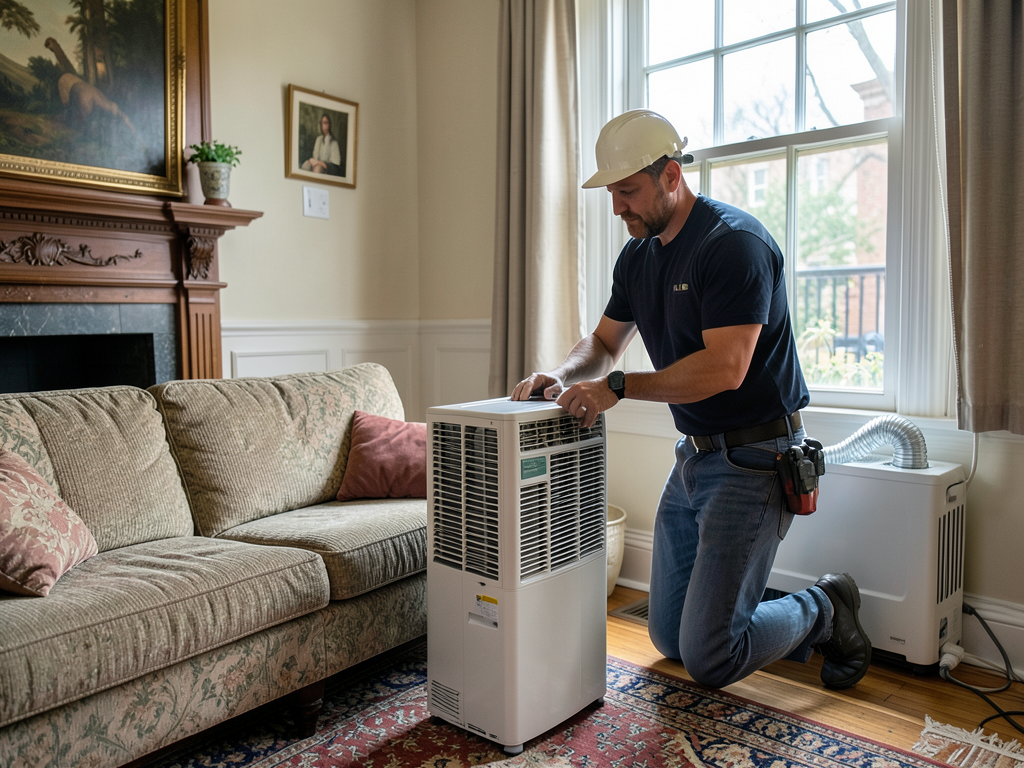
Portable air conditioners represent the most popular non-permanent cooling solution for Lower Haight renters. These units offer several advantages: they require no permanent installation, can be moved between rooms, and come in various sizes to match different apartment layouts.
The key feature of portable AC units is their exhaust hose, which must be vented through a window. This venting requirement actually works well with Lower Haight’s architecture, as most apartments have standard double-hung or sliding windows that accommodate portable AC kits.
When selecting a portable air conditioner, consider the unit’s BTU rating, noise level, and energy efficiency. Most Lower Haight apartments will be comfortable with units ranging from 8,000 to 12,000 BTUs, depending on the space size. Energy Department air conditioning guide.
Noise level is particularly important in multi-unit buildings where sound travels easily through shared walls and floors. Look for units with noise ratings below 55 decibels for bedroom use, as anything louder can disrupt sleep.
Energy efficiency matters too, especially given San Francisco’s high electricity rates. Units with Energy Star certification use 10-15% less electricity than standard models, which can add up to significant savings during heat waves.
Modern portable AC units also include features like programmable timers, remote controls, and dehumidification modes. The dehumidification function is particularly valuable in San Francisco’s humid climate, as it removes excess moisture from the air while cooling.
Installation is straightforward and requires no tools beyond what comes in the box. Most units can be set up in under 30 minutes, and the window venting kit can be removed without leaving any marks when you move out.
Maintenance involves emptying the water collection tank every few days during humid weather and cleaning the air filter monthly. These tasks take only minutes but keep the unit running efficiently. Quiet and Efficient Furnace Replacement Options for Pacific Heights Residents.
Window Air Conditioners: When You Have the Right Window Type
Window air conditioners offer more cooling power than portable units and take up no floor space. However, they work best with specific window types commonly found in Lower Haight apartments.
The ideal window for a window AC is a double-hung window that slides up and down. Many Lower Haight Victorians feature these classic windows, which accommodate standard window AC units perfectly.
Window units come in various sizes, from small 5,000 BTU models for tiny bedrooms to large 15,000 BTU units for living rooms. The key is matching the unit’s dimensions to your window opening.
Installation requires temporarily removing the window’s lower sash and securing the unit with brackets. This process is generally lease-friendly since it’s reversible and doesn’t damage the window frame.
Window AC units cool more efficiently than portable units because they vent hot air directly outside rather than through a hose. This means they use less electricity to achieve the same cooling effect.
Modern window units include features like Wi-Fi connectivity, allowing you to control them from your smartphone. Some even work with voice assistants like Alexa or Google Home.
The main drawback is that window units block your view and natural light. They also create a security vulnerability since the window can’t be fully closed while the unit is installed.
Storage during off-seasons is another consideration. Window units are heavy and bulky, requiring space to store them when not in use. Many renters find creative solutions like storing them in building basements or with friends.
Despite these challenges, window units remain a popular choice for Lower Haight renters with compatible windows who want maximum cooling power without permanent installation.
Evaporative Coolers: The Energy-Efficient Alternative
Evaporative coolers, also known as swamp coolers, offer a different approach to cooling that works surprisingly well in San Francisco’s climate. These units use water evaporation to cool air, consuming 75% less electricity than traditional air conditioners.
The effectiveness of evaporative coolers depends on humidity levels. San Francisco’s coastal location means humidity varies throughout the year, but these units still provide significant cooling during most summer days.
Evaporative coolers work by pulling warm air through water-saturated pads. As the water evaporates, it cools the air, which is then blown into your apartment. This process also adds moisture to the air, which can be beneficial in San Francisco’s often dry indoor environments.
Portable evaporative coolers require only a standard electrical outlet and occasional water refills. Some models include ice compartments for enhanced cooling during the hottest days.
The main advantage of evaporative coolers is their operating cost. A typical unit costs less than $0.10 per hour to run, compared to $0.30-$0.50 per hour for a portable AC.
Another benefit is that evaporative coolers don’t require venting. You can place them anywhere in your apartment, making them ideal for rooms without accessible windows.
The cooling effect is also more natural and comfortable for many people. Unlike refrigerated air conditioning, which can feel dry and artificial, evaporative cooling maintains comfortable humidity levels.
However, evaporative coolers are less effective during extremely humid days or heat waves when temperatures exceed 90°F. They also require regular cleaning to prevent mold growth in the water reservoir.
For Lower Haight renters looking for an eco-friendly, low-cost cooling solution, evaporative coolers offer an excellent alternative to traditional air conditioning.
Smart Cooling Strategies for Renters
Beyond choosing the right cooling equipment, several smart strategies can help you stay comfortable while minimizing energy costs and equipment wear.
Start by maximizing natural ventilation. Lower Haight’s cool evening temperatures provide free cooling if you take advantage of them. Open windows on opposite sides of your apartment to create cross-ventilation once outdoor temperatures drop below indoor levels.
Use thermal curtains or reflective window film to block solar heat gain during the day. This simple step can reduce cooling needs by 20-30%, allowing smaller units to work more effectively.
Consider zoning your cooling efforts. Rather than trying to cool your entire apartment, focus on the rooms you use most during the day. A small bedroom unit might be all you need if you primarily use your living room in the evenings.
Time your cooling strategically. Run your AC or cooler during the hottest afternoon hours, then turn it off once outdoor temperatures drop. Many modern units include timers that automate this process.
Maintain your cooling equipment properly. Clean filters monthly, check for proper venting, and ensure units have adequate clearance for air circulation. These simple maintenance steps can extend equipment life by years.
Use ceiling fans if your apartment has them. Fans don’t cool air but make you feel cooler by increasing evaporation from your skin. This allows you to set thermostats 4-5 degrees higher while maintaining comfort.
Consider heat-generating appliance usage. Avoid using ovens, dryers, or dishwashers during the hottest parts of the day, as they add significant heat to your living space.
Monitor humidity levels. San Francisco’s humidity can make heat feel more oppressive. If your unit has a dehumidification mode, use it during humid spells even if temperatures aren’t extremely high.
Finally, communicate with your neighbors. In multi-unit buildings, coordinated cooling efforts can prevent electrical circuit overloads and reduce overall energy consumption.
These strategies, combined with the right cooling equipment, can keep you comfortable throughout San Francisco’s warmest months without breaking your lease or your budget.
Comparing Cooling Options: What Works Best for Your Space
Choosing between cooling options depends on your specific apartment characteristics, budget, and cooling needs. Here’s a comprehensive comparison to help you decide.
| Cooling Type | Best For | Cost Range | Monthly Operating Cost | Installation Difficulty |
|---|---|---|---|---|
| Portable AC (8,000 BTU) | Small bedrooms, studios | $250-$350 | $25-$35 | Easy (30 minutes) |
| Portable AC (12,000 BTU) | Living rooms, large bedrooms | $350-$450 | $35-$45 | Easy (30 minutes) |
| Window AC (5,000 BTU) | Small bedrooms, offices | $150-$200 | $20-$25 | Moderate (1-2 hours) |
| Window AC (8,000 BTU) | Medium bedrooms, studios | $200-$250 | $25-$30 | Moderate (1-2 hours) |
| Evaporative Cooler | Living rooms, open spaces | $100-$200 | $10-$15 | Very Easy (5 minutes) |
This comparison shows that while portable AC units offer the most cooling power, they also have the highest operating costs. Window units provide better efficiency for their size, while evaporative coolers offer the lowest operating costs but less cooling power.
Consider your apartment’s specific characteristics when making your choice. South-facing units with large windows might need the extra power of a 12,000 BTU portable AC, while north-facing studios might be perfectly comfortable with a 5,000 BTU window unit.
Also factor in storage space. Window units require significant storage during off-seasons, while portable units can be easily stored in closets.
Noise tolerance is another important factor. Window units tend to be quieter since the compressor is outside, while portable units have all components in the room with you.
Finally, consider your long-term plans. If you’re only in your apartment for one summer, a lower-cost evaporative cooler might make more sense than investing in a more expensive portable AC.
Many renters find that combining cooling methods works best. For example, using an evaporative cooler for general comfort and a small window unit for the bedroom during heat waves provides flexibility while controlling costs.
Installation Tips for Lower Haight Apartments
Installing non-permanent cooling solutions in Lower Haight apartments requires some specific considerations due to the area’s unique architecture and building characteristics.
First, assess your window types. Most Lower Haight Victorians have double-hung windows that work well with both portable AC venting kits and window units. However, some apartments have casement windows that swing outward, which require different installation approaches.
For casement windows, you’ll need a venting kit specifically designed for this window type. These kits typically include Plexiglas panels that replace the screen and accommodate the exhaust hose.
Before installation, clean your windows thoroughly. Dirt and debris can prevent proper sealing, reducing cooling efficiency and potentially damaging window frames.
Measure your window openings carefully before purchasing any unit. Window AC units have specific dimensional requirements, and portable AC venting kits come in different sizes.
Consider the electrical requirements. Most portable and window AC units require a standard 120V outlet, but larger units might need dedicated circuits. Check your apartment’s electrical panel to ensure you have adequate capacity.
Position your unit for optimal performance. Portable AC units work best when placed near the center of the room with the exhaust hose directed toward the window. Avoid placing them behind furniture or in corners where airflow is restricted.
For window units, ensure the unit is level and properly supported. Most units come with mounting brackets, but you might need additional support for larger units or windows with weak frames.
Seal any gaps around window units with weatherstripping or foam insulation. Even small gaps can significantly reduce cooling efficiency and allow humid air to enter.
Test your installation before relying on it for comfort. Run the unit for several hours to ensure proper venting and check for any water leaks or unusual noises.
Document your installation with photos before and after. This documentation can be valuable if your landlord has questions about modifications when you move out.
Finally, be considerate of your neighbors. In multi-unit buildings, the noise from AC units can travel through shared walls and floors. Choose quieter models and avoid running units during late night hours when possible.
Proper installation ensures your cooling solution works efficiently and prevents damage to your apartment’s historic features.
Energy Efficiency and Cost Management
Managing energy costs is crucial for Lower Haight renters, where electricity rates in San Francisco are among the highest in the nation. Understanding how to maximize cooling efficiency while minimizing costs can save you hundreds of dollars each summer.
San Francisco’s electricity rates vary by time of day, with peak rates typically applying from 4 PM to 9 PM on weekdays. Running your cooling equipment during off-peak hours can reduce costs by 30-40%.
Most portable and window AC units have programmable timers that allow you to schedule operation during off-peak hours. Set your unit to cool your apartment before peak rates begin, then maintain temperature with fans during expensive hours.
Energy Star certified units use 10-15% less electricity than standard models. While they might cost slightly more upfront, the energy savings typically pay for the difference within one cooling season.
Proper sizing is crucial for energy efficiency. An oversized unit cools too quickly without removing adequate humidity, leaving your apartment feeling clammy. An undersized unit runs constantly, consuming excess electricity while never achieving comfortable temperatures.
Maintain your unit’s efficiency through regular cleaning. Dirty filters reduce airflow by up to 15%, forcing the compressor to work harder and consume more electricity. Clean or replace filters monthly during heavy use.
Check your venting system regularly. Kinked or blocked exhaust hoses force the compressor to work harder, increasing energy consumption by up to 25%.
Use ceiling fans to supplement your cooling system. Fans allow you to raise thermostat settings by 4-5 degrees while maintaining the same comfort level, potentially reducing cooling costs by 10-15%.
Consider a smart thermostat or smart plug for your cooling unit. These devices learn your schedule and can automatically adjust temperatures when you’re away or asleep, potentially reducing cooling costs by 15-20%.
Monitor your electricity usage through your utility’s online portal. Many San Francisco residents are surprised to learn which appliances consume the most electricity during summer months.
Take advantage of natural cooling when possible. San Francisco’s cool nights provide free cooling if you open windows and use fans to bring in cool air, then close everything up during the day.
Finally, consider the long-term costs when choosing equipment. A more expensive but more efficient unit might save you money over a two or three-year period compared to a cheaper but less efficient model.
These energy management strategies can keep you comfortable while keeping your electricity bills manageable throughout San Francisco’s warmest months.
Maintenance and Troubleshooting
Proper maintenance of your non-permanent cooling solution ensures optimal performance, extends equipment life, and prevents costly repairs or replacements. Here’s what you need to know about maintaining your cooling equipment. EPA Energy Star certified air conditioners.
Start with regular filter cleaning. Most portable and window AC units have washable filters that should be cleaned every two to four weeks during heavy use. Dirty filters restrict airflow, reduce cooling efficiency by up to 15%, and can cause the compressor to overheat.
To clean filters, remove them from the unit and wash them with warm, soapy water. Rinse thoroughly and allow them to dry completely before reinstalling. Never operate the unit without filters, as this allows dust to accumulate on internal components.
Check the condensate drain regularly. Portable AC units collect moisture from the air, which must be drained periodically. Most units have a water collection tank that needs emptying every few days during humid weather.
Inspect the exhaust hose for kinks, tears, or disconnections. A damaged hose reduces cooling efficiency and can allow hot air to leak back into your apartment. Replace damaged hoses immediately.
Clean the condenser coils annually. Dust and debris accumulation on coils reduces heat transfer efficiency, forcing the compressor to work harder. Use a soft brush or vacuum with a brush attachment to clean coils gently.
Check window seals if you’re using a window unit. Over time, seals can deteriorate, allowing hot air to enter and cool air to escape. Replace worn seals with weatherstripping to maintain efficiency.
Test your unit’s thermostat accuracy. Place a separate thermometer near the unit and compare readings. If there’s a significant discrepancy, the thermostat might need calibration or replacement.
Listen for unusual noises. Grinding, squealing, or rattling sounds often indicate problems that require attention. A failing bearing or loose component can quickly lead to more serious damage if ignored.
Monitor cooling performance. If your unit seems less effective than when new, check for reduced airflow, which often indicates a dirty filter or failing fan motor.
Check for water leaks around window units. Improper installation or deteriorated seals can allow water to enter your apartment, potentially causing water damage to walls and floors.
Store portable units properly during off-seasons. Clean all components, allow them to dry completely, and store in a cool, dry place. Cover window units or remove and store them if possible.
Keep the area around your unit clear. Furniture, curtains, or other objects should be at least 18 inches away from all sides to ensure proper airflow.
Consider professional maintenance for older units or if you notice performance issues. A technician can identify problems before they cause complete failure. Professional Commercial HVAC Maintenance for SOMA Office Buildings.
Regular maintenance not only keeps your cooling system working efficiently but also prevents the frustration of equipment failure during heat waves when you need cooling most.
Frequently Asked Questions
Can I install a window air conditioner in my Lower Haight apartment?
Yes, most Lower Haight apartments have windows compatible with standard window AC units. However, always check your lease agreement first and choose reversible installation methods that won’t damage window frames or walls.
How much will a portable air conditioner increase my electricity bill?
A typical 8,000 BTU portable AC running 8 hours per day costs approximately $25-$35 per month in San Francisco. Larger units or longer run times increase costs proportionally. Using Energy Star certified units and smart scheduling can reduce these costs by 15-30%.
Do I need a permit to install a window air conditioner in San Francisco?
No permit is required for standard window air conditioner installation in residential units. However, if you’re renting, you should obtain written permission from your landlord before installation to avoid lease violations.
What size air conditioner do I need for my studio apartment?
For a typical Lower Haight studio (400-500 square feet), an 8,000 BTU unit is usually sufficient. If your apartment gets direct afternoon sun or has poor insulation, consider a 10,000 BTU unit for better performance.
Are evaporative coolers effective in San Francisco’s climate?
Yes, evaporative coolers work well in San Francisco for most of the summer. They’re most effective when humidity is below 60%, which occurs frequently in our area. They’re particularly cost-effective for living rooms and open spaces.
How can I cool my apartment without using electricity?
Natural ventilation is your best option. Open windows on opposite sides of your apartment during cool evenings and early mornings to create cross-breezes. Use ceiling fans if available, and block solar heat gain with curtains or reflective window film during the day.
Will a portable AC work in a room with only casement windows?
Yes, but you’ll need a special venting kit designed for casement windows. These kits include Plexiglas panels that replace the screen and accommodate the exhaust hose. Standard venting kits won’t work with casement windows.
How long do portable air conditioners typically last?
With proper maintenance, portable AC units typically last 5-7 years. Regular filter cleaning, proper storage during off-seasons, and avoiding overuse can extend their lifespan to 8-10 years.
Conclusion
Staying cool in your Lower Haight apartment doesn’t require permanent modifications or breaking your lease. With the right non-permanent cooling solution, you can enjoy comfortable temperatures throughout San Francisco’s warmest months while protecting your security deposit and maintaining good relations with your landlord.
Whether you choose a portable air conditioner for maximum cooling power, a window unit for better efficiency, or an evaporative cooler for minimum operating costs, the key is matching the solution to your specific apartment characteristics and cooling needs.
Remember that successful cooling in Lower Haight apartments also involves smart strategies like maximizing natural ventilation, using thermal curtains, and maintaining your equipment properly. These approaches can significantly reduce your cooling costs while extending the life of your equipment.
Don’t let summer heat make your beautiful Victorian apartment uncomfortable. With the information in this guide, you can choose the perfect non-permanent cooling solution that keeps you comfortable without permanent modifications.
If you’re still unsure which cooling option is best for your specific situation, or if you need help with installation, the experts at Atlas HVAC are here to help. We understand the unique challenges of cooling historic San Francisco apartments and can recommend solutions that work perfectly for your space.
Call (628) 201-6600 today to schedule a consultation. Our team can assess your apartment’s cooling needs and recommend the most effective non-permanent solution for your Lower Haight home.
Stay cool this summer with the right cooling solution for your Lower Haight apartment!

{
“@context”: “https://schema.org”,
“@type”: “BlogPosting”,
“headline”: “Non-Permanent Cooling Solutions for Renters in the Lower Haight”,
“description”: “Stay cool in your Lower Haight apartment without risking your security deposit. Learn about portable AC units, window options, and energy-efficient cooling for renters.”,
“wordCount”: 3780,
“datePublished”: “2026-06-13T14:46:00.000Z”,
“dateModified”: “2026-06-13T14:46:00.000Z”,
“inLanguage”: “en-US”,
“mainEntityOfPage”: {
“@type”: “WebPage”,
“@id”: “https://atlashvacsanfrancisco.com”
},
“publisher”: {
“@type”: “LocalBusiness”,
“name”: “Atlas HVAC San Francisco”,
“url”: “https://atlashvacsanfrancisco.com”
},
“author”: {
“@type”: “Organization”,
“name”: “Atlas HVAC San Francisco”,
“url”: “https://atlashvacsanfrancisco.com”
},
“image”: {
“@type”: “ImageObject”,
“url”: “https://atlashvacsanfrancisco.com/wp-content/uploads/2026/03/non-permanent-cooling-solutions-for-renters-in-the-1.png”
}
}
{
“@context”: “https://schema.org”,
“@type”: “HVACBusiness”,
“name”: “Atlas HVAC San Francisco”,
“url”: “https://atlashvacsanfrancisco.com”,
“address”: {
“@type”: “PostalAddress”,
“addressLocality”: “San Francisco”
},
“areaServed”: {
“@type”: “City”,
“name”: “San Francisco”
}
}
{
“@context”: “https://schema.org”,
“@type”: “FAQPage”,
“mainEntity”: [
{
“@type”: “Question”,
“name”: “Can I install a window air conditioner in my Lower Haight apartment?”,
“acceptedAnswer”: {
“@type”: “Answer”,
“text”: “Yes, most Lower Haight apartments have windows compatible with standard window AC units. However, always check your lease agreement first and choose reversible installation methods that won’t damage window frames or walls.”
}
},
{
“@type”: “Question”,
“name”: “How much will a portable air conditioner increase my electricity bill?”,
“acceptedAnswer”: {
“@type”: “Answer”,
“text”: “A typical 8,000 BTU portable AC running 8 hours per day costs approximately $25-$35 per month in San Francisco. Larger units or longer run times increase costs proportionally. Using Energy Star certified units and smart scheduling can reduce these costs by 15-30%.”
}
},
{
“@type”: “Question”,
“name”: “Do I need a permit to install a window air conditioner in San Francisco?”,
“acceptedAnswer”: {
“@type”: “Answer”,
“text”: “No permit is required for standard window air conditioner installation in residential units. However, if you’re renting, you should obtain written permission from your landlord before installation to avoid lease violations.”
}
},
{
“@type”: “Question”,
“name”: “What size air conditioner do I need for my studio apartment?”,
“acceptedAnswer”: {
“@type”: “Answer”,
“text”: “For a typical Lower Haight studio (400-500 square feet), an 8,000 BTU unit is usually sufficient. If your apartment gets direct afternoon sun or has poor insulation, consider a 10,000 BTU unit for better performance.”
}
},
{
“@type”: “Question”,
“name”: “Are evaporative coolers effective in San Francisco’s climate?”,
“acceptedAnswer”: {
“@type”: “Answer”,
“text”: “Yes, evaporative coolers work well in San Francisco for most of the summer. They’re most effective when humidity is below 60%, which occurs frequently in our area. They’re particularly cost-effective for living rooms and open spaces.”
}
},
{
“@type”: “Question”,
“name”: “How can I cool my apartment without using electricity?”,
“acceptedAnswer”: {
“@type”: “Answer”,
“text”: “Natural ventilation is your best option. Open windows on opposite sides of your apartment during cool evenings and early mornings to create cross-breezes. Use ceiling fans if available, and block solar heat gain with curtains or reflective window film during the day.”
}
},
{
“@type”: “Question”,
“name”: “Will a portable AC work in a room with only casement windows?”,
“acceptedAnswer”: {
“@type”: “Answer”,
“text”: “Yes, but you’ll need a special venting kit designed for casement windows. These kits include Plexiglas panels that replace the screen and accommodate the exhaust hose. Standard venting kits won’t work with casement windows.”
}
},
{
“@type”: “Question”,
“name”: “How long do portable air conditioners typically last?”,
“acceptedAnswer”: {
“@type”: “Answer”,
“text”: “With proper maintenance, portable AC units typically last 5-7 years. Regular filter cleaning, proper storage during off-seasons, and avoiding overuse can extend their lifespan to 8-10 years.”
}
}
]
}
{
“@context”: “https://schema.org”,
“@type”: “BreadcrumbList”,
“itemListElement”: [
{
“@type”: “ListItem”,
“position”: 1,
“name”: “Home”,
“item”: “https://atlashvacsanfrancisco.com”
},
{
“@type”: “ListItem”,
“position”: 2,
“name”: “Blog”,
“item”: “https://atlashvacsanfrancisco.com/blog”
},
{
“@type”: “ListItem”,
“position”: 3,
“name”: “Non-Permanent Cooling Solutions for Renters in the Lower Haight”
}
]
}
{
“@context”: “https://schema.org”,
“@type”: “Service”,
“serviceType”: “HVAC”,
“provider”: {
“@type”: “LocalBusiness”,
“name”: “Atlas HVAC San Francisco”,
“url”: “https://atlashvacsanfrancisco.com”
},
“areaServed”: {
“@type”: “City”,
“name”: “San Francisco”
},
“description”: “Stay cool in your Lower Haight apartment without risking your security deposit. Learn about portable AC units, window options, and energy-efficient cooling for renters.”
}