
Protecting Your HVAC Unit from Salt Air Damage in the Outer Sunset and Ocean Beach
Your outdoor HVAC condenser sits on the front lawn facing the Pacific Ocean. Every day it battles salt-laden fog that eats away at aluminum fins and copper tubing. In San Francisco’s coastal neighborhoods, standard HVAC units fail 50% faster than inland units because microscopic salt particles create galvanic corrosion that destroys heat exchangers within 3-5 years instead of 10-15.. Read more about Seasonal HVAC Tune Ups to Prepare Your San Francisco Home for Winter.
The Outer Sunset and Ocean Beach experience the worst salt air damage in the city. Ocean breezes carry sodium chloride particles that settle on condenser coils and create microscopic pits. When moisture from the famous San Francisco fog combines with salt, it accelerates oxidation. The result is white rust on zinc-coated fins, brittle aluminum coils, and eventually refrigerant leaks that kill your system.
Protecting your HVAC unit requires understanding the enemy. Salt air isn’t just ocean spray. It’s a corrosive cocktail of sodium chloride, magnesium chloride, and other minerals that create an electrolytic environment. When these particles land on metal surfaces and combine with moisture, they create tiny electrical cells that eat away at your condenser from the inside out.
The Science of Salt Air: Why SF Units Fail 50% Faster
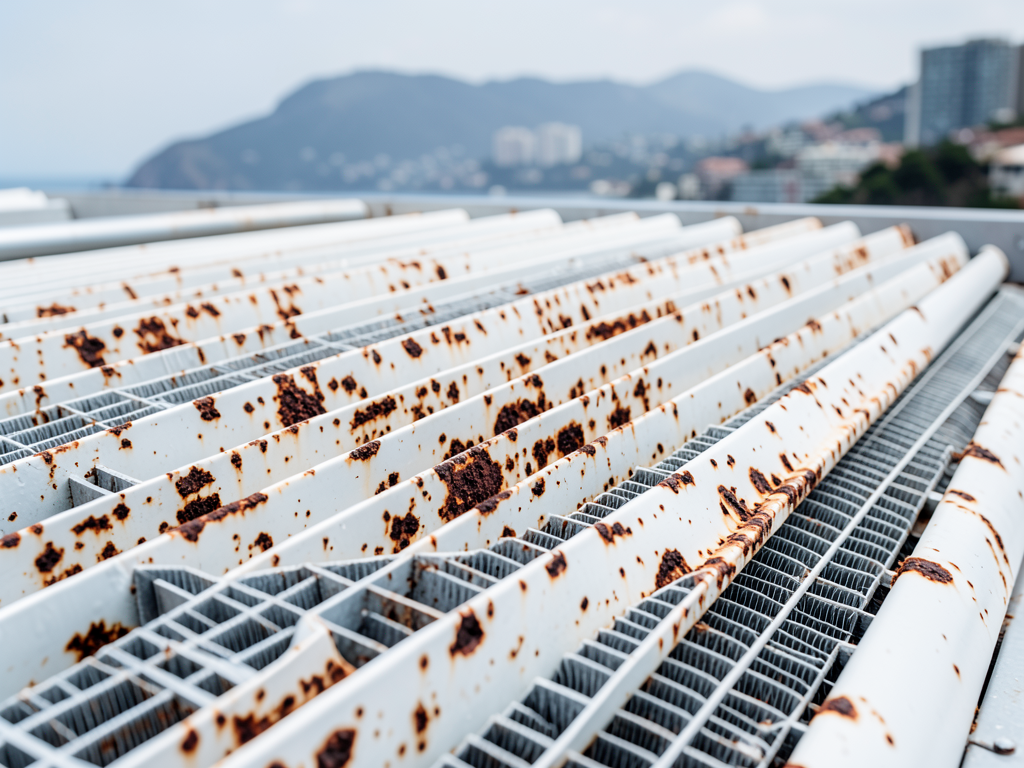
Salt air damage works through galvanic corrosion. When salt particles land on your condenser’s aluminum fins, they create microscopic electrical cells. The aluminum becomes the anode and corrodes away while the copper tubing becomes the cathode. This process happens 24/7 in coastal environments, even when your system isn’t running.
San Francisco’s unique geography makes the problem worse. The Golden Gate creates a wind tunnel that funnels ocean air directly into the Sunset District. The fog that blankets the city provides constant moisture that activates the salt’s corrosive properties. Unlike Florida or other coastal areas, San Francisco’s fog is year-round, not seasonal.
Micro-channel coils used in modern high-efficiency units are especially vulnerable. These coils have thinner aluminum walls than traditional tube-and-fin designs. Salt air penetrates the protective coatings faster and creates corrosion that spreads through the entire coil. Once corrosion starts in one area, it creates stress points that lead to refrigerant leaks.
Identifying the Signs of Corrosion
White rust appears as a chalky white coating on aluminum fins. This zinc oxide forms when the protective coating breaks down. If you see white rust, the corrosion process has already begun and will accelerate rapidly.
Pitting creates small holes in the aluminum surface. These pits start microscopic but grow larger over time. They often appear as dark spots that feel rough when touched. Pitting indicates the protective coating has failed completely.
Bent or brittle fins signal advanced corrosion. Healthy aluminum fins should feel slightly flexible. If they snap or crumble when touched, the metal has lost its structural integrity. This damage reduces airflow and forces your system to work harder.
Refrigerant leaks often appear as oily spots near coil connections. When corrosion eats through copper tubing, refrigerant escapes and carries oil with it. These leaks cause your system to lose cooling capacity and eventually fail completely.
Prevention Strategies for Coastal Properties
Unit placement makes a huge difference. Position your condenser on the side of your home away from prevailing ocean winds. In the Outer Sunset, that usually means the east or northeast side. Even a few feet of distance from direct ocean exposure can extend your unit’s life by 3-5 years.
Physical barriers block salt-laden air. Install a decorative fence or hedge between your condenser and the ocean. The barrier doesn’t need to be solid. Even a lattice fence with climbing plants can reduce salt exposure by 50%. Keep barriers at least 2 feet from the unit for proper airflow. The Best Way to Install Heat Pumps in Historic San Francisco Victorians.
Regular fresh water rinsing prevents salt buildup. Every 2-3 months, spray your condenser with a garden hose using moderate pressure. Focus on the coil fins and don’t worry about getting electrical components wet. The water pressure should be strong enough to remove salt deposits but not so strong it bends the fins.
Protective coatings create a barrier between salt air and metal surfaces. Clear acrylic coatings fill microscopic pores in aluminum fins. These coatings need reapplication every 2-3 years in coastal environments. More durable epoxy coatings last 5-7 years but cost more initially.
Professional Solutions: Protective Coatings
Factory-applied coatings offer the best protection. Manufacturers like Blygold and Heresite apply electrostatically charged particles that bond at the molecular level. These coatings penetrate deep into aluminum pores and create a barrier that salt air cannot penetrate. Factory coatings last 7-10 years in coastal environments.
Field-applied coatings work well for existing units. Professional technicians clean the coils thoroughly, then apply epoxy or phenolic coatings. These coatings don’t penetrate as deeply as factory applications but still provide 5-7 years of protection. The key is proper surface preparation before application. EPA Refrigerant Management Guidelines.
Blygold’s Polibrid coating uses a unique polymer matrix that flexes with temperature changes. This flexibility prevents cracking that occurs with rigid epoxy coatings. The coating also contains UV inhibitors that prevent sun damage in exposed locations.. Read more about Solving Temperature Imbalances in Multi-Level Potrero Hill Homes.
Heresite’s P-413 coating creates a chemical bond with aluminum surfaces. The coating penetrates 0.001 inches into the metal, creating a barrier that salt cannot penetrate. This coating works especially well in San Francisco’s temperature range where day-night temperature swings are common.
Recommended Equipment for SF Homeowners
Coastal grade HVAC units feature enhanced corrosion protection. These units use 316-grade stainless steel hardware instead of standard 304 stainless. The higher nickel content in 316 steel resists salt air corrosion 5 times better than standard grades.
Trane’s Hyperion units include a Seacoast Protection package. This package adds factory-applied Heresite coating, stainless steel hardware, and enhanced coil design. The units also feature larger condensate drains that prevent moisture buildup that accelerates corrosion.
Carrier’s WeatherShield series uses a different approach. These units feature copper tubing with tin coating instead of aluminum fins. Copper resists salt air corrosion better than aluminum, though it costs more initially. The tin coating provides additional protection against galvanic corrosion.
Heat pumps work well in San Francisco’s mild climate. Unlike traditional air conditioners, heat pumps provide both heating and cooling. Modern heat pumps achieve SEER2 ratings of 18-21, making them highly efficient for year-round use in coastal environments. Quiet and Efficient Furnace Replacement Options for Pacific Heights Residents.
Localized Maintenance Schedule
San Francisco’s fog season runs from May through August. During these months, salt air concentration is highest. Increase your rinsing frequency to once monthly during fog season. The rest of the year, rinse every 2-3 months.
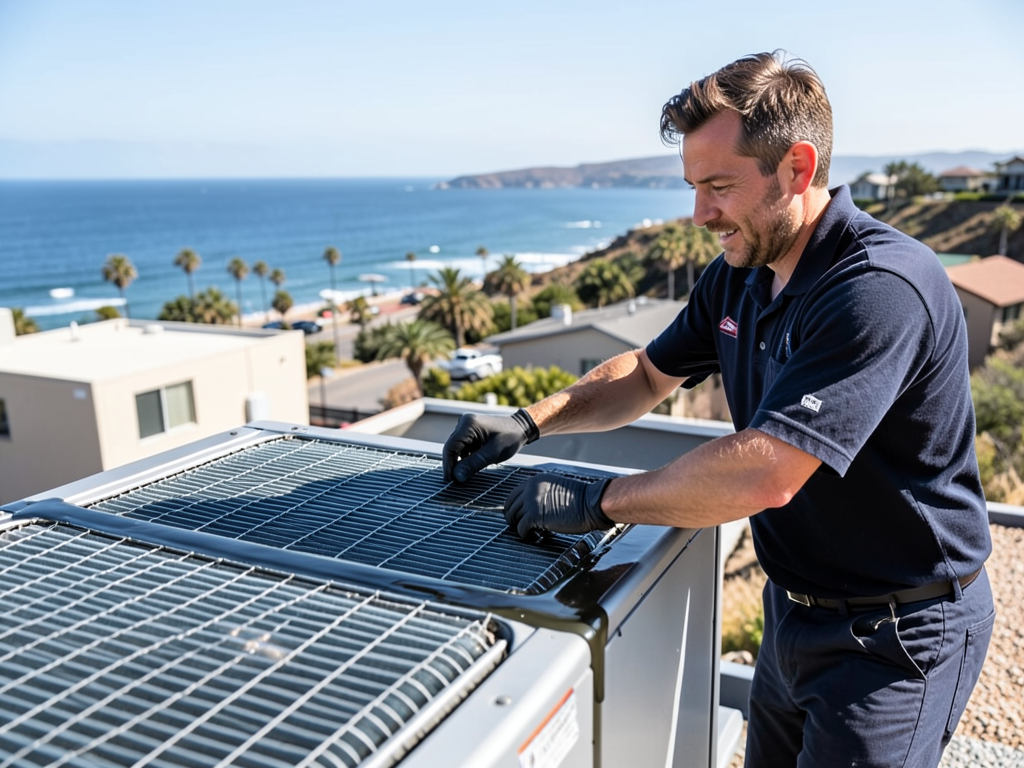
Quarterly inspections catch problems early. Check for white rust, pitting, and bent fins every three months. Look for oily spots near connections that indicate refrigerant leaks. Listen for unusual noises that might indicate fan motor bearing wear from salt exposure.
Annual professional maintenance is essential for coastal units. A technician should check refrigerant levels, clean coils thoroughly, and inspect all electrical connections. Salt air can cause corrosion on electrical terminals that leads to system failures. Professional Commercial HVAC Maintenance for SOMA Office Buildings.
Replace air filters monthly during high-use seasons. Dirty filters reduce airflow and force your system to work harder. In coastal environments, salt particles can clog filters faster than inland locations. Use filters with MERV ratings between 8-11 for optimal performance.
Cost Considerations and ROI
Protective coatings cost $300-600 for field application on existing units. Factory-applied coatings add $800-1,200 to new unit prices but last 2-3 times longer than field applications. The investment pays off through extended equipment life and reduced repair costs. Fast and Affordable AC Repair Services in Daly City and South San Francisco.
Coastal grade units cost 15-20% more than standard units. For a typical 3-ton system, that’s $800-1,500 extra. Given that coastal units last 10-12 years versus 5-7 years for unprotected units, the premium often pays for itself through avoided replacement costs.
Energy efficiency improves with proper maintenance. Corroded coils reduce heat transfer efficiency by 15-25%. That means your system runs longer to achieve the same cooling, increasing energy costs by $100-200 annually. Clean, protected coils maintain peak efficiency throughout their service life.. Read more about Deciding if an Annual HVAC Maintenance Plan is Worth the Investment.
Insurance considerations matter in coastal areas. Some insurers offer premium discounts for units with documented protective coatings. Others may require proof of regular maintenance to honor claims related to corrosion damage.. Read more about Dealing with Dampness and Fog Related Humidity in the Outer Richmond.
Building Code Requirements
San Francisco Building Code Section 43A.4 requires proper equipment mounting in seismic zones. All HVAC units must be anchored to prevent tipping during earthquakes. This requirement affects condenser pad design and mounting hardware selection.
California Title 24 Energy Standards mandate minimum SEER2 ratings for new installations. As of 2023, residential air conditioners must achieve SEER2 ratings of 14 or higher. Heat pumps must meet even stricter requirements based on climate zone. California Title 24 Energy Standards.
San Francisco Noise Ordinance limits outdoor equipment sound levels. Condensers must operate below 70 decibels at property lines. This requirement influences unit selection and placement, especially in dense Sunset District neighborhoods.
Permit requirements vary by installation type. Simple replacements often qualify for over-the-counter permits. System upgrades or relocations require full plan review and may need architectural drawings showing equipment placement relative to property lines.
Environmental Impact
Properly maintained HVAC systems reduce environmental impact. Efficient units use less electricity, reducing greenhouse gas emissions from power generation. Heat pumps produce zero on-site emissions, making them ideal for San Francisco’s electrification goals.
Refrigerant management prevents atmospheric damage. Modern systems use R-410A or R-32 refrigerants with lower global warming potential than older R-22. Proper maintenance prevents leaks that release these chemicals into the atmosphere.
Water usage for rinsing is minimal. A thorough condenser rinse uses 10-15 gallons of water. Compared to the 5,000+ gallons an inefficient system might waste through extended run times, the water used for maintenance is negligible.
Material recycling reduces landfill impact. When units reach end-of-life, aluminum coils, copper tubing, and steel components are recyclable. Professional removal services ensure these materials enter the recycling stream rather than landfills.
Emergency Response Planning
Storm damage requires immediate attention. High winds can bend condenser fins or damage protective coatings. After any major storm, inspect your unit for physical damage and rinse away any salt spray deposited by wind-driven waves.
Power surge protection prevents electrical damage. San Francisco’s power grid experiences occasional voltage fluctuations. Install surge protectors on both the electrical supply and control circuits to prevent damage from lightning strikes or grid disturbances.
Backup cooling options matter during system failures. Portable fans, window units, or temporary rentals can provide cooling while repairs are completed. Plan for at least 24-48 hours without your primary system during peak summer months.
Emergency service availability varies by season. HVAC companies experience highest demand during heat waves. Establish a relationship with a local contractor before you need emergency service to ensure priority response when problems occur. Who to Call for 24 Hour Emergency Heating Repair in San Francisco.
Future Trends in Coastal HVAC
Smart technology improves coastal unit monitoring. Sensors can detect early signs of corrosion or efficiency loss. Some systems alert homeowners when rinsing is needed or when protective coatings require reapplication.
Advanced materials offer better protection. Titanium heat exchangers resist corrosion better than aluminum or copper. While currently expensive, prices are dropping as manufacturing scales up. These units could become standard for coastal installations within 5 years.
Electrification trends favor heat pumps over traditional AC. San Francisco’s building electrification goals mean gas furnaces are being phased out. Heat pumps provide efficient heating and cooling in one unit, reducing equipment costs and complexity.
Energy storage integration allows off-peak cooling. Battery systems can power HVAC during peak rate periods or outages. This technology becomes especially valuable in coastal areas where power reliability can be affected by storms.
Frequently Asked Questions
How often should I rinse my coastal HVAC unit?
Rinse your condenser every 2-3 months during dry seasons and monthly during San Francisco’s fog season from May through August. More frequent rinsing may be needed if you live within 1/4 mile of the ocean.
What’s the difference between factory and field-applied protective coatings?
Factory coatings penetrate deeper into metal surfaces and last 7-10 years. Field applications provide good protection for 5-7 years but require more frequent reapplication. Factory coatings cost more upfront but offer better long-term value.
Can I apply protective coating myself?
DIY coatings are available but don’t provide the same protection as professional applications. Professional technicians use industrial-grade materials and proper surface preparation techniques that ensure coating adhesion and longevity.
How much does a coastal grade HVAC unit cost?
Coastal grade units cost 15-20% more than standard units. For a typical 3-ton system, expect to pay $800-1,500 extra. This premium often pays for itself through extended equipment life and reduced maintenance costs.
What SEER rating should I look for in a coastal unit?
Look for SEER2 ratings of 16 or higher for optimal efficiency. Higher ratings cost more upfront but reduce energy costs over the unit’s lifetime. In San Francisco’s mild climate, even high-efficiency units run relatively few hours annually.
Call to Action
Don’t wait until corrosion destroys your HVAC system. Call (628) 201-6600 today to schedule your coastal unit inspection. Our technicians specialize in Outer Sunset and Ocean Beach installations and can recommend the right protection strategy for your specific location.
Pick up the phone and call (628) 201-6600 before the next fog season hits. A quick inspection now can prevent thousands in emergency repairs later. We’ll check your current unit’s condition and recommend cost-effective protection options that extend your system’s life by 5-10 years.
Protect your investment with professional coastal HVAC services. Call (628) 201-6600 to learn about our maintenance plans that include quarterly inspections, protective coating reapplication, and priority emergency service. Your comfort depends on equipment that can withstand San Francisco’s unique coastal environment.
Conclusion
Salt air damage is inevitable in San Francisco’s coastal neighborhoods, but it doesn’t have to destroy your HVAC system. With proper protection strategies, regular maintenance, and professional inspections, you can extend your unit’s life by 5-10 years and avoid costly emergency repairs.
The key is understanding that coastal HVAC care isn’t optional. It’s a requirement for protecting your investment in San Francisco’s unique environment. Whether you choose factory-applied coatings, enhanced equipment, or diligent maintenance schedules, the effort you invest now pays dividends through years of reliable cooling and heating.
Don’t let salt air win the battle against your comfort. Take action today by calling (628) 201-6600 to schedule your coastal HVAC assessment. Your future self will thank you when your system keeps running smoothly through years of San Francisco’s challenging coastal conditions.
{
“@context”: “https://schema.org”,
“@type”: “BlogPosting”,
“headline”: “Protecting Your HVAC Unit from Salt Air Damage in the Outer Sunset and Ocean Beach”,
“description”: “San Francisco’s coastal HVAC units fail 50% faster from salt air corrosion. Learn how to protect your system in the Outer Sunset and Ocean Beach with proven prevention strategies.”,
“wordCount”: 2435,
“datePublished”: “2026-03-07T12:48:00.000Z”,
“dateModified”: “2026-03-07T12:48:00.000Z”,
“inLanguage”: “en-US”,
“mainEntityOfPage”: {
“@type”: “WebPage”,
“@id”: “https://atlashvacsanfrancisco.com”
},
“publisher”: {
“@type”: “LocalBusiness”,
“name”: “Atlas HVAC San Francisco”,
“url”: “https://atlashvacsanfrancisco.com”
},
“author”: {
“@type”: “Organization”,
“name”: “Atlas HVAC San Francisco”,
“url”: “https://atlashvacsanfrancisco.com”
},
“image”: {
“@type”: “ImageObject”,
“url”: “https://atlashvacsanfrancisco.com/wp-content/uploads/2026/03/protecting-your-hvac-unit-from-salt-air-damage-in-1.png”
}
}
{
“@context”: “https://schema.org”,
“@type”: “HVACBusiness”,
“name”: “Atlas HVAC San Francisco”,
“url”: “https://atlashvacsanfrancisco.com”,
“address”: {
“@type”: “PostalAddress”,
“addressLocality”: “San Francisco”
},
“areaServed”: {
“@type”: “City”,
“name”: “San Francisco”
}
}
{
“@context”: “https://schema.org”,
“@type”: “FAQPage”,
“mainEntity”: [
{
“@type”: “Question”,
“name”: “How often should I rinse my coastal HVAC unit?”,
“acceptedAnswer”: {
“@type”: “Answer”,
“text”: “Rinse your condenser every 2-3 months during dry seasons and monthly during San Francisco’s fog season from May through August. More frequent rinsing may be needed if you live within 1/4 mile of the ocean.”
}
},
{
“@type”: “Question”,
“name”: “What’s the difference between factory and field-applied protective coatings?”,
“acceptedAnswer”: {
“@type”: “Answer”,
“text”: “Factory coatings penetrate deeper into metal surfaces and last 7-10 years. Field applications provide good protection for 5-7 years but require more frequent reapplication. Factory coatings cost more upfront but offer better long-term value.”
}
},
{
“@type”: “Question”,
“name”: “Can I apply protective coating myself?”,
“acceptedAnswer”: {
“@type”: “Answer”,
“text”: “DIY coatings are available but don’t provide the same protection as professional applications. Professional technicians use industrial-grade materials and proper surface preparation techniques that ensure coating adhesion and longevity.”
}
},
{
“@type”: “Question”,
“name”: “How much does a coastal grade HVAC unit cost?”,
“acceptedAnswer”: {
“@type”: “Answer”,
“text”: “Coastal grade units cost 15-20% more than standard units. For a typical 3-ton system, expect to pay $800-1,500 extra. This premium often pays for itself through extended equipment life and reduced maintenance costs.”
}
},
{
“@type”: “Question”,
“name”: “What SEER rating should I look for in a coastal unit?”,
“acceptedAnswer”: {
“@type”: “Answer”,
“text”: “Look for SEER2 ratings of 16 or higher for optimal efficiency. Higher ratings cost more upfront but reduce energy costs over the unit’s lifetime. In San Francisco’s mild climate, even high-efficiency units run relatively few hours annually.”
}
}
]
}
{
“@context”: “https://schema.org”,
“@type”: “BreadcrumbList”,
“itemListElement”: [
{
“@type”: “ListItem”,
“position”: 1,
“name”: “Home”,
“item”: “https://atlashvacsanfrancisco.com”
},
{
“@type”: “ListItem”,
“position”: 2,
“name”: “Blog”,
“item”: “https://atlashvacsanfrancisco.com/blog”
},
{
“@type”: “ListItem”,
“position”: 3,
“name”: “Protecting Your HVAC Unit from Salt Air Damage in the Outer Sunset and Ocean Beach”
}
]
}
{
“@context”: “https://schema.org”,
“@type”: “Service”,
“serviceType”: “HVAC”,
“provider”: {
“@type”: “LocalBusiness”,
“name”: “Atlas HVAC San Francisco”,
“url”: “https://atlashvacsanfrancisco.com”
},
“areaServed”: {
“@type”: “City”,
“name”: “San Francisco”
},
“description”: “San Francisco’s coastal HVAC units fail 50% faster from salt air corrosion. Learn how to protect your system in the Outer Sunset and Ocean Beach with proven prevention strategies.”
}