
The Best Ways to Heat and Cool a San Francisco Garage Conversion or ADU
Heating and cooling a San Francisco garage conversion or ADU requires careful planning to meet strict building codes while handling the city’s unique microclimates. Whether you’re converting a Richmond District garage or building a new accessory dwelling unit in the Sunset, the right HVAC system ensures comfort, efficiency, and compliance with San Francisco’s Title 24 energy standards. Title 24 energy efficiency standards.
The first decision involves choosing between ductless mini-splits, heat pumps, or vertical PTAC units. Each system offers different advantages for small spaces. Ductless mini-splits provide zoned temperature control without requiring ductwork, making them ideal for garage conversions where running ducts would be difficult or impossible. Heat pumps offer both heating and cooling in one unit, perfect for San Francisco’s mild but variable climate. Vertical PTAC units work well in tight spaces but may not meet the city’s efficiency requirements for new construction. San Francisco Department of Building Inspection.
San Francisco’s building codes add another layer of complexity. The Department of Building Inspection requires permits for all new HVAC installations, and the system must meet Title 24 energy efficiency standards. This means your equipment needs a minimum Seasonal Energy Efficiency Ratio (SEER) rating and must pass a Manual J load calculation to ensure proper sizing. The city also has specific noise ordinances for outdoor condenser units, particularly important in dense neighborhoods like the Marina or Pacific Heights where units must operate below certain decibel levels. The Best Way to Install Heat Pumps in Historic San Francisco Victorians.
Installation costs in San Francisco typically range from $4,000 to $12,000 depending on the system type, home age, and electrical panel capacity. Many older homes in neighborhoods like Noe Valley or the Mission District need electrical upgrades before installing modern heat pump systems. The city offers several incentive programs including BayREN rebates and federal tax credits through the Inflation Reduction Act that can offset 30% or more of installation costs. BayREN rebate programs.
Before making any decisions, consider your specific needs. A 300-square-foot studio ADU in the foggy Richmond District has different requirements than a 700-square-foot two-bedroom unit in sunny Bernal Heights. The Richmond needs a system that can handle cool, damp conditions while the Bernal Heights unit requires better cooling capacity for warmer afternoons. Professional load calculations take these factors into account to recommend the right BTU capacity. Professional Commercial HVAC Maintenance for SOMA Office Buildings.
The installation timeline typically spans four to six weeks from permit approval to final inspection. This includes electrical work, mounting the indoor and outdoor units, running refrigerant lines, and obtaining final sign-off from the Department of Building Inspection. Working with a contractor familiar with San Francisco’s permitting process can prevent costly delays and ensure your system meets all local requirements.
Call (628) 201-6600 today to schedule your free consultation and learn which HVAC system works best for your San Francisco ADU or garage conversion.
Understanding SF ADU Heating & Cooling Requirements
San Francisco’s building codes create specific requirements for ADU HVAC systems that differ from standard residential installations. The city mandates that all new construction and major renovations meet Title 24 energy efficiency standards, which means your system must achieve specific performance metrics. This includes a minimum SEER rating of 15 for cooling equipment and compliance with California’s all-electric building requirements for new construction.
The Department of Building Inspection also enforces strict noise ordinances for outdoor equipment. Condenser units must operate below 70 decibels when measured from adjacent property lines, which affects unit selection and placement. This is particularly challenging in neighborhoods like the Castro or Haight-Ashbury where homes sit close together on small lots.
San Francisco’s unique microclimates mean one system doesn’t fit all. The fog belt along the western side of the city requires different heating strategies than the sunnier eastern neighborhoods. A garage conversion in the Sunset District needs equipment that can handle cool, damp conditions, while a unit in Potrero Hill requires better cooling capacity for warmer afternoons. The city’s Building Code requires contractors to perform Manual J load calculations to properly size equipment for these varying conditions. Who to Call for 24 Hour Emergency Heating Repair in San Francisco.
Permitting adds another layer of complexity. All new HVAC installations require permits from the Department of Building Inspection, and the process includes plan review, inspections, and final sign-off. The timeline typically spans two to four weeks for permit approval alone, making it essential to factor this into your project schedule. Working with contractors who understand San Francisco’s specific requirements can prevent costly mistakes and delays.
The city’s transition to all-electric buildings affects older garage conversions. Many pre-1970s homes have gas furnaces that don’t meet current standards. Converting to electric heat pumps requires evaluating your electrical panel capacity and potentially upgrading from 100 to 200 amps. This electrical work often becomes the determining factor in which HVAC system you can install.
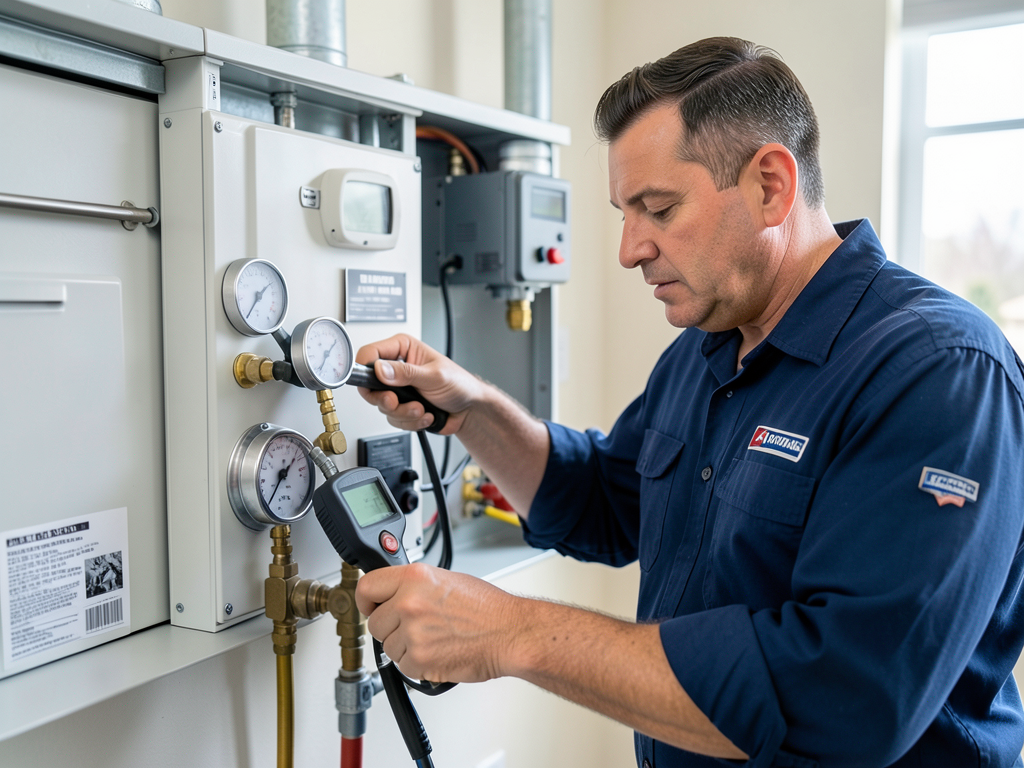
Image: Technician performing a Manual J load calculation on a San Francisco ADU using specialized software to determine proper BTU requirements based on local climate data and building envelope characteristics.
Best HVAC Systems for Small Spaces
Small spaces like garage conversions and ADUs require HVAC systems that maximize efficiency while minimizing footprint. Ductless mini-split systems dominate this category because they provide zoned heating and cooling without the space requirements of traditional ductwork. These systems consist of an outdoor compressor unit connected to one or more indoor air handlers mounted on walls or ceilings.
Single-zone mini-splits work well for studio ADUs or one-room garage conversions. A 9,000 BTU unit typically handles 300 to 400 square feet, while a 12,000 BTU unit covers 400 to 550 square feet. Multi-zone systems support multiple indoor units controlled independently, perfect for two-bedroom ADUs where different rooms need different temperatures. A three-zone system might include a 12,000 BTU unit for the living area and two 9,000 BTU units for bedrooms.
Heat pumps offer an alternative that provides both heating and cooling in one unit. Air-source heat pumps work efficiently in San Francisco’s mild climate, operating at coefficients of performance (COP) between 3.0 and 4.0. This means they produce three to four units of heat for every unit of electricity consumed. Ground-source heat pumps achieve even higher efficiency but require significant yard space for the ground loop, making them impractical for most urban lots. Quiet and Efficient Furnace Replacement Options for Pacific Heights Residents.
Vertical PTAC (Packaged Terminal Air Conditioner) units install through exterior walls and work in extremely tight spaces. These self-contained units provide heating and cooling but typically achieve lower efficiency ratings than mini-splits or heat pumps. They’re most common in older buildings where space constraints prevent other options, though they may not meet current Title 24 requirements for new construction.
Noise levels vary significantly between system types. Mini-splits operate at 19 to 30 decibels indoors, quieter than a whisper. Heat pumps range from 50 to 70 decibels outdoors depending on the model. PTAC units can reach 60 decibels or higher, similar to normal conversation levels. San Francisco’s noise ordinances require outdoor units to stay below 70 decibels at property lines, making mini-splits the quietest option for dense neighborhoods.
- Determine Your Space Requirements
Measure your ADU square footage and ceiling height. A 400-square-foot studio needs approximately 9,000 BTUs for cooling, while a 700-square-foot two-bedroom requires 18,000 BTUs or more.
- Evaluate Your Electrical Capacity
Check your electrical panel amperage. Most mini-splits require 15 to 20 amp circuits, while heat pumps may need 30 to 50 amp service. Older homes often need panel upgrades.
- Consider Your Climate Zone
Identify whether your location falls in San Francisco’s fog belt or sunnier zones. Western neighborhoods need better heating capacity, while eastern areas require stronger cooling.
- Check Local Code Requirements
Verify Title 24 compliance requirements and noise ordinances. Some neighborhoods restrict outdoor unit placement based on proximity to property lines.
- Compare Operating Costs
Calculate annual energy costs based on local utility rates. Heat pumps typically cost $200 to $400 annually to operate, while electric resistance heating can cost $600 to $800.
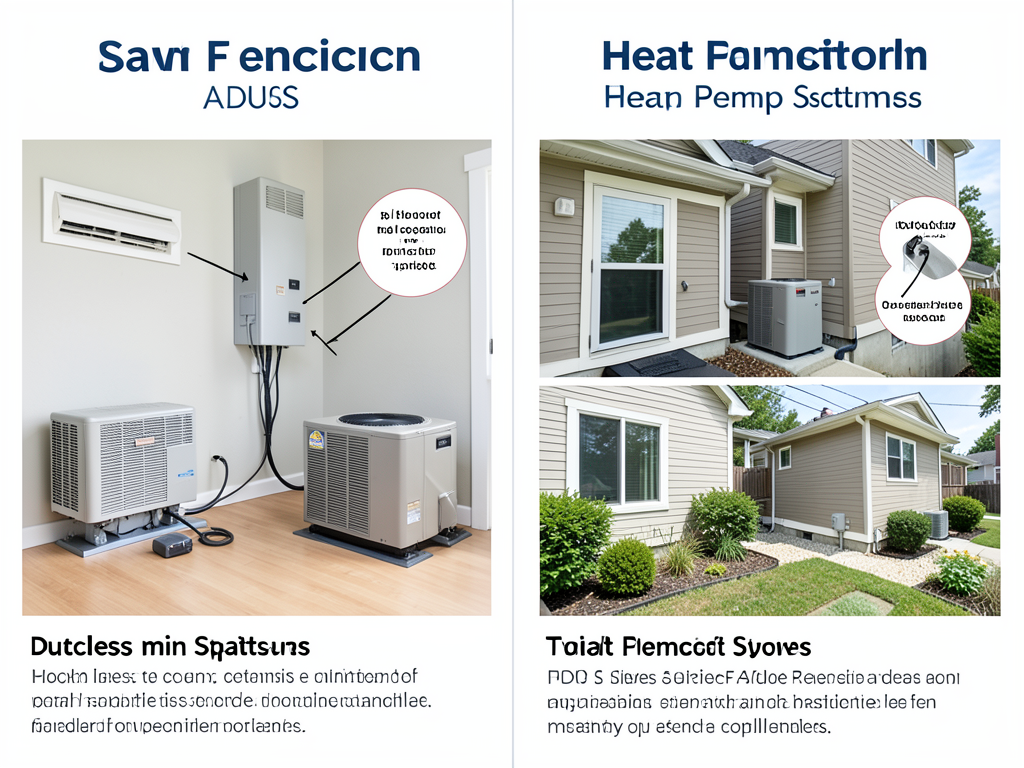
Image: Side-by-side comparison of ductless mini-split and heat pump systems showing indoor unit mounting options, outdoor unit sizes, and typical installation configurations for San Francisco ADUs.
Title 24 Compliance in San Francisco
California’s Title 24 energy code establishes strict requirements for all new HVAC installations in San Francisco. The code mandates specific efficiency levels, insulation requirements, and commissioning procedures to ensure systems operate as designed. For ADUs and garage conversions, compliance affects everything from equipment selection to installation methods.
SEER ratings represent the primary efficiency metric for cooling equipment. Title 24 requires a minimum SEER of 15 for new installations, though many modern systems achieve 20 to 25 SEER. Heat pumps must meet both SEER requirements for cooling and Heating Seasonal Performance Factor (HSPF) requirements for heating. The minimum HSPF rating is 8.5, with premium units reaching 10 or higher.
Manual J load calculations prove essential for Title 24 compliance. These calculations determine the exact heating and cooling capacity needed based on your building’s specific characteristics. Factors include square footage, ceiling height, insulation levels, window area, orientation, and local climate data. San Francisco’s varied microclimates mean calculations for the foggy Richmond District differ significantly from those for sunny Noe Valley.
The code also requires commissioning for all new HVAC systems. This process verifies that equipment operates according to design specifications through performance testing and adjustment. Commissioning includes checking refrigerant charge, airflow rates, and control sequences. Many contractors skip this step to save time, but Title 24 compliance requires documented commissioning results.
Building envelope requirements affect HVAC sizing. Title 24 mandates specific insulation levels for walls, ceilings, and floors based on your climate zone. San Francisco falls in Climate Zone 3, requiring R-13 insulation in walls and R-30 in ceilings for new construction. Poor insulation forces oversized HVAC equipment, increasing both installation and operating costs.
Ventilation requirements add another compliance layer. Title 24 mandates mechanical ventilation for all new residential construction, including ADUs. This typically means installing energy recovery ventilators (ERVs) or heat recovery ventilators (HRVs) that exchange stale indoor air for fresh outdoor air while recovering heating or cooling energy. These units add $1,500 to $3,000 to installation costs but improve indoor air quality and meet code requirements.
Solar readiness requirements affect system planning. New California homes must be pre-wired for future solar panel installation, including dedicated circuits and roof space allocation. While not mandatory for existing garage conversions, solar-ready design can reduce future installation costs if you plan to add panels later.
Installation Process & Timeline
Installing HVAC in a San Francisco ADU follows a specific sequence that ensures code compliance and proper system operation. The process begins with obtaining permits from the Department of Building Inspection, which typically takes two to four weeks for review and approval. During this time, your contractor submits detailed plans showing equipment locations, electrical requirements, and compliance with Title 24 standards.
Day one involves electrical preparation. This includes running new circuits from your electrical panel to the installation locations, upgrading the panel if necessary, and installing any required disconnect switches. Many San Francisco homes built before 1980 have 100-amp service that cannot support modern heat pump systems, requiring costly but necessary upgrades to 200-amp service.
Day two focuses on mounting indoor units. Wall-mounted air handlers install using metal brackets secured to wall studs, while ceiling cassette units require cutting access holes in the ceiling. The mounting location affects both performance and aesthetics. Units should mount high on walls for optimal air distribution but away from beds or seating areas where direct airflow causes discomfort.
Day three addresses outdoor unit placement. Condenser units require level pads with proper clearance from walls and property lines. San Francisco’s small lot sizes often create challenges finding compliant locations. Units must sit at least three feet from property lines and five feet from windows in many zoning districts. Noise considerations may force placement on less optimal sides of buildings.
Day four involves connecting refrigerant lines and running electrical wiring between indoor and outdoor units. Copper refrigerant lines must maintain proper slope and avoid sharp bends that restrict flow. Line sets typically run through walls or along exterior surfaces, then enter the building through small holes sealed with weatherproof fittings. Proper insulation prevents condensation and energy loss.
Day five covers system charging and commissioning. Technicians connect vacuum pumps to remove moisture and non-condensable gases from refrigerant lines, then charge the system with the correct refrigerant type and quantity. Commissioning tests verify proper operation across heating and cooling modes, checking superheat and subcooling levels to ensure optimal efficiency.
Final inspections occur after installation completion. The Department of Building Inspection verifies code compliance through visual inspection and performance testing. This includes checking permit displays, verifying Title 24 documentation, testing system operation, and confirming proper electrical connections. Any deficiencies require correction before final approval.
The entire process from permit application to final inspection typically spans six to eight weeks, though complex projects may take longer. Weather delays rarely affect indoor work, but outdoor activities like condenser pad installation may pause during heavy rain. Working with experienced San Francisco contractors familiar with local requirements helps maintain schedules and avoid common pitfalls.
Image: Step-by-step installation sequence showing electrical panel preparation, indoor unit mounting, outdoor condenser placement, refrigerant line connection, and final system commissioning for a San Francisco ADU project.
Cost Estimates & Rebates
HVAC installation costs in San Francisco vary significantly based on system type, home characteristics, and local requirements. Basic ductless mini-split systems for small ADUs start around $4,000 to $6,000, including equipment, installation, and permits. Mid-range heat pump systems with multiple zones cost $8,000 to $12,000, while premium systems with advanced features can exceed $15,000.
Equipment costs represent the largest expense category. A single-zone 9,000 BTU mini-split with installation runs $2,500 to $4,000. Multi-zone systems cost $1,500 to $2,500 per additional zone. Heat pump prices vary by efficiency rating, with premium 20 SEER units costing 30% to 50% more than standard 15 SEER models. However, higher efficiency often pays for itself through lower operating costs within five to seven years.
Electrical work frequently adds unexpected costs. Panel upgrades from 100 to 200 amps cost $2,000 to $4,000, including new breakers and utility coordination. Running new circuits to installation locations adds $500 to $1,500 depending on distance and accessibility. Many San Francisco homes require extensive electrical work before installing modern HVAC systems.
Permit fees in San Francisco range from $500 to $2,000 depending on project scope and valuation. The Department of Building Inspection charges based on construction valuation, with HVAC projects typically falling in the $5,000 to $15,000 range. Title 24 documentation fees add $200 to $500 if your contractor doesn’t handle this internally.
Several rebate programs can significantly reduce net costs. BayREN (Bay Area Regional Energy Network) offers rebates of $300 to $1,500 for heat pump installations, depending on system efficiency and household income. TECH Clean California provides additional rebates of $1,000 to $3,000 for qualifying heat pump systems. Federal tax credits through the Inflation Reduction Act cover 30% of installation costs up to $2,000.
PG&E also offers incentives for high-efficiency equipment. Their rebate program provides $50 to $200 per ton of cooling capacity for systems meeting specific efficiency thresholds. These rebates apply to both residential and ADU installations, though documentation requirements can be extensive.
Operating costs vary by system type and usage patterns. Mini-splits typically cost $200 to $400 annually to operate in San Francisco’s mild climate. Heat pumps range from $250 to $500 depending on efficiency and usage. Electric resistance heating, still common in older buildings, can cost $600 to $1,000 annually for comparable heating output.
Maintenance costs average $150 to $300 annually for professional servicing, including filter replacement, refrigerant level checks, and performance testing. Well-maintained systems operate 15% to 20% more efficiently than neglected equipment, making regular maintenance a cost-effective investment.
Financing options help manage upfront costs. Many contractors offer payment plans spanning 12 to 60 months. BayREN also provides low-interest financing through the Property Assessed Clean Energy (PACE) program, allowing homeowners to finance improvements through property tax assessments over 10 to 20 years.
Call (628) 201-6600 today to schedule your free consultation and learn which HVAC system works best for your San Francisco ADU or garage conversion.
Frequently Asked Questions
What size HVAC system do I need for my 400-square-foot ADU?
A 400-square-foot ADU typically requires a 9,000 to 12,000 BTU system for adequate heating and cooling. However, San Francisco’s Title 24 compliance requires a Manual J load calculation to determine exact sizing based on insulation, windows, and local climate conditions. Installing an oversized system wastes energy and increases costs.
How long does it take to get permits for HVAC installation in San Francisco?
Permit approval from the Department of Building Inspection typically takes two to four weeks. The process includes plan review, title search, and verification of contractor licensing. Complex projects or those requiring electrical upgrades may take longer. Your contractor should handle permit submission and scheduling inspections.
Can I install HVAC in my garage conversion without permits?
No. San Francisco requires permits for all new HVAC installations, including garage conversions and ADUs. Unpermitted work can result in fines, forced removal of equipment, and complications when selling your property. Title 24 compliance also requires documentation that only permitted installations provide.
What rebates are available for HVAC installation in San Francisco?
Several programs offer rebates for qualifying HVAC installations. BayREN provides $300 to $1,500 rebates for heat pump systems. TECH Clean California offers $1,000 to $3,000 additional rebates. Federal tax credits cover 30% of costs up to $2,000. PG&E also offers efficiency-based rebates of $50 to $200 per ton.
Do I need to upgrade my electrical panel for a new HVAC system?
Many San Francisco homes built before 1980 have 100-amp electrical service that cannot support modern heat pump systems. Panel upgrades to 200 amps cost $2,000 to $4,000 but may be necessary. Your contractor should evaluate your electrical capacity during the initial consultation to identify any required upgrades.
How noisy are outdoor HVAC units in residential neighborhoods?
San Francisco’s noise ordinances limit outdoor units to 70 decibels at property lines. Modern mini-splits operate at 50 to 70 decibels outdoors, while older PTAC units can exceed 80 decibels. Indoor units typically operate at 19 to 30 decibels, quieter than a whisper. Proper unit selection and placement ensure compliance.
What maintenance does a new HVAC system require?
Annual professional maintenance costs $150 to $300 and includes filter replacement, refrigerant level checks, coil cleaning, and performance testing. DIY tasks include monthly filter checks and cleaning. Well-maintained systems operate 15% to 20% more efficiently and typically last 15 to 20 years compared to 10 to 12 years for neglected equipment.
Can I finance my HVAC installation?
Yes. Many contractors offer payment plans spanning 12 to 60 months. BayREN provides low-interest financing through the PACE program, allowing you to finance improvements through property tax assessments over 10 to 20 years. Some utility companies also offer on-bill financing that adds monthly payments to your utility bill.
How do I choose between a mini-split and a heat pump?
Choose mini-splits for zoned temperature control and installation flexibility. They work well when you need different temperatures in different rooms. Choose heat pumps for whole-house heating and cooling with potentially lower installation costs. Your choice depends on your space layout, budget, and whether you need zoning capabilities.
What happens if my HVAC system fails inspection?
Failed inspections require corrections before final approval. Common issues include improper refrigerant charge, inadequate clearance from property lines, or missing Title 24 documentation. Your contractor should address deficiencies and request re-inspection. Most issues can be resolved within a few days, though complex problems may extend timelines.
Should I consider a smart thermostat with my new system?
Smart thermostats offer energy savings of 10% to 15% through learning algorithms and remote control. They integrate with most modern HVAC systems and provide energy usage data to help optimize settings. Many utility rebate programs require smart thermostats for maximum incentives. The $200 to $300 investment typically pays for itself within two years.
How do San Francisco’s microclimates affect HVAC sizing?
San Francisco’s microclimates create significant variation in heating and cooling requirements. Western neighborhoods in the fog belt need more heating capacity due to cooler temperatures and higher humidity. Eastern areas require better cooling for warmer afternoons. Your contractor should use location-specific climate data in Manual J calculations to ensure proper sizing for your exact location.
What warranties come with new HVAC systems?
Equipment warranties typically cover 5 to 10 years for parts and 1 to 5 years for compressors. Labor warranties vary by contractor but often cover 1 to 2 years. Some manufacturers offer extended warranties up to 12 years with product registration and annual maintenance. Always get warranty terms in writing before installation.
{
“@context”: “https://schema.org”,
“@type”: “BlogPosting”,
“headline”: “The Best Ways to Heat and Cool a San Francisco Garage Conversion or ADU”,
“description”: “Discover the best HVAC systems for San Francisco ADUs and garage conversions. Learn about Title 24 compliance, local rebates, and expert installation for your small space.”,
“wordCount”: 3481,
“datePublished”: “2026-04-21T15:22:00.000Z”,
“dateModified”: “2026-04-21T15:22:00.000Z”,
“inLanguage”: “en-US”,
“mainEntityOfPage”: {
“@type”: “WebPage”,
“@id”: “https://atlashvacsanfrancisco.com”
},
“publisher”: {
“@type”: “LocalBusiness”,
“name”: “Atlas HVAC San Francisco”,
“url”: “https://atlashvacsanfrancisco.com”
},
“author”: {
“@type”: “Organization”,
“name”: “Atlas HVAC San Francisco”,
“url”: “https://atlashvacsanfrancisco.com”
},
“image”: {
“@type”: “ImageObject”,
“url”: “https://atlashvacsanfrancisco.com/wp-content/uploads/2026/03/the-best-ways-to-heat-and-cool-a-san-francisco-gar-1.png”
}
}
{
“@context”: “https://schema.org”,
“@type”: “HVACBusiness”,
“name”: “Atlas HVAC San Francisco”,
“url”: “https://atlashvacsanfrancisco.com”,
“address”: {
“@type”: “PostalAddress”,
“addressLocality”: “San Francisco”
},
“areaServed”: {
“@type”: “City”,
“name”: “San Francisco”
}
}
{
“@context”: “https://schema.org”,
“@type”: “FAQPage”,
“mainEntity”: [
{
“@type”: “Question”,
“name”: “What size HVAC system do I need for my 400-square-foot ADU?”,
“acceptedAnswer”: {
“@type”: “Answer”,
“text”: “A 400-square-foot ADU typically requires a 9,000 to 12,000 BTU system for adequate heating and cooling. However, San Francisco’s Title 24 compliance requires a Manual J load calculation to determine exact sizing based on insulation, windows, and local climate conditions. Installing an oversized system wastes energy and increases costs.”
}
},
{
“@type”: “Question”,
“name”: “How long does it take to get permits for HVAC installation in San Francisco?”,
“acceptedAnswer”: {
“@type”: “Answer”,
“text”: “Permit approval from the Department of Building Inspection typically takes two to four weeks. The process includes plan review, title search, and verification of contractor licensing. Complex projects or those requiring electrical upgrades may take longer. Your contractor should handle permit submission and scheduling inspections.”
}
},
{
“@type”: “Question”,
“name”: “Can I install HVAC in my garage conversion without permits?”,
“acceptedAnswer”: {
“@type”: “Answer”,
“text”: “No. San Francisco requires permits for all new HVAC installations, including garage conversions and ADUs. Unpermitted work can result in fines, forced removal of equipment, and complications when selling your property. Title 24 compliance also requires documentation that only permitted installations provide.”
}
},
{
“@type”: “Question”,
“name”: “What rebates are available for HVAC installation in San Francisco?”,
“acceptedAnswer”: {
“@type”: “Answer”,
“text”: “Several programs offer rebates for qualifying HVAC installations. BayREN provides $300 to $1,500 rebates for heat pump systems. TECH Clean California offers $1,000 to $3,000 additional rebates. Federal tax credits cover 30% of costs up to $2,000. PG&E also offers efficiency-based rebates of $50 to $200 per ton.”
}
},
{
“@type”: “Question”,
“name”: “Do I need to upgrade my electrical panel for a new HVAC system?”,
“acceptedAnswer”: {
“@type”: “Answer”,
“text”: “Many San Francisco homes built before 1980 have 100-amp electrical service that cannot support modern heat pump systems. Panel upgrades to 200 amps cost $2,000 to $4,000 but may be necessary. Your contractor should evaluate your electrical capacity during the initial consultation to identify any required upgrades.”
}
},
{
“@type”: “Question”,
“name”: “How noisy are outdoor HVAC units in residential neighborhoods?”,
“acceptedAnswer”: {
“@type”: “Answer”,
“text”: “San Francisco’s noise ordinances limit outdoor units to 70 decibels at property lines. Modern mini-splits operate at 50 to 70 decibels outdoors, while older PTAC units can exceed 80 decibels. Indoor units typically operate at 19 to 30 decibels, quieter than a whisper. Proper unit selection and placement ensure compliance.”
}
},
{
“@type”: “Question”,
“name”: “What maintenance does a new HVAC system require?”,
“acceptedAnswer”: {
“@type”: “Answer”,
“text”: “Annual professional maintenance costs $150 to $300 and includes filter replacement, refrigerant level checks, coil cleaning, and performance testing. DIY tasks include monthly filter checks and cleaning. Well-maintained systems operate 15% to 20% more efficiently and typically last 15 to 20 years compared to 10 to 12 years for neglected equipment.”
}
},
{
“@type”: “Question”,
“name”: “Can I finance my HVAC installation?”,
“acceptedAnswer”: {
“@type”: “Answer”,
“text”: “Yes. Many contractors offer payment plans spanning 12 to 60 months. BayREN provides low-interest financing through the PACE program, allowing you to finance improvements through property tax assessments over 10 to 20 years. Some utility companies also offer on-bill financing that adds monthly payments to your utility bill.”
}
},
{
“@type”: “Question”,
“name”: “How do I choose between a mini-split and a heat pump?”,
“acceptedAnswer”: {
“@type”: “Answer”,
“text”: “Choose mini-splits for zoned temperature control and installation flexibility. They work well when you need different temperatures in different rooms. Choose heat pumps for whole-house heating and cooling with potentially lower installation costs. Your choice depends on your space layout, budget, and whether you need zoning capabilities.”
}
},
{
“@type”: “Question”,
“name”: “What happens if my HVAC system fails inspection?”,
“acceptedAnswer”: {
“@type”: “Answer”,
“text”: “Failed inspections require corrections before final approval. Common issues include improper refrigerant charge, inadequate clearance from property lines, or missing Title 24 documentation. Your contractor should address deficiencies and request re-inspection. Most issues can be resolved within a few days, though complex problems may extend timelines.”
}
},
{
“@type”: “Question”,
“name”: “Should I consider a smart thermostat with my new system?”,
“acceptedAnswer”: {
“@type”: “Answer”,
“text”: “Smart thermostats offer energy savings of 10% to 15% through learning algorithms and remote control. They integrate with most modern HVAC systems and provide energy usage data to help optimize settings. Many utility rebate programs require smart thermostats for maximum incentives. The $200 to $300 investment typically pays for itself within two years.”
}
},
{
“@type”: “Question”,
“name”: “How do San Francisco’s microclimates affect HVAC sizing?”,
“acceptedAnswer”: {
“@type”: “Answer”,
“text”: “San Francisco’s microclimates create significant variation in heating and cooling requirements. Western neighborhoods in the fog belt need more heating capacity due to cooler temperatures and higher humidity. Eastern areas require better cooling for warmer afternoons. Your contractor should use location-specific climate data in Manual J calculations to ensure proper sizing for your exact location.”
}
},
{
“@type”: “Question”,
“name”: “What warranties come with new HVAC systems?”,
“acceptedAnswer”: {
“@type”: “Answer”,
“text”: “Equipment warranties typically cover 5 to 10 years for parts and 1 to 5 years for compressors. Labor warranties vary by contractor but often cover 1 to 2 years. Some manufacturers offer extended warranties up to 12 years with product registration and annual maintenance. Always get warranty terms in writing before installation.”
}
}
]
}
{
“@context”: “https://schema.org”,
“@type”: “HowTo”,
“name”: “How to Choose the Right HVAC System”,
“step”: [
{
“@type”: “HowToStep”,
“position”: 1,
“name”: “Determine Your Space Requirements”,
“text”: “Measure your ADU square footage and ceiling height. A 400-square-foot studio needs approximately 9,000 BTUs for cooling, while a 700-square-foot two-bedroom requires 18,000 BTUs or more.”
},
{
“@type”: “HowToStep”,
“position”: 2,
“name”: “Evaluate Your Electrical Capacity”,
“text”: “Check your electrical panel amperage. Most mini-splits require 15 to 20 amp circuits, while heat pumps may need 30 to 50 amp service. Older homes often need panel upgrades.”
},
{
“@type”: “HowToStep”,
“position”: 3,
“name”: “Consider Your Climate Zone”,
“text”: “Identify whether your location falls in San Francisco’s fog belt or sunnier zones. Western neighborhoods need better heating capacity, while eastern areas require stronger cooling.”
},
{
“@type”: “HowToStep”,
“position”: 4,
“name”: “Check Local Code Requirements”,
“text”: “Verify Title 24 compliance requirements and noise ordinances. Some neighborhoods restrict outdoor unit placement based on proximity to property lines.”
},
{
“@type”: “HowToStep”,
“position”: 5,
“name”: “Compare Operating Costs”,
“text”: “Calculate annual energy costs based on local utility rates. Heat pumps typically cost $200 to $400 annually to operate, while electric resistance heating can cost $600 to $800.”
}
],
“image”: “https://atlashvacsanfrancisco.com/wp-content/uploads/2026/03/the-best-ways-to-heat-and-cool-a-san-francisco-gar-1.png”
}
{
“@context”: “https://schema.org”,
“@type”: “BreadcrumbList”,
“itemListElement”: [
{
“@type”: “ListItem”,
“position”: 1,
“name”: “Home”,
“item”: “https://atlashvacsanfrancisco.com”
},
{
“@type”: “ListItem”,
“position”: 2,
“name”: “Blog”,
“item”: “https://atlashvacsanfrancisco.com/blog”
},
{
“@type”: “ListItem”,
“position”: 3,
“name”: “The Best Ways to Heat and Cool a San Francisco Garage Conversion or ADU”
}
]
}
{
“@context”: “https://schema.org”,
“@type”: “Service”,
“serviceType”: “HVAC”,
“provider”: {
“@type”: “LocalBusiness”,
“name”: “Atlas HVAC San Francisco”,
“url”: “https://atlashvacsanfrancisco.com”
},
“areaServed”: {
“@type”: “City”,
“name”: “San Francisco”
},
“description”: “Discover the best HVAC systems for San Francisco ADUs and garage conversions. Learn about Title 24 compliance, local rebates, and expert installation for your small space.”
}