
How to Stop Your HVAC System from Keeping the Neighbors Awake in Nob Hill
Living in Nob Hill means enjoying historic charm, steep streets, and stunning views—but it also means dealing with close quarters. If your air conditioner sounds like a jet engine, your neighbors hear it too. The good news is that modern quiet AC technology and proper installation can eliminate noise complaints while keeping your home cool. This guide covers the exact steps to achieve whisper-quiet cooling in San Francisco’s densest neighborhood. San Francisco Department of Building Inspection.
Why Noise Matters More in Nob Hill Than Other Neighborhoods
Nob Hill’s unique density creates specific challenges. Victorian and Edwardian homes sit shoulder-to-shoulder on narrow lots, often separated by just a few feet. Sound travels easily through these old walls and across tiny side yards. San Francisco’s Noise Control Ordinance (Chapter 41 of the San Francisco Police Code) limits outdoor equipment noise to 45 decibels at property lines during daytime hours and 40 decibels at night. A standard AC unit often produces 60-70 decibels—well above legal limits and guaranteed to trigger complaints.
Beyond legal compliance, there’s the social contract. In a neighborhood where residents value peace and historic preservation, a noisy condenser can damage relationships with neighbors who paid premium prices for quiet living. The solution isn’t just about following rules—it’s about being a good neighbor in one of San Francisco’s most prestigious communities. Quiet and Efficient Furnace Replacement Options for Pacific Heights Residents.
Understanding AC Noise: What Makes Units Loud
AC noise comes from several sources working together. The compressor creates the most noticeable sound—a low-frequency hum or vibration that travels through walls and floors. The condenser fan adds a high-pitched whirring noise, especially when running at full speed. Vibration from the entire unit transmits through mounting brackets into your home’s structure. Startup surges create momentary loud clicks and hums. Even the refrigerant flow can produce gurgling sounds in older systems.
Traditional single-speed compressors run at 100% capacity whenever cooling is needed, creating maximum noise during every cycle. They also cycle on and off frequently, which means more noise events throughout the day. The outdoor unit’s placement matters tremendously—units mounted on bedroom walls or near property lines amplify problems. Poor installation techniques, like using rigid metal brackets instead of vibration isolation pads, turn minor vibrations into major noise issues. The Best Way to Install Heat Pumps in Historic San Francisco Victorians.
Top Quiet AC Technologies for Nob Hill Homes
Inverter technology represents the biggest breakthrough in quiet cooling. Unlike traditional compressors that turn fully on or off, inverter compressors adjust their speed continuously to match cooling demand. This means they typically run at 30-70% capacity, producing 10-15 decibels less noise than standard units. The gradual startup eliminates the loud click-and-roar of traditional systems. Brands like Mitsubishi Electric, Daikin, and Bosch offer inverter models specifically engineered for quiet operation.
Ductless mini-split systems excel in Nob Hill’s older homes. These systems separate the noisy outdoor compressor from the indoor air handler by up to 50 feet of refrigerant line. The indoor units operate at whisper-quiet levels—often below 20 decibels, quieter than a library. Mitsubishi’s FH series and Daikin’s Fit line include models rated at just 19 decibels for the indoor unit. The outdoor units for these systems also run more quietly than traditional central AC condensers.
Variable-speed air handlers add another layer of quiet performance. These fans adjust their speed based on cooling needs rather than running at full blast constantly. They eliminate the whoosh of high-speed air movement and reduce overall system noise by 5-10 decibels. When paired with inverter compressors, the combination creates cooling systems so quiet you might not notice they’re running.
Comparison Table: Decibel Ratings by AC Type
| AC System Type | Indoor Unit dB | Outdoor Unit dB | Typical Use Case |
|---|---|---|---|
| Standard Central AC | 45-55 | 60-70 | Older homes, budget installs |
| Inverter Mini-Split | 19-25 | 45-52 | Victorian homes, bedrooms |
| Ductless Ceiling Cassette | 25-30 | 48-55 | Historic preservation projects |
| Geothermal Heat Pump | 30-35 | 42-48 | New construction, deep retrofits |
| Portable AC Unit | 50-60 | N/A | Temporary solutions only |
Specialized Quiet Installation Techniques
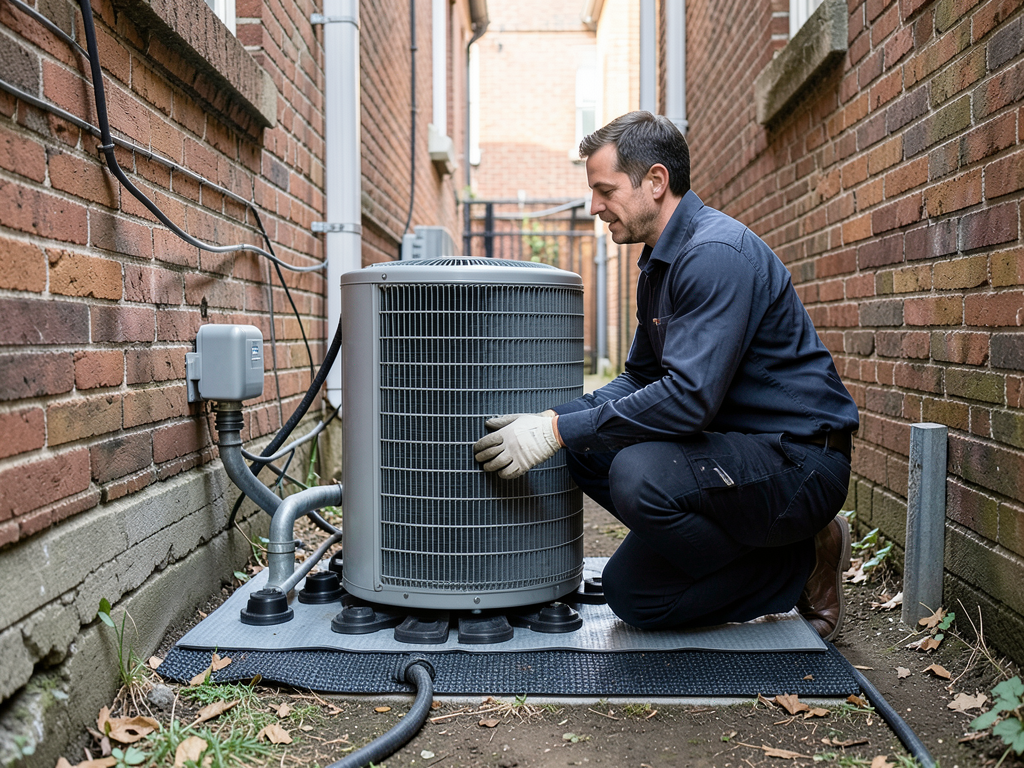
Even the quietest equipment becomes noisy without proper installation. Vibration isolation pads are the first line of defense—these rubber or composite mounts absorb vibrations before they travel into your home’s structure. Standard installations use rigid metal brackets that transmit every compressor vibration directly into walls and floors. Vibration pads can reduce transmitted noise by 8-12 decibels.
Sound blankets and compressor jackets provide another layer of noise reduction. These acoustic wraps fit around the outdoor unit, absorbing sound waves before they escape. High-quality sound blankets can reduce outdoor noise by 5-8 decibels without affecting system efficiency. They’re especially important for units near property lines or bedroom windows.
Strategic outdoor unit placement makes a huge difference in Nob Hill’s tight spaces. Mounting units on the least-used side of your home, away from neighbors’ bedrooms and living areas, minimizes impact. Installing units on rubber isolation mounts instead of concrete pads prevents structure-borne vibration. Using extended line sets to move noisy equipment to less sensitive locations can solve problems that equipment selection alone cannot address.
Proper refrigerant line insulation prevents noise from refrigerant flow. When lines run through walls or between floors, inadequate insulation allows the gurgling and hissing sounds to travel throughout your home. Professional installers use sound-deadening insulation specifically designed for HVAC applications, not standard pipe insulation. Professional Commercial HVAC Maintenance for SOMA Office Buildings.
Navigating San Francisco Building Permits and Noise Regulations
San Francisco’s Department of Building Inspection (DBI) requires permits for most AC installations, especially those involving electrical work or structural modifications. The permitting process ensures your system meets Title 24 energy efficiency standards and local noise ordinances. For Nob Hill’s historic district, additional review by the Historic Preservation Commission may be required to ensure exterior modifications don’t compromise architectural integrity.
The city’s noise ordinance specifically addresses HVAC equipment. Daytime limits of 45 decibels at property lines mean that even quiet units need proper sound barriers in tight spaces. Nighttime limits drop to 40 decibels—quieter than normal conversation. Violations can result in fines starting at $100 for first offenses and escalating for repeat violations. More importantly, persistent noise complaints can trigger DBI inspections and forced removal of non-compliant equipment.
Electrical requirements add another layer of complexity. Many Nob Hill homes have 60-80 amp electrical service from the early 1900s. Modern AC systems often require 30-50 amp dedicated circuits. Upgrading electrical service requires separate permits and inspections. Professional installers coordinate all necessary permits, ensuring your installation passes inspections the first time without costly delays or rework.
Customer Success Stories: Quiet Solutions for SF Homeowners
A Jackson Street Victorian had suffered from noisy window units for years, keeping both the owners and their neighbors awake. The solution involved installing a Mitsubishi mini-split system with the outdoor unit mounted on vibration isolation pads on the least-used side of the house. The indoor units operate at just 21 decibels—quieter than a whisper. The neighbors reported they could no longer hear the system, and the owners finally enjoy uninterrupted sleep during summer heat waves.
A California Street condo association faced multiple noise complaints about a central AC system that vibrated through shared walls. The fix required replacing the old single-speed compressor with an inverter model, adding sound blankets to all outdoor units, and installing vibration isolation mounts. The system noise dropped from 68 to 52 decibels at the property line, bringing it into compliance with city ordinances. The association avoided potential fines and restored good relationships with neighboring buildings.
A Pacific Avenue homeowner wanted cooling but refused to disturb the historic facade of their Edwardian home. The solution was a ductless system with the outdoor unit hidden in a rear courtyard and slim indoor units mounted flush with existing wall surfaces. The system operates at whisper-quiet levels while maintaining the home’s architectural integrity. The installation required careful routing of refrigerant lines through existing wall cavities to avoid visible modifications.
Maintenance Tips to Keep Your System Quiet
Regular maintenance prevents noise problems from developing. Dirty condenser coils force compressors to work harder, increasing both noise and energy consumption. Annual professional cleaning keeps systems running at optimal sound levels. Loose mounting hardware can develop over time, allowing vibration to increase. Checking and tightening all connections during maintenance visits prevents this gradual noise increase.. Read more about Essential HVAC Maintenance for North Beach Restaurants and Commercial Kitchens.
Refrigerant levels affect system noise significantly. Low refrigerant causes compressors to work harder and cycle more frequently, increasing operational noise. Professional technicians check refrigerant charge during maintenance visits, ensuring your system runs quietly and efficiently. They also inspect sound blankets and vibration pads for wear, replacing them before they fail completely.
Air filter maintenance impacts indoor unit noise more than many homeowners realize. Dirty filters restrict airflow, causing indoor fans to work harder and produce more noise. Monthly filter checks and replacements keep your system quiet and efficient. For Nob Hill’s older homes, where dust accumulation can be higher, more frequent filter changes may be necessary.
Cost Considerations for Quiet AC Systems
Quiet AC technology typically costs 15-25% more than standard equipment upfront. A basic 2-ton inverter mini-split system might cost $4,500-6,000 installed, while a comparable standard system runs $3,500-4,500. However, the total cost of ownership often favors quiet systems. They use 20-30% less electricity, potentially saving $200-400 annually on utility bills. The reduced wear from soft-start technology can extend equipment life by 3-5 years.
Installation costs vary significantly based on home characteristics. Nob Hill’s older homes often require electrical upgrades, adding $1,000-3,000 to installation costs. Difficult routing for refrigerant lines in historic walls can add $500-1,500. However, these costs are often offset by avoiding the need for extensive ductwork modifications that traditional central AC would require.
Permit and inspection fees in San Francisco add $200-500 to most installations. For historic properties, additional review fees may apply. Professional installers typically bundle these costs into their quotes, handling all paperwork and inspections on your behalf. This ensures compliance and prevents the delays and fines that can result from DIY permitting attempts.
Making the Right Choice for Your Nob Hill Home
The best quiet AC system for your home depends on several factors. Home age and construction matter—Victorian homes often suit ductless mini-splits better than trying to retrofit ductwork. Available outdoor space affects equipment placement options. Your cooling needs, budget, and relationship with neighbors all influence the optimal solution.
Professional assessment is crucial. A qualified HVAC technician should evaluate your home’s cooling load, electrical capacity, and installation constraints before recommending equipment. They should explain decibel ratings in terms you can understand, showing you how different options will sound in your specific space. The cheapest option rarely provides the best long-term value in Nob Hill’s unique environment.
Consider the full picture: initial cost, operating efficiency, noise levels, permit requirements, and impact on your home’s value and your relationships with neighbors. A quiet AC system isn’t just about comfort—it’s about maintaining Nob Hill’s character while enjoying modern conveniences. The right system disappears into the background, keeping you cool without anyone noticing it’s running.
Frequently Asked Questions
How quiet is a truly quiet AC system?
A quiet AC system typically operates between 19-45 decibels, depending on the component. Indoor mini-split units can be as quiet as 19 decibels—quieter than a whisper. Outdoor units with sound blankets and vibration isolation usually run 45-52 decibels, comparable to light rainfall. For context, normal conversation is about 60 decibels.
Will a quiet AC system keep my Nob Hill home cool enough?
Yes. Modern inverter technology and properly sized systems cool homes effectively while running quietly. A 2-ton system typically handles 1,000-1,200 square feet in San Francisco’s mild climate. Professional load calculations ensure your system has adequate capacity without oversizing, which can actually increase noise and reduce efficiency.
How long does quiet AC installation take in a Nob Hill home?
Most installations require 1-2 days for the physical work, plus additional time for permits and inspections. Simple mini-split replacements might finish in a single day. Complex installations involving electrical upgrades or historic preservation reviews can take 2-3 weeks total, including permit processing time through San Francisco DBI.
What if my neighbors still complain after installing a quiet system?
First, verify your system is operating correctly—loose mounts or failing components can cause unexpected noise. If the system is functioning properly, document its decibel levels with a sound meter. Share this data with your neighbors, explaining the city’s noise ordinance limits. Most complaints resolve through communication once neighbors understand the actual sound levels.
Are there any rebates for quiet AC systems in San Francisco?
Yes. Bay Area Air Quality Management District offers rebates for high-efficiency heat pumps, including many quiet inverter systems. PG&E provides additional incentives for systems meeting specific efficiency criteria. These rebates can reduce installation costs by $300-1,000 depending on the equipment chosen. Your installer should help you navigate available rebate programs. Bay Area Air Quality Management District heat pump rebates.
- Assess Your Home’s Needs
Evaluate your home’s size, layout, and cooling requirements. Consider factors like sun exposure, insulation quality, and existing ductwork if any.
- Research Quiet Technologies
Focus on inverter compressors, ductless mini-splits, and variable-speed fans. Compare decibel ratings across different brands and models.
- Check Local Regulations
Review San Francisco’s noise ordinances and permit requirements. For historic homes, check with the Historic Preservation Commission about exterior modifications.
- Get Professional Assessment
Have a qualified HVAC technician evaluate your home and provide detailed recommendations. Ask about vibration isolation and sound-dampening installation techniques.
- Compare Total Costs
Look beyond initial equipment prices to include installation, permits, electrical upgrades, and long-term operating costs.
- Verify Installer Credentials
Ensure your chosen contractor is licensed, insured, and experienced with quiet system installations in San Francisco’s unique housing stock.

Take Action Today for Peaceful Cooling
Don’t let another noisy summer keep you and your neighbors awake. The right quiet AC system can transform your Nob Hill home into a cool, peaceful retreat while maintaining good relationships with those around you. Modern technology makes whisper-quiet cooling accessible for any home, regardless of age or configuration.
Professional installation makes the difference between a system that merely meets code and one that truly disappears into the background. From vibration isolation to strategic placement, every detail matters when you’re working within Nob Hill’s tight spaces and strict noise limits.
You may also find this helpful. Why Your Russian Hill Furnace is Making Rattling Noises and How to Fix It.
Call (628) 201-6600 today to schedule your quiet AC consultation. Our experienced technicians understand Nob Hill’s unique challenges and can recommend solutions that keep you cool without disturbing the peace. We handle everything from equipment selection to permit processing, ensuring your installation passes inspections and keeps your neighbors happy. Pick up the phone and call (628) 201-6600 before the next heat wave hits—your neighbors (and your sleep) will thank you.
{
“@context”: “https://schema.org”,
“@type”: “BlogPosting”,
“headline”: “How to Stop Your HVAC System from Keeping the Neighbors Awake in Nob Hill”,
“description”: “Tired of noisy AC complaints in Nob Hill? Learn expert quiet installation, San Francisco noise ordinances, and the best ultra-low dB systems for dense urban living.”,
“wordCount”: 2446,
“datePublished”: “2026-03-11T13:06:00.000Z”,
“dateModified”: “2026-03-11T13:06:00.000Z”,
“inLanguage”: “en-US”,
“mainEntityOfPage”: {
“@type”: “WebPage”,
“@id”: “https://atlashvacsanfrancisco.com”
},
“publisher”: {
“@type”: “LocalBusiness”,
“name”: “Atlas HVAC San Francisco”,
“url”: “https://atlashvacsanfrancisco.com”
},
“author”: {
“@type”: “Organization”,
“name”: “Atlas HVAC San Francisco”,
“url”: “https://atlashvacsanfrancisco.com”
},
“image”: {
“@type”: “ImageObject”,
“url”: “https://atlashvacsanfrancisco.com/wp-content/uploads/2026/03/how-to-stop-your-hvac-system-from-keeping-the-neig-1.png”
}
}
{
“@context”: “https://schema.org”,
“@type”: “HVACBusiness”,
“name”: “Atlas HVAC San Francisco”,
“url”: “https://atlashvacsanfrancisco.com”,
“address”: {
“@type”: “PostalAddress”,
“addressLocality”: “San Francisco”
},
“areaServed”: {
“@type”: “City”,
“name”: “San Francisco”
}
}
{
“@context”: “https://schema.org”,
“@type”: “FAQPage”,
“mainEntity”: [
{
“@type”: “Question”,
“name”: “How quiet is a truly quiet AC system?”,
“acceptedAnswer”: {
“@type”: “Answer”,
“text”: “A quiet AC system typically operates between 19-45 decibels, depending on the component. Indoor mini-split units can be as quiet as 19 decibels—quieter than a whisper. Outdoor units with sound blankets and vibration isolation usually run 45-52 decibels, comparable to light rainfall. For context, normal conversation is about 60 decibels.”
}
},
{
“@type”: “Question”,
“name”: “Will a quiet AC system keep my Nob Hill home cool enough?”,
“acceptedAnswer”: {
“@type”: “Answer”,
“text”: “Yes. Modern inverter technology and properly sized systems cool homes effectively while running quietly. A 2-ton system typically handles 1,000-1,200 square feet in San Francisco’s mild climate. Professional load calculations ensure your system has adequate capacity without oversizing, which can actually increase noise and reduce efficiency.”
}
},
{
“@type”: “Question”,
“name”: “How long does quiet AC installation take in a Nob Hill home?”,
“acceptedAnswer”: {
“@type”: “Answer”,
“text”: “Most installations require 1-2 days for the physical work, plus additional time for permits and inspections. Simple mini-split replacements might finish in a single day. Complex installations involving electrical upgrades or historic preservation reviews can take 2-3 weeks total, including permit processing time through San Francisco DBI.”
}
},
{
“@type”: “Question”,
“name”: “Are there any rebates for quiet AC systems in San Francisco?”,
“acceptedAnswer”: {
“@type”: “Answer”,
“text”: “Yes. Bay Area Air Quality Management District offers rebates for high-efficiency heat pumps, including many quiet inverter systems. PG&E provides additional incentives for systems meeting specific efficiency criteria. These rebates can reduce installation costs by $300-1,000 depending on the equipment chosen. Your installer should help you navigate available rebate programs. Bay Area Air Quality Management District heat pump rebates.”
}
}
]
}
{
“@context”: “https://schema.org”,
“@type”: “HowTo”,
“name”: “How to Choose a Quiet AC System”,
“step”: [
{
“@type”: “HowToStep”,
“position”: 1,
“name”: “Assess Your Home’s Needs”,
“text”: “Evaluate your home’s size, layout, and cooling requirements. Consider factors like sun exposure, insulation quality, and existing ductwork if any.”
},
{
“@type”: “HowToStep”,
“position”: 2,
“name”: “Research Quiet Technologies”,
“text”: “Focus on inverter compressors, ductless mini-splits, and variable-speed fans. Compare decibel ratings across different brands and models.”
},
{
“@type”: “HowToStep”,
“position”: 3,
“name”: “Check Local Regulations”,
“text”: “Review San Francisco’s noise ordinances and permit requirements. For historic homes, check with the Historic Preservation Commission about exterior modifications.”
},
{
“@type”: “HowToStep”,
“position”: 4,
“name”: “Get Professional Assessment”,
“text”: “Have a qualified HVAC technician evaluate your home and provide detailed recommendations. Ask about vibration isolation and sound-dampening installation techniques.”
},
{
“@type”: “HowToStep”,
“position”: 5,
“name”: “Compare Total Costs”,
“text”: “Look beyond initial equipment prices to include installation, permits, electrical upgrades, and long-term operating costs.”
},
{
“@type”: “HowToStep”,
“position”: 6,
“name”: “Verify Installer Credentials”,
“text”: “Ensure your chosen contractor is licensed, insured, and experienced with quiet system installations in San Francisco’s unique housing stock.”
}
],
“image”: “https://atlashvacsanfrancisco.com/wp-content/uploads/2026/03/how-to-stop-your-hvac-system-from-keeping-the-neig-1.png”
}
{
“@context”: “https://schema.org”,
“@type”: “BreadcrumbList”,
“itemListElement”: [
{
“@type”: “ListItem”,
“position”: 1,
“name”: “Home”,
“item”: “https://atlashvacsanfrancisco.com”
},
{
“@type”: “ListItem”,
“position”: 2,
“name”: “Blog”,
“item”: “https://atlashvacsanfrancisco.com/blog”
},
{
“@type”: “ListItem”,
“position”: 3,
“name”: “How to Stop Your HVAC System from Keeping the Neighbors Awake in Nob Hill”
}
]
}
{
“@context”: “https://schema.org”,
“@type”: “Service”,
“serviceType”: “HVAC”,
“provider”: {
“@type”: “LocalBusiness”,
“name”: “Atlas HVAC San Francisco”,
“url”: “https://atlashvacsanfrancisco.com”
},
“areaServed”: {
“@type”: “City”,
“name”: “San Francisco”
},
“description”: “Tired of noisy AC complaints in Nob Hill? Learn expert quiet installation, San Francisco noise ordinances, and the best ultra-low dB systems for dense urban living.”
}