
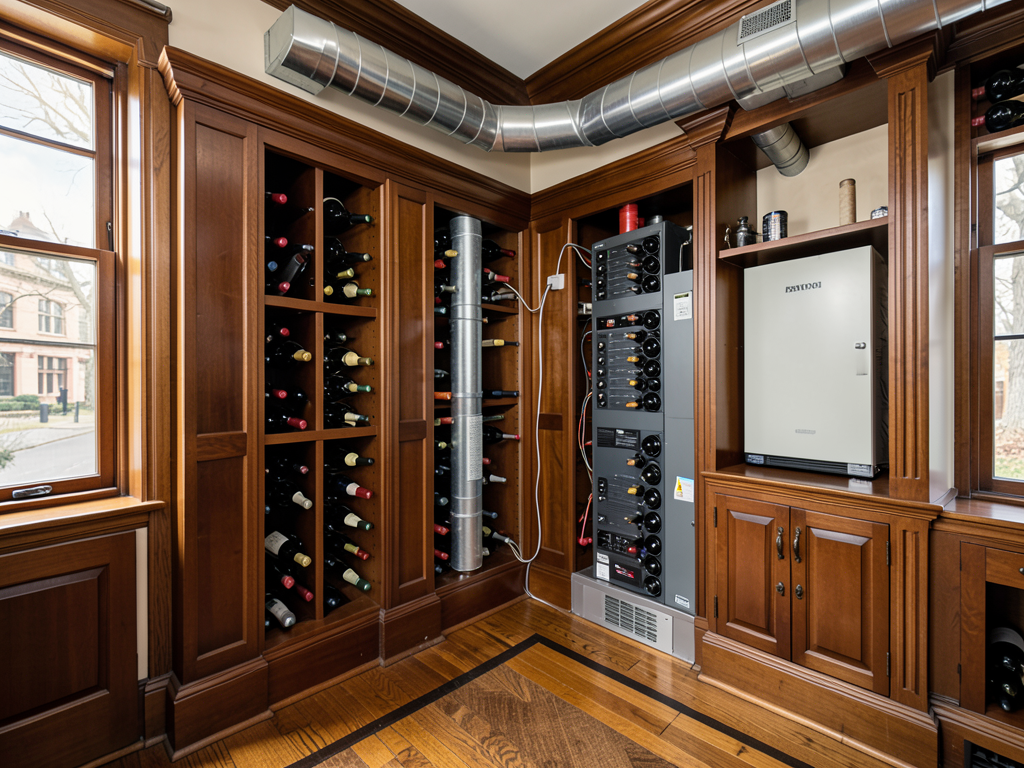
Designing a Climate Controlled Wine Cellar for Your Pacific Heights Residence
Building a wine cellar in your Pacific Heights home requires precision climate control to protect your investment. The foggy coastal conditions of San Francisco create unique challenges for maintaining the 55-57°F and 60-70% humidity levels that wine needs for proper aging. Pacific Heights’ historic Victorian architecture and microclimates demand specialized cooling systems that balance temperature stability with energy efficiency.
Your wine collection represents both financial and sentimental value. The wrong cooling system can lead to cork dry-out, label damage, and premature aging. We’ll walk through the exact requirements for Pacific Heights wine cellars, from vapor barrier specifications to the best cooling units for historic home renovations.
Understanding the San Francisco Climate Impact on Wine Storage
San Francisco’s marine layer creates humidity swings that can damage wine collections. The coastal fog that rolls through Pacific Heights brings moisture that seeps into poorly sealed cellars, while sudden temperature changes stress wine bottles. Your cooling system must combat both the external climate and the internal heat load from lighting and visitors.
The city’s building codes require specific insulation R-values for wine rooms. Title 24 energy standards mandate minimum R-13 for walls and R-19 for ceilings in Pacific Heights’ historic districts. These requirements protect your collection while meeting San Francisco’s strict energy efficiency mandates.
Common failure patterns in Pacific Heights wine cellars include:
- Vapor barrier breaches causing mold growth behind drywall
- Inadequate condensate drainage leading to water damage
- Undersized cooling units cycling too frequently
- Poor air circulation creating temperature stratification
The right system prevents these issues through proper sizing, installation, and maintenance. We use thermal imaging cameras to detect insulation gaps and moisture meters to verify vapor barrier integrity before installing any cooling equipment. The Best Way to Install Heat Pumps in Historic San Francisco Victorians.
Types of Wine Cooling Systems for Pacific Heights Homes
Choosing the right cooling system depends on your cellar size, location, and construction. Pacific Heights homes often have limited space for equipment, requiring creative solutions that don’t compromise historic aesthetics.
| System Type | Best For | Space Requirements | Noise Level |
|---|---|---|---|
| Through-the-Wall Units | Small cellars up to 300 bottles | Minimal – fits standard wall cavity | 45-50 dB |
| Split Systems | Medium cellars 300-1000 bottles | Separate indoor/outdoor components | 35-40 dB |
| Ducted Systems | Large cellars or multi-room setups | Requires attic/basement space | 30-35 dB |
Through-the-wall units work well for Pacific Heights’ compact spaces but require proper exterior venting. Split systems offer better temperature control for larger collections while keeping noisy components outside. Ducted systems provide the quietest operation but need adequate space for ductwork. Quiet and Efficient Furnace Replacement Options for Pacific Heights Residents.
We recently installed a ducted system in a Jackson Street wine room where the homeowner needed whisper-quiet operation for entertaining. The system maintains 56°F with 1°F variation across the entire space.
The Importance of Vapor Barriers and R-Value Insulation
Vapor barriers prevent moisture migration that causes mold and structural damage. In Pacific Heights’ older homes, we often find inadequate vapor protection that compromises wine storage conditions. The International Building Code requires Class I vapor barriers on the warm side of insulation in wine cellars. International Building Code requirements.
Proper insulation maintains stable temperatures while reducing energy costs. We install closed-cell spray foam with R-13 minimum for walls and R-19 for ceilings. This exceeds Title 24 requirements while providing superior moisture protection.
Key installation steps include:
- Sealing all penetrations with expanding foam
- Installing 6-mil polyethylene vapor barrier with taped seams
- Applying closed-cell spray foam to achieve required R-values
- Installing vapor barrier on the warm side of insulation
- Testing for air leaks using smoke pencils
We use infrared cameras to verify insulation coverage and moisture meters to check for vapor barrier integrity. This diagnostic approach prevents the costly failures we see in DIY installations.
BTU Sizing and Heat Load Calculations for Pacific Heights
Proper BTU sizing prevents short cycling and temperature fluctuations. Pacific Heights’ historic homes often have poor insulation, requiring higher cooling capacity than newer construction. Short Cycling.
Heat load factors include:
- Bottle heat contribution: 1 BTU per 750ml bottle
- Lighting: 3.41 BTU per watt
- Occupant heat: 400 BTU per person per hour
- Equipment heat: 500 BTU per refrigerator
A 500-bottle cellar with LED lighting and occasional entertaining needs approximately 3,500 BTU cooling capacity. We add 20% for Pacific Heights’ historic construction and coastal humidity.
We use specialized software to calculate heat loads based on your specific collection size, room dimensions, and usage patterns. This prevents the common mistake of undersizing units that can’t maintain proper conditions.
Maintenance and Repair Services for Wine Cellar Systems
Wine cellar cooling systems require specialized maintenance different from standard HVAC equipment. The precision temperature and humidity control demands regular calibration and cleaning.
Our maintenance service includes:
- Refrigerant level checks and pressure testing
- Coil cleaning and condensate drain inspection
- Temperature and humidity calibration
- Vapor barrier integrity testing
- Condensate pump testing and backup installation
We recommend bi-annual service for Pacific Heights wine cellars. The coastal environment accelerates corrosion on outdoor components, while the historic construction creates unique maintenance challenges.
Common repair issues include:
- Refrigerant leaks from vibration or corrosion
- Condensate pump failures causing water damage
- Thermostat calibration drift affecting temperature stability
- Fan motor bearing wear creating noise issues
Our technicians carry specialized tools for wine cellar diagnostics, including digital hygrometers that measure humidity to 0.1% accuracy and thermal cameras that detect temperature variations across cellar walls.
Local Wine Cellar Projects in Pacific Heights
We’ve completed numerous wine cellar installations throughout Pacific Heights, each with unique challenges from the neighborhood’s historic architecture. The area’s building codes require special permits for any exterior modifications, affecting how we route cooling system components.
A recent project on Washington Street involved converting a former butler’s pantry into a 300-bottle wine room. The 1920s construction required extensive vapor barrier installation and creative duct routing to maintain the home’s historic character.
Another Jackson Street installation featured a through-the-wall unit hidden behind custom millwork. The homeowner needed whisper-quiet operation for entertaining, so we selected a unit with 38 dB noise rating and added sound dampening insulation.
Pacific Heights’ 94115 and 94118 zip codes have specific requirements for exterior equipment placement. Units must be at least 5 feet from property lines and cannot be visible from the street in historic districts.
Energy Efficiency and Cost Considerations
Wine cellar cooling systems operate 24/7, making energy efficiency crucial for Pacific Heights homeowners. Modern units use 30-40% less electricity than older models while providing better temperature control.
Energy-saving features include:
- Variable speed compressors that match cooling demand
- High-efficiency heat exchangers with enhanced surface area
- Smart controls that learn usage patterns
- Sleep modes for periods of low activity
The initial investment in high-efficiency equipment typically pays for itself within 3-5 years through reduced electricity costs. Pacific Gas and Electric offers rebates for qualifying wine cellar cooling systems that meet energy efficiency standards.
We provide detailed energy usage projections based on your specific system and usage patterns. This helps you understand the long-term operating costs before making investment decisions.
Frequently Asked Questions
How much does a wine cellar cooling system cost in Pacific Heights?
Systems range from $2,500 for small through-the-wall units to $15,000+ for large ducted systems. The final cost depends on cellar size, equipment type, and installation complexity in your historic home.
How long do wine cellar cooling systems last?
With proper maintenance, quality systems last 10-15 years. Coastal environments may reduce lifespan to 8-12 years due to salt air corrosion. Regular service extends equipment life and prevents costly failures.
Can I install a wine cellar cooling system myself?
DIY installation often leads to costly problems. Wine cellars require precise temperature and humidity control that demands professional calibration. Improper installation can void warranties and cause wine damage. Professional Commercial HVAC Maintenance for SOMA Office Buildings.
What size cooling unit do I need for my wine collection?
Size depends on bottle count, room dimensions, and heat sources. A 300-bottle collection typically needs 1,500-2,000 BTU, while 1,000+ bottles require 4,000+ BTU. We provide detailed calculations for your specific situation.
How often should I service my wine cellar cooling system?
Bi-annual service is recommended for Pacific Heights wine cellars. Coastal humidity and historic construction create conditions that require more frequent maintenance than standard HVAC systems.
Getting Started with Your Pacific Heights Wine Cellar
Building the perfect wine cellar starts with understanding your collection needs and space constraints. Pacific Heights’ historic homes offer unique opportunities for custom wine storage solutions that enhance both function and aesthetics.
We provide free consultations to assess your space, discuss cooling options, and provide detailed proposals. Our team understands the specific requirements of Pacific Heights’ building codes and can navigate the permitting process efficiently.
During your consultation, we’ll evaluate:
- Existing insulation and vapor barrier conditions
- Available space for equipment and ductwork
- Electrical capacity for new cooling systems
- Noise considerations for your specific location
- Energy efficiency goals and budget constraints
Call (628) 201-6600 today to schedule your wine cellar consultation. Our Pacific Heights wine cellar specialists will help you design a system that protects your collection while meeting your home’s unique requirements.
Don’t risk your valuable wine collection to inadequate cooling. The coastal climate of Pacific Heights demands professional expertise to maintain the perfect storage conditions. Pick up the phone and call (628) 201-6600 before the next heat wave hits. For more information, visit California Title 24 Energy Standards.
You may also find this helpful. Why You Might Need a Dedicated Dehumidifier for Your San Francisco Garage or Workspace.
{
“@context”: “https://schema.org”,
“@type”: “BlogPosting”,
“headline”: “Designing a Climate Controlled Wine Cellar for Your Pacific Heights Residence”,
“description”: “Expert HVAC solutions for Pacific Heights wine cellars. Learn about cooling systems, vapor barriers, and humidity control to protect your collection.”,
“wordCount”: 1565,
“datePublished”: “2026-05-06T15:44:00.000Z”,
“dateModified”: “2026-05-06T15:44:00.000Z”,
“inLanguage”: “en-US”,
“mainEntityOfPage”: {
“@type”: “WebPage”,
“@id”: “https://atlashvacsanfrancisco.com”
},
“publisher”: {
“@type”: “LocalBusiness”,
“name”: “Atlas HVAC San Francisco”,
“url”: “https://atlashvacsanfrancisco.com”
},
“author”: {
“@type”: “Organization”,
“name”: “Atlas HVAC San Francisco”,
“url”: “https://atlashvacsanfrancisco.com”
},
“image”: {
“@type”: “ImageObject”,
“url”: “https://atlashvacsanfrancisco.com/wp-content/uploads/2026/03/designing-a-climate-controlled-wine-cellar-for-you-1.png”
}
}
{
“@context”: “https://schema.org”,
“@type”: “HVACBusiness”,
“name”: “Atlas HVAC San Francisco”,
“url”: “https://atlashvacsanfrancisco.com”,
“address”: {
“@type”: “PostalAddress”,
“addressLocality”: “San Francisco”
},
“areaServed”: {
“@type”: “City”,
“name”: “San Francisco”
}
}
{
“@context”: “https://schema.org”,
“@type”: “FAQPage”,
“mainEntity”: [
{
“@type”: “Question”,
“name”: “How much does a wine cellar cooling system cost in Pacific Heights?”,
“acceptedAnswer”: {
“@type”: “Answer”,
“text”: “Systems range from $2,500 for small through-the-wall units to $15,000+ for large ducted systems. The final cost depends on cellar size, equipment type, and installation complexity in your historic home.”
}
},
{
“@type”: “Question”,
“name”: “How long do wine cellar cooling systems last?”,
“acceptedAnswer”: {
“@type”: “Answer”,
“text”: “With proper maintenance, quality systems last 10-15 years. Coastal environments may reduce lifespan to 8-12 years due to salt air corrosion. Regular service extends equipment life and prevents costly failures.”
}
},
{
“@type”: “Question”,
“name”: “Can I install a wine cellar cooling system myself?”,
“acceptedAnswer”: {
“@type”: “Answer”,
“text”: “DIY installation often leads to costly problems. Wine cellars require precise temperature and humidity control that demands professional calibration. Improper installation can void warranties and cause wine damage. Professional Commercial HVAC Maintenance for SOMA Office Buildings.”
}
},
{
“@type”: “Question”,
“name”: “What size cooling unit do I need for my wine collection?”,
“acceptedAnswer”: {
“@type”: “Answer”,
“text”: “Size depends on bottle count, room dimensions, and heat sources. A 300-bottle collection typically needs 1,500-2,000 BTU, while 1,000+ bottles require 4,000+ BTU. We provide detailed calculations for your specific situation.”
}
},
{
“@type”: “Question”,
“name”: “How often should I service my wine cellar cooling system?”,
“acceptedAnswer”: {
“@type”: “Answer”,
“text”: “Bi-annual service is recommended for Pacific Heights wine cellars. Coastal humidity and historic construction create conditions that require more frequent maintenance than standard HVAC systems.”
}
}
]
}
{
“@context”: “https://schema.org”,
“@type”: “BreadcrumbList”,
“itemListElement”: [
{
“@type”: “ListItem”,
“position”: 1,
“name”: “Home”,
“item”: “https://atlashvacsanfrancisco.com”
},
{
“@type”: “ListItem”,
“position”: 2,
“name”: “Blog”,
“item”: “https://atlashvacsanfrancisco.com/blog”
},
{
“@type”: “ListItem”,
“position”: 3,
“name”: “Designing a Climate Controlled Wine Cellar for Your Pacific Heights Residence”
}
]
}
{
“@context”: “https://schema.org”,
“@type”: “Service”,
“serviceType”: “HVAC”,
“provider”: {
“@type”: “LocalBusiness”,
“name”: “Atlas HVAC San Francisco”,
“url”: “https://atlashvacsanfrancisco.com”
},
“areaServed”: {
“@type”: “City”,
“name”: “San Francisco”
},
“description”: “Expert HVAC solutions for Pacific Heights wine cellars. Learn about cooling systems, vapor barriers, and humidity control to protect your collection.”
}