




menu

Rooftop Unit Installation in San Francisco | Minimize Downtime with Industrial-Grade RTU Solutions

United HVAC Kansas City delivers commercial rooftop package unit installation engineered for San Francisco's marine climate, reducing operational disruption through precise load calculations, seismic compliance, and accelerated project timelines that keep your facility running.

Slider Image 1
Slider Image 2
Slider Image 3
Slider Image 4
Slider Image 5
Slider Image 7
Slider Image 8
Slider Image 9
Slider Image 10
Slider Image 11

Why San Francisco's Coastal Climate Demands Specialized RTU Installation

San Francisco's persistent marine layer creates constant moisture exposure that accelerates corrosion on commercial rooftop HVAC units. The salt-laden fog that blankets SOMA, the Financial District, and Mission Bay neighborhoods attacks compressor housings, condenser coils, and electrical components faster than inland installations experience. Buildings near the Embarcadero or Fisherman's Wharf face even more aggressive environmental conditions.

Your facility cannot afford an RTU installation that ignores these realities. Standard commercial rooftop package unit installation approaches fail within three to five years when technicians skip corrosion-resistant fasteners, proper flashing details, or fail to account for San Francisco's seismic requirements. The 2019 California Building Code mandates specific anchorage calculations for rooftop equipment in Seismic Design Category D, which covers most of San Francisco.

Temperature swings between microclimates add another layer of complexity. A warehouse in Bayview operates under different load requirements than an office building in Nob Hill, yet many contractors use cookie-cutter sizing methods that result in short-cycling, humidity problems, and premature equipment failure.

Commercial RTU install projects require load calculations that account for San Francisco's unique degree-day profile, not generic Pacific Coast assumptions. Your HVAC system represents a significant capital investment. The installation quality determines whether that investment delivers ten years of reliable service or becomes a recurring maintenance liability that disrupts operations and drains your budget.

Why San Francisco's Coastal Climate Demands Specialized RTU Installation
The Engineering Approach That Prevents Costly RTU Failures

The Engineering Approach That Prevents Costly RTU Failures

United HVAC Kansas City structures every rooftop AC replacement around building-specific load analysis, not manufacturer tonnage charts. We calculate actual sensible and latent loads using ACCA Manual N protocols, then factor in San Francisco's marine climate modifier to prevent oversizing. Oversized units short-cycle, fail to dehumidify, and waste energy. Undersized units run continuously and die early.

Our commercial rooftop HVAC installation process begins with structural verification. Many San Francisco buildings constructed before 1980 lack adequate roof framing for modern high-efficiency units, which weigh 200 to 400 pounds more than older models. We coordinate with structural engineers when existing curb mounts show inadequate load distribution or when seismic bracing requires reinforcement.

Curb adapter fabrication receives particular attention. We never force-fit units onto existing curbs without verifying dimensional compatibility and drain routing. Improper curb transitions create air leakage that reduces capacity by 15 to 25 percent and allows moisture infiltration that damages roof membranes.

Refrigerant line installation follows brazing procedures that eliminate leaks. We pull triple evacuations to 500 microns, not the 1000-micron shortcut that leaves moisture in the system. Moisture reacts with refrigerant to form acids that attack compressor windings and cause premature failure.

Electrical connections receive torque specifications per NEC 110.14, and we verify voltage balance across all three phases before startup. Voltage imbalance above three percent destroys compressors. Control wiring uses shielded cable to prevent electromagnetic interference from variable frequency drives, and we program economizer controls to comply with California Title 24 requirements for free cooling integration.

How Your Commercial RTU Installation Unfolds

Rooftop Unit Installation in San Francisco | Minimize Downtime with Industrial-Grade RTU Solutions
01

Site Assessment and Engineering

We survey your existing rooftop conditions, measure electrical service capacity, and document structural limitations. Our team photographs curb dimensions, checks roof membrane condition around penetrations, and maps ductwork configurations. You receive a detailed scope document that identifies required permits, utility coordination needs, and project timeline with specific milestone dates. This eliminates surprises and allows you to plan around installation schedules.
02

Coordinated Equipment Deployment

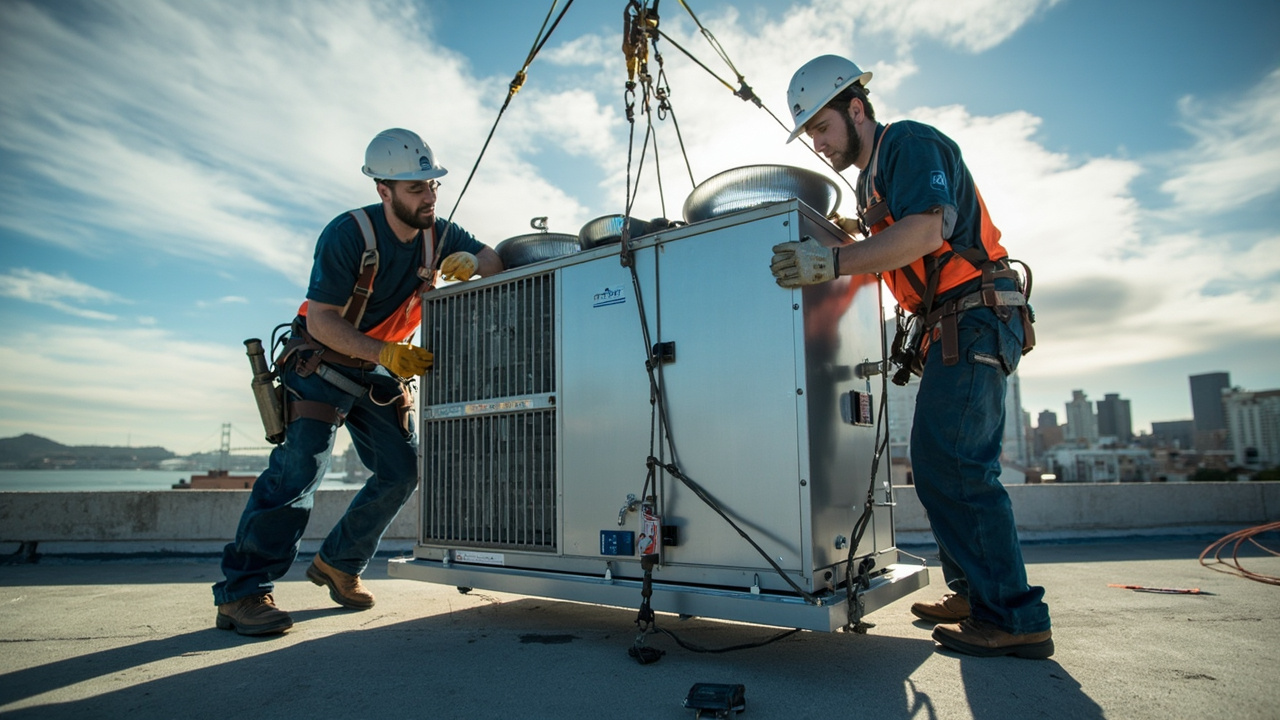
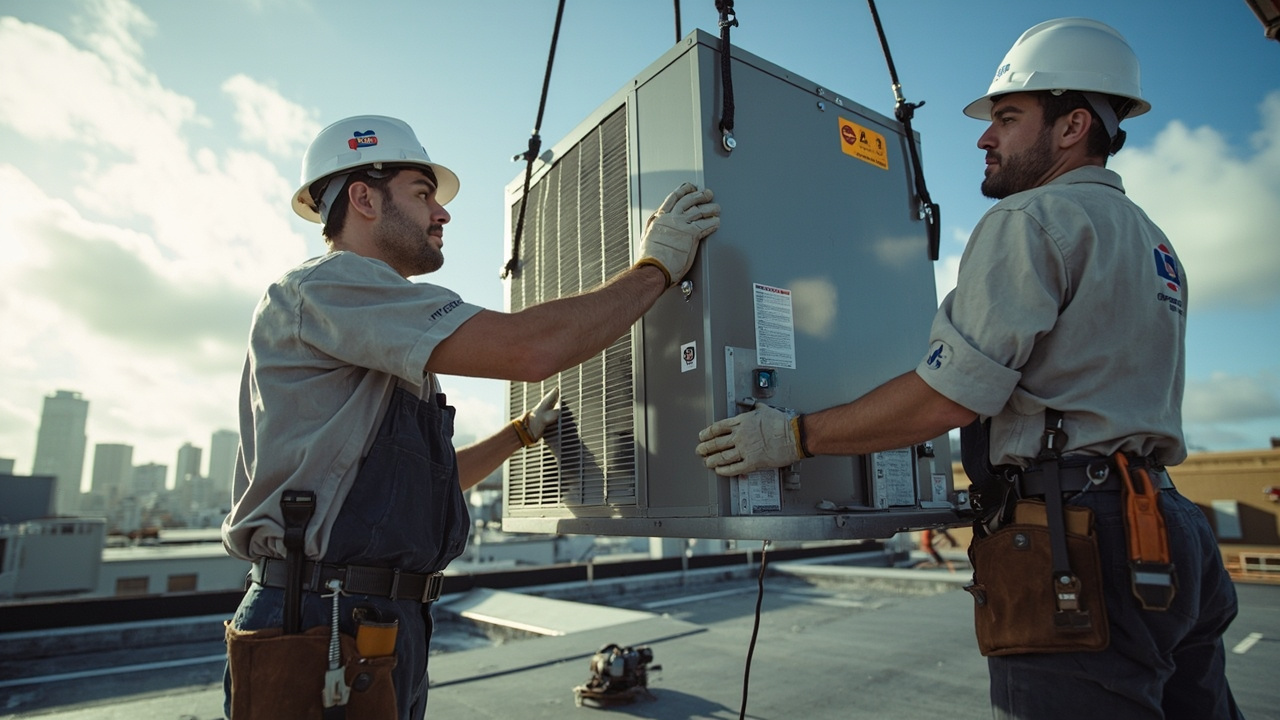
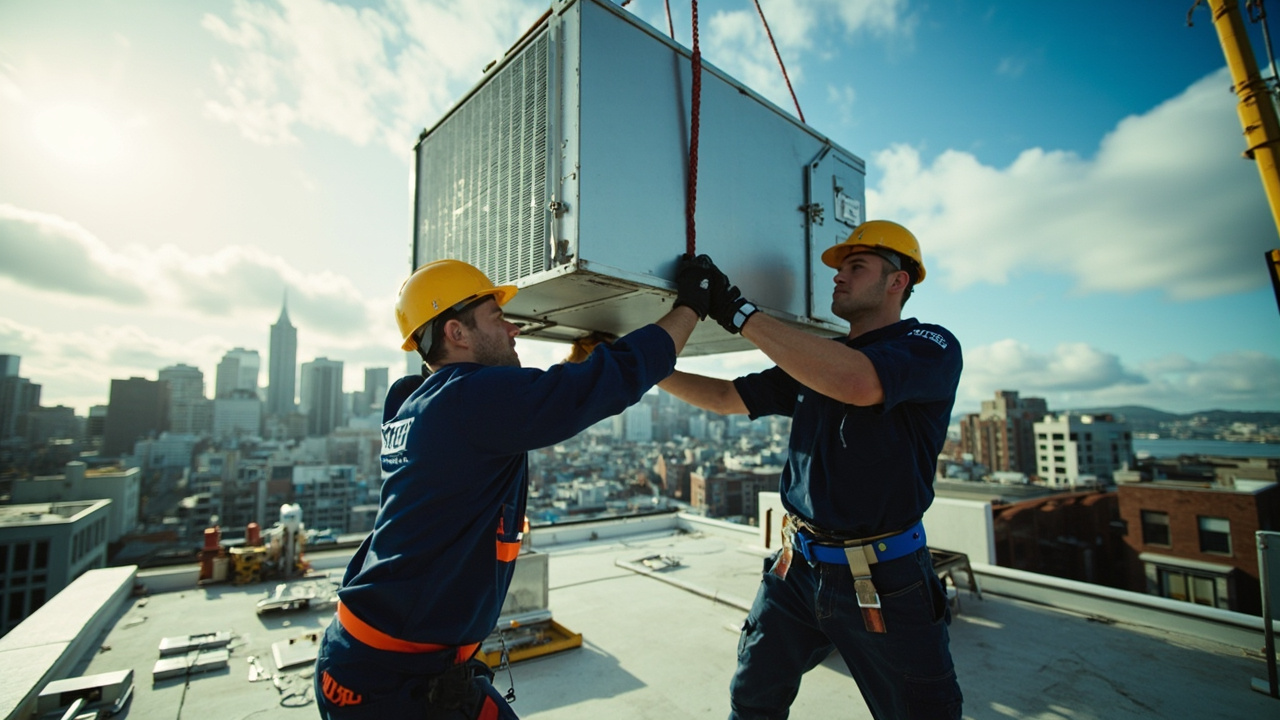
We schedule crane services or rigging operations during your lowest-traffic periods to minimize business disruption. Our crews stage equipment, verify unit serial numbers match submittal documents, and complete rigging safety protocols before lifting begins. Pre-fabricated electrical whips and refrigerant line sets reduce rooftop labor time. We coordinate with your facility manager to maintain temporary cooling or heating during changeout periods, preventing occupant complaints and productivity losses.
03

Commissioning and Documentation

We execute full ASHRAE Guideline 0 commissioning protocols, not basic startups. This includes airflow measurement across all zones, refrigerant charge verification using superheat and subcooling targets, and control sequence testing under multiple load scenarios. You receive O&M manuals, warranty registration confirmation, filter specifications, and a recommended maintenance schedule. We train your maintenance staff on unit-specific procedures and provide emergency contact information for after-hours support.

Why San Francisco Facility Managers Choose United HVAC Kansas City

San Francisco's commercial building stock presents challenges that require local code knowledge and practical problem-solving ability. Buildings in the Financial District often have limited roof access through interior stairwells, requiring specialized rigging plans. Structures near the waterfront face Department of Building Inspection scrutiny regarding seismic anchorage details that differ from standard California Building Code minimums.

United HVAC Kansas City maintains relationships with San Francisco permit expeditors who understand DBI review processes. We submit complete plan sets the first time, avoiding the resubmittal delays that extend project timelines. Our crews hold current OSHA 30 certifications and maintain fall protection protocols that satisfy your risk management requirements.

We understand Title 24 compliance requirements for economizer integration, ventilation air monitoring, and energy management system integration. Many contractors install code-minimum equipment without optimizing control sequences for San Francisco's climate. Our programming approach uses dry-bulb economizer strategies during shoulder seasons when San Francisco's outdoor air conditions allow 100 percent free cooling for eight to ten months annually.

Our supplier relationships provide access to Trane, Carrier, and Daikin commercial rooftop units without the lead time delays that smaller contractors face. When your unit fails during a heat event and your server room approaches critical temperature, we can source and install emergency replacement equipment within 48 to 72 hours.

Your facility operates on thin margins. Equipment downtime translates directly to lost productivity, tenant complaints, and emergency service calls. United HVAC Kansas City structures commercial RTU install projects around your operational requirements, not our convenience.

What Your Commercial RTU Installation Includes

Project Timeline and Scheduling

Standard rooftop package unit installation projects require two to four weeks from contract signing to final commissioning, depending on permit approval timelines and equipment availability. We provide detailed schedule documentation that identifies permit submission dates, equipment delivery windows, and installation dates. Our project managers communicate progress weekly and alert you immediately if delays occur. Emergency rooftop AC replacement projects receive priority scheduling, with installation crews available within 24 to 48 hours for critical failures. We coordinate with building engineers to schedule work during low-occupancy periods, minimizing tenant disruption.

Load Analysis and Equipment Selection

We calculate heating and cooling loads using ACCA Manual N protocols, not rules of thumb. Our engineers measure existing airflow, document zone requirements, and analyze utility data to identify capacity deficiencies. You receive equipment recommendations with efficiency comparisons, lifecycle cost analysis, and utility rebate qualification information. We specify units with factory-installed economizers, variable speed drives, and advanced diagnostics that reduce service calls. San Francisco's PG&E territory offers substantial rebates for high-efficiency equipment, and we handle rebate application paperwork to maximize your return. Equipment selection considers your building's electrical service capacity to avoid expensive utility upgrades.

Installation Quality and Code Compliance

Our installation crews follow manufacturer specifications for curb mounting, refrigerant line sizing, and electrical connections. We use stainless steel fasteners in coastal areas to prevent corrosion failure. Seismic restraints meet CBC Section 1621 requirements, with calculations stamped by California-licensed engineers when required by plan review. Roofing penetrations receive proper flashing and pitch pockets to prevent water infiltration. We pressure-test ductwork connections and seal joints to reduce air leakage below ten percent. Refrigerant systems undergo leak testing at 150 percent operating pressure, triple evacuation to 500 microns, and charge verification using manufacturer superheat tables. Control wiring installation follows NEC Article 725 requirements for separation from power conductors.

Commissioning and Ongoing Support

We execute functional performance testing per ASHRAE Guideline 0, verifying that your RTU installation meets design specifications under actual load conditions. Testing includes airflow measurement at each supply register, temperature differential verification across coils, and economizer operation across the full modulation range. You receive commissioning reports documenting baseline performance for future troubleshooting reference. Our service department provides ongoing maintenance contracts that include quarterly filter changes, annual coil cleaning, and refrigerant level verification. Maintenance contracts include priority emergency response, with technicians available 24/7 for critical failures. We maintain detailed service history records that track component replacements and identify developing problems before they cause downtime.

Frequently Asked Questions

You Have Questions,
We Have Answers

How much does it cost to install a rooftop unit? +

Rooftop unit installation costs vary based on tonnage, SEER rating, and building access constraints. A 3-5 ton unit typically ranges from $8,000 to $15,000, while larger 10-20 ton commercial systems run $15,000 to $40,000 or more. San Francisco projects often face higher labor costs due to crane access on multi-story buildings and strict seismic bracing requirements per California Title 24. Ductwork modifications, electrical upgrades, and structural reinforcement add to the total. Complex installations in the Financial District or SoMa may require night work to minimize business disruption, increasing labor expenses.

What does a rooftop unit sit on? +

Rooftop units sit on structural curb adapters engineered to match the unit footprint. These curbs elevate the equipment above the roof membrane, preventing water intrusion and providing a weatherproof seal. In San Francisco, curbs must meet seismic anchoring standards to withstand earthquake forces. The curb attaches directly to reinforced roof framing or steel beams capable of supporting the unit's operating weight plus wind loads. Proper curb installation includes vibration isolation pads to reduce noise transmission into occupied spaces below. Flashing integrates the curb into the existing roof system to maintain waterproofing integrity.

What is the life expectancy of a rooftop unit? +

Commercial rooftop units last 15 to 20 years with proper maintenance. San Francisco's marine climate accelerates corrosion on coastal properties, potentially reducing lifespan without protective coatings. Units serving data centers or manufacturing facilities with extended runtime hours may need replacement closer to the 12-15 year mark. Regular coil cleaning, refrigerant checks, and filter changes extend equipment life. Neglected systems fail earlier due to compressor burnout or heat exchanger degradation. Buildings near the Embarcadero or Fisherman's Wharf face salt air exposure, requiring more frequent inspections. Budget for replacement when efficiency drops below 70 percent of original capacity.

How much does it cost to replace a 5 ton rooftop unit? +

Replacing a 5 ton rooftop unit costs $10,000 to $18,000 for most San Francisco commercial buildings. This includes equipment, crane rental for rooftop access, refrigerant disposal, electrical connections, and startup. Higher SEER models increase upfront cost but reduce monthly energy bills. Projects requiring structural upgrades to support newer, heavier units add $2,000 to $5,000. Tight urban sites in Chinatown or North Beach may need street closures for crane work, adding permit fees. Gas-electric units cost more than electric-only models. Factor in ductwork modifications if upgrading capacity or changing airflow patterns.

What is the $5000 AC rule? +

The $5,000 AC rule refers to IRS guidelines allowing businesses to expense equipment under $5,000 in the purchase year rather than depreciating it over time. Units exceeding this threshold must be capitalized and depreciated. For tax purposes, you can deduct the full cost of smaller rooftop units immediately, improving cash flow. This applies to commercial properties in San Francisco using Section 179 deductions or bonus depreciation. Consult your CPA, as installation labor and ancillary costs factor into the total capitalized amount. Strategic timing around fiscal year-end maximizes tax benefits for equipment replacement projects.

What are the disadvantages of RTU? +

Rooftop units expose critical HVAC components to weather, increasing maintenance demands. San Francisco fog and coastal moisture corrode coils and electrical connections faster than indoor systems. Roof access complicates repairs, requiring ladders or lifts that increase service costs. Units are vulnerable to seismic damage during earthquakes, potentially causing refrigerant leaks or structural failure. Noise from rooftop equipment can disturb neighboring buildings in dense areas like the Mission District. Larger units require crane removal for major repairs, creating logistical challenges. Poor installation allows water infiltration through curb penetrations, damaging interior ceilings. Energy efficiency suffers when ductwork runs through unconditioned spaces.

What are the disadvantages of rooftop units? +

Rooftop units expose critical HVAC components to weather, increasing maintenance demands. San Francisco fog and coastal moisture corrode coils and electrical connections faster than indoor systems. Roof access complicates repairs, requiring ladders or lifts that increase service costs. Units are vulnerable to seismic damage during earthquakes, potentially causing refrigerant leaks or structural failure. Noise from rooftop equipment can disturb neighboring buildings in dense areas like the Mission District. Larger units require crane removal for major repairs, creating logistical challenges. Poor installation allows water infiltration through curb penetrations, damaging interior ceilings. Energy efficiency suffers when ductwork runs through unconditioned spaces.

What is the 3 minute rule for AC? +

The 3 minute rule prevents short cycling that damages compressors. After shutdown, refrigerant pressure must equalize before restarting, requiring a minimum 3 minute delay between cycles. Quality rooftop units include anti-short-cycle timers that enforce this delay automatically. Rapid cycling causes electrical spikes, overheats motors, and reduces equipment lifespan by 40 percent. In San Francisco buildings with unstable power or frequent thermostat adjustments, this protection becomes critical. Building management systems should program minimum run times of 10-15 minutes to maximize efficiency. Technicians troubleshooting frequent cycling check for oversized equipment, faulty thermostats, or refrigerant issues first.

What is better, 13 seer or 16 seer? +

16 SEER units cost 15-25 percent more upfront but reduce energy consumption by roughly 23 percent compared to 13 SEER models. For San Francisco commercial properties with high cooling loads or extended operating hours, 16 SEER pays back within 4-6 years through lower PG&E bills. California Title 24 energy codes push toward higher efficiency ratings. Moderate climate buildings with minimal cooling needs see slower payback on premium equipment. Factor in utility rebates that offset the SEER upgrade cost. Higher SEER units often include variable speed fans and two-stage compressors, improving humidity control and occupant comfort beyond energy savings alone.

How much does it cost to maintain a rooftop unit? +

Annual rooftop unit maintenance costs $400 to $800 per unit for commercial buildings. This includes filter changes, coil cleaning, refrigerant checks, electrical testing, and belt adjustments. San Francisco properties near the ocean need quarterly coil cleaning to remove salt buildup, adding $200 to $400 yearly. Multi-unit buildings negotiate service contracts at $300 to $600 per unit annually. Emergency repairs cost $150 to $250 per hour plus parts. Deferred maintenance leads to 20-30 percent efficiency loss and premature failure. Budget an additional $500 to $1,000 every 3-5 years for component replacements like contactors, capacitors, or fan motors.

How San Francisco's Seismic Requirements Impact Commercial RTU Installation

San Francisco sits in Seismic Design Category D, which mandates engineering calculations for rooftop equipment anchorage that exceed standard California Building Code minimums. Commercial rooftop HVAC installation projects require stamped calculations showing that curb mounts, support frames, and building attachments can withstand lateral forces from ground motion. Buildings constructed before modern seismic codes often need structural reinforcement before supporting current-generation high-efficiency units. The Department of Building Inspection reviews these calculations during permit review, and inspectors verify installation details match approved plans. Contractors unfamiliar with San Francisco's specific requirements submit incomplete applications that delay projects by weeks.

San Francisco facility managers face unique challenges from the city's microclimates and aging building infrastructure. Buildings near the waterfront require corrosion-resistant materials that withstand salt fog exposure. Structures in SOMA and the Financial District often have limited roof access requiring specialized rigging plans. United HVAC Kansas City maintains relationships with local permit expeditors, rigging contractors, and structural engineers who understand San Francisco building department procedures. Our crews have completed commercial RTU install projects across every San Francisco neighborhood, from Bayview industrial facilities to Union Square high-rises. This local experience translates to faster permitting, fewer installation surprises, and equipment selections optimized for San Francisco's specific climate conditions.
HVAC Services in The San Francisco Area

While we provide mobile service across the entire San Francisco area, you can locate our main office and service dispatch hub on the map below. We are proud to serve all neighborhoods, from the Financial District to the Sunset and Richmond areas, ensuring swift response times for all your heating and cooling needs. Feel free to stop by our location or easily invite our professional team to your residential or commercial property for a consultation.

Address:
Atlas HVAC San Francisco, 1390 Market St, San Francisco, CA, 94102

Additional Services We Offer

Our news updates

Latest Articles & News from The Blogs

Heating and Cooling Solutions for Sunnyside Attic and Basement Conversions Converting your Sunnyside attic or basement into livable space requires…

Heating and Cooling Solutions for Sunnyside Attic and Basement Conversions

Heating and Cooling Solutions for Sunnyside Attic and Basement Conversions Converting your Sunnyside attic or basement into livable space requires…

Pairing Your San Francisco Solar Panels with a High Efficiency Heat Pump

Pairing Your San Francisco Solar Panels with a High Efficiency Heat Pump If you have solar panels on your San…

Energy Efficient HVAC Upgrades for Small Businesses in Chinatown

Energy Efficient HVAC Upgrades for Small Businesses in Chinatown Small businesses in San Francisco's Chinatown face unique challenges when it…

Contact Us

Your aging rooftop unit costs money every day it operates below peak efficiency. Contact United HVAC Kansas City at (628) 201-6600 for a comprehensive load analysis and equipment recommendation. We provide detailed proposals within 48 hours and can schedule installation during your preferred operational windows.